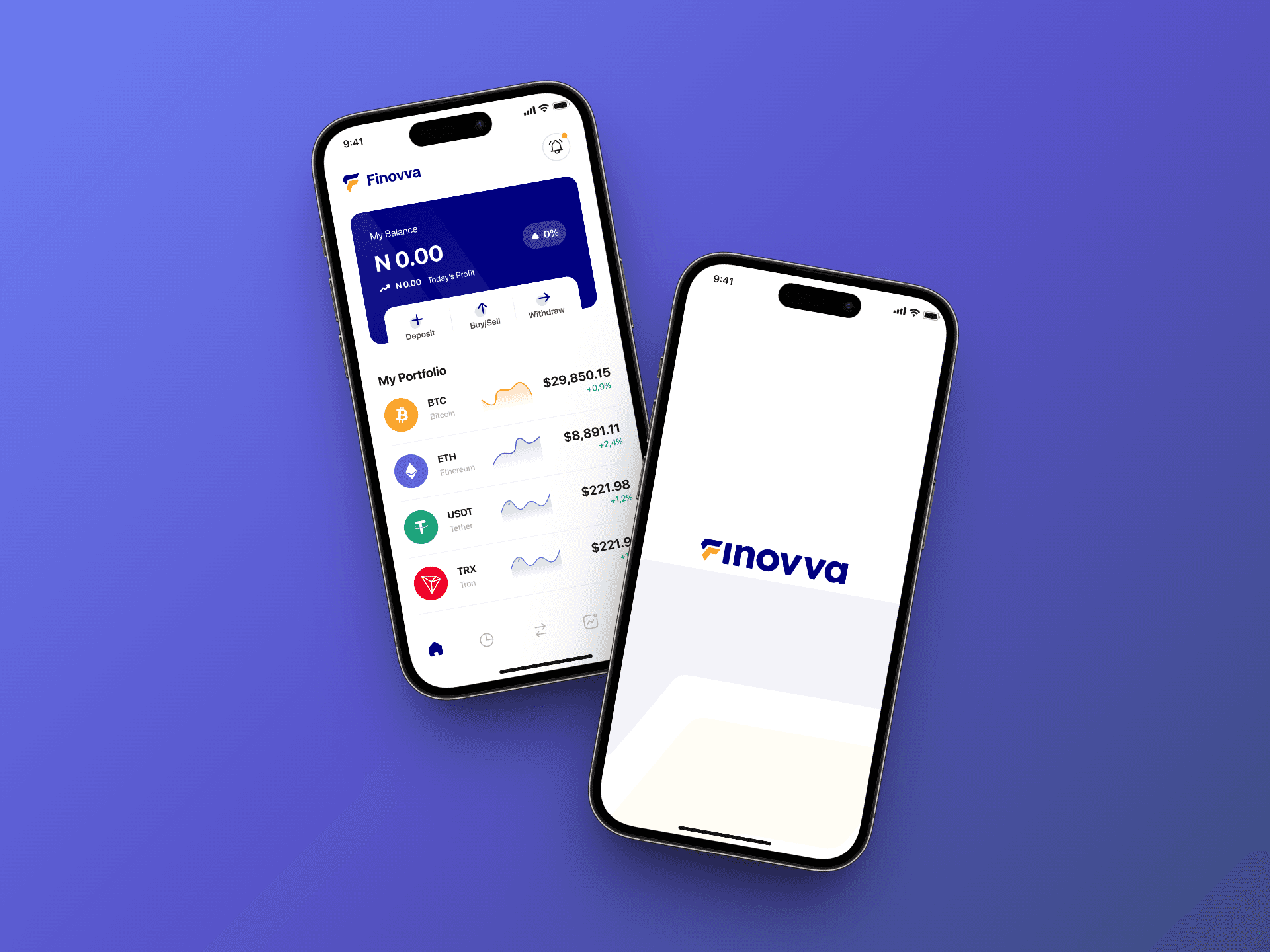
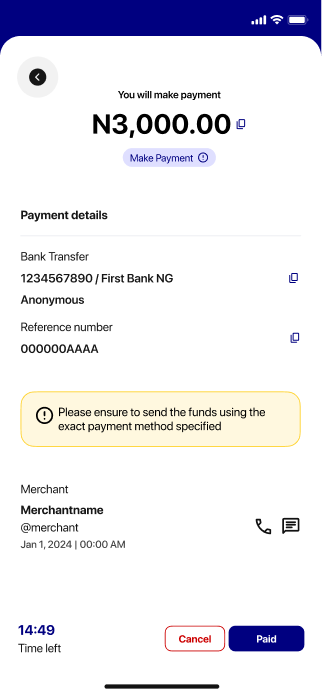
Access to secure trading and investment platforms is often limited, and users face inefficiencies and a lack of trust in financial systems. Finovva is a self-directed concept exploring how design can make a decentralized financial ecosystem feel secure, transparent, and accessible.

Limited access to secure trading platforms and a general lack of trust in existing financial systems leave many users relying on inefficient tools for managing investments.
In DeFi specifically, the barrier isn't just the technology — it's the comprehension gap between technical jargon and what a non-expert user actually needs to feel confident acting.
This project started life as real client work: Finovva shared a Business Requirement Document in September 2022 outlining a decentralized financial platform spanning P2P trading (fiat & crypto), crowdfunding, thrift contribution, DeFi lending, an NFT marketplace, and crypto remittance, aimed at retailers, crypto enthusiasts, tech-savvy individuals, investors, and remittance users on web and mobile. The client didn't move forward, so it became a self-directed concept from that same brief.
The BRD itself was the primary research input, and it went deep: wallet and funding requirements, a tiered user verification system (Newbie through Bronze, Silver, Gold, Expert, Guru based on transaction volume, referrals, and document verification), a public "pool chat" plus private deal chat for P2P trading, and security requirements like 2FA, cold storage, and multi-signature wallets.
The BRD was dense and technical, so synthesis meant translating requirements into a design direction a non-expert user could actually navigate with confidence.
Two things stood out. First, the verification tier system (Newbie, no-tag, Bronze, Silver, Gold, Expert, Guru) needed to be visibly legible in the UI so trust and risk level were never ambiguous. Second, because trades hinge on irreversible crypto/fiat transfers between users, technical actions and confirmations needed plain-language framing rather than raw transaction jargon, the trust and comprehension gap named in the Problem above.
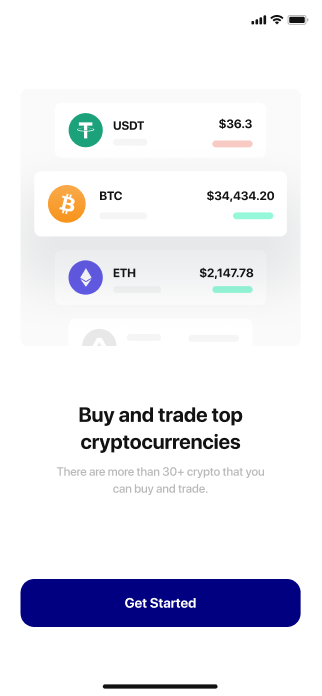
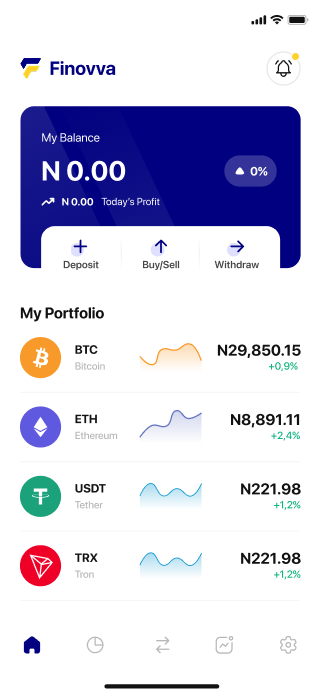
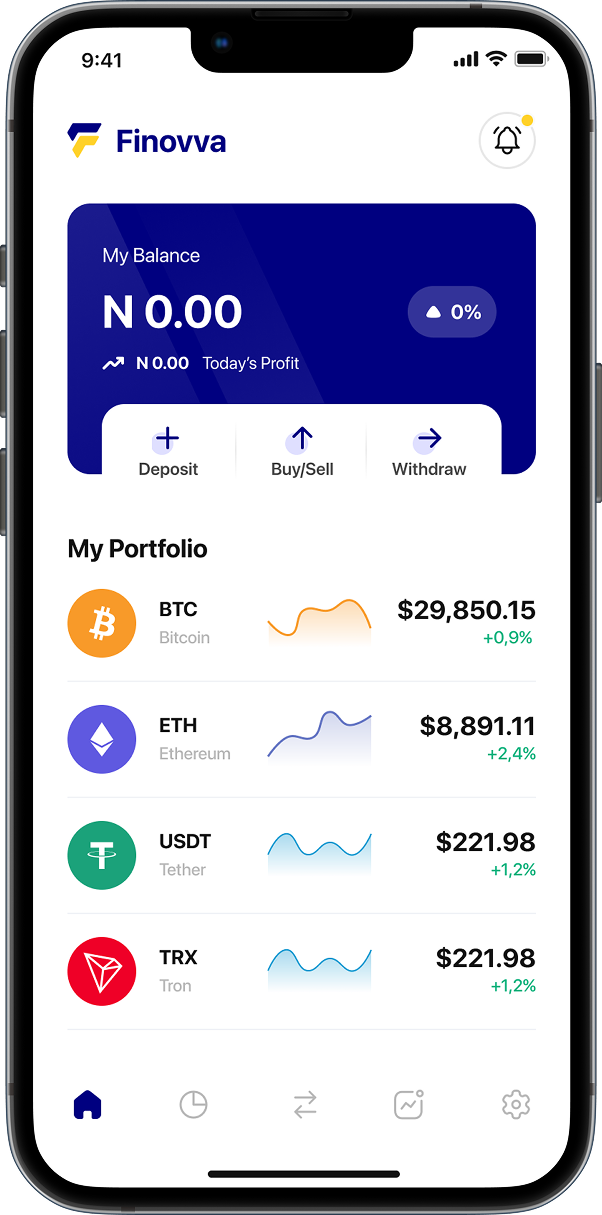
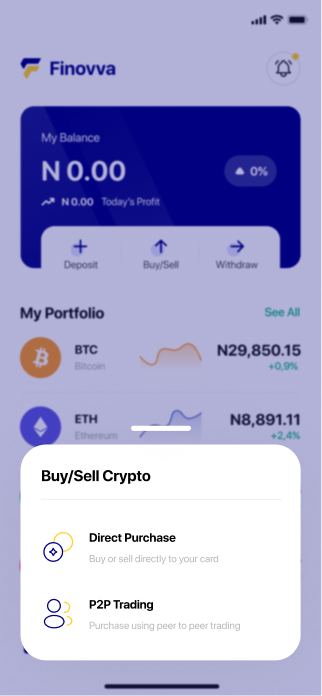
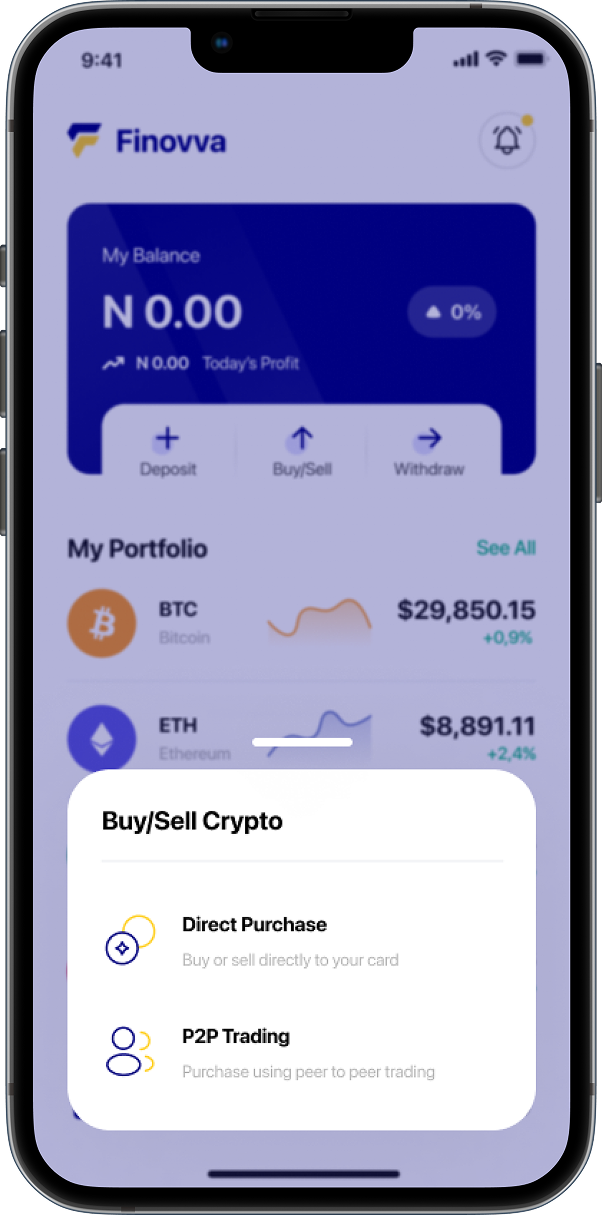
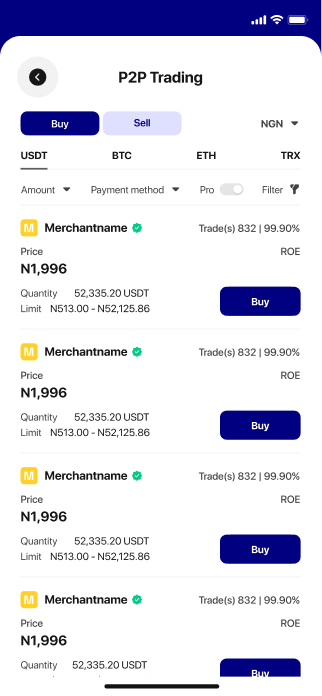
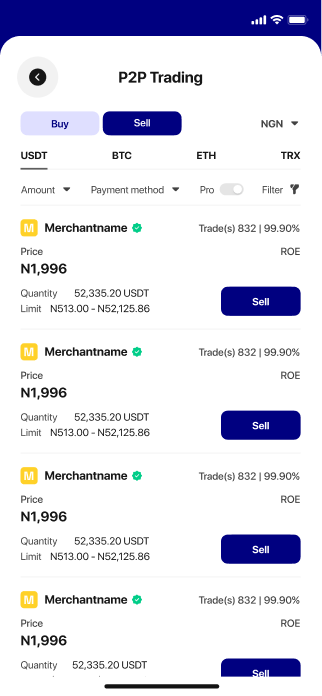
No standalone interactive prototype link for this one, the screens below show onboarding through the wallet, P2P trading, and portfolio flows as designed.


As the designer on this concept, I focused on creating intuitive, secure, and visually consistent interfaces — designing high-fidelity screens for the decentralized trading and investment platform.
Above all, the priority was ensuring usability, clarity, and trust across every interaction, aligning the design with Finovva's brand identity and broader ecosystem vision.
Finovva forced me to think hard about designing for irreversible actions — in most products, a mistake is annoying; in DeFi, a mistake can be unrecoverable. That changes how much design has to do to build confidence before a user acts, not just how it looks.
If this became a live product, I'd want real usability testing with DeFi-skeptical users specifically, since the whole premise depends on winning over people who don't currently trust the space.