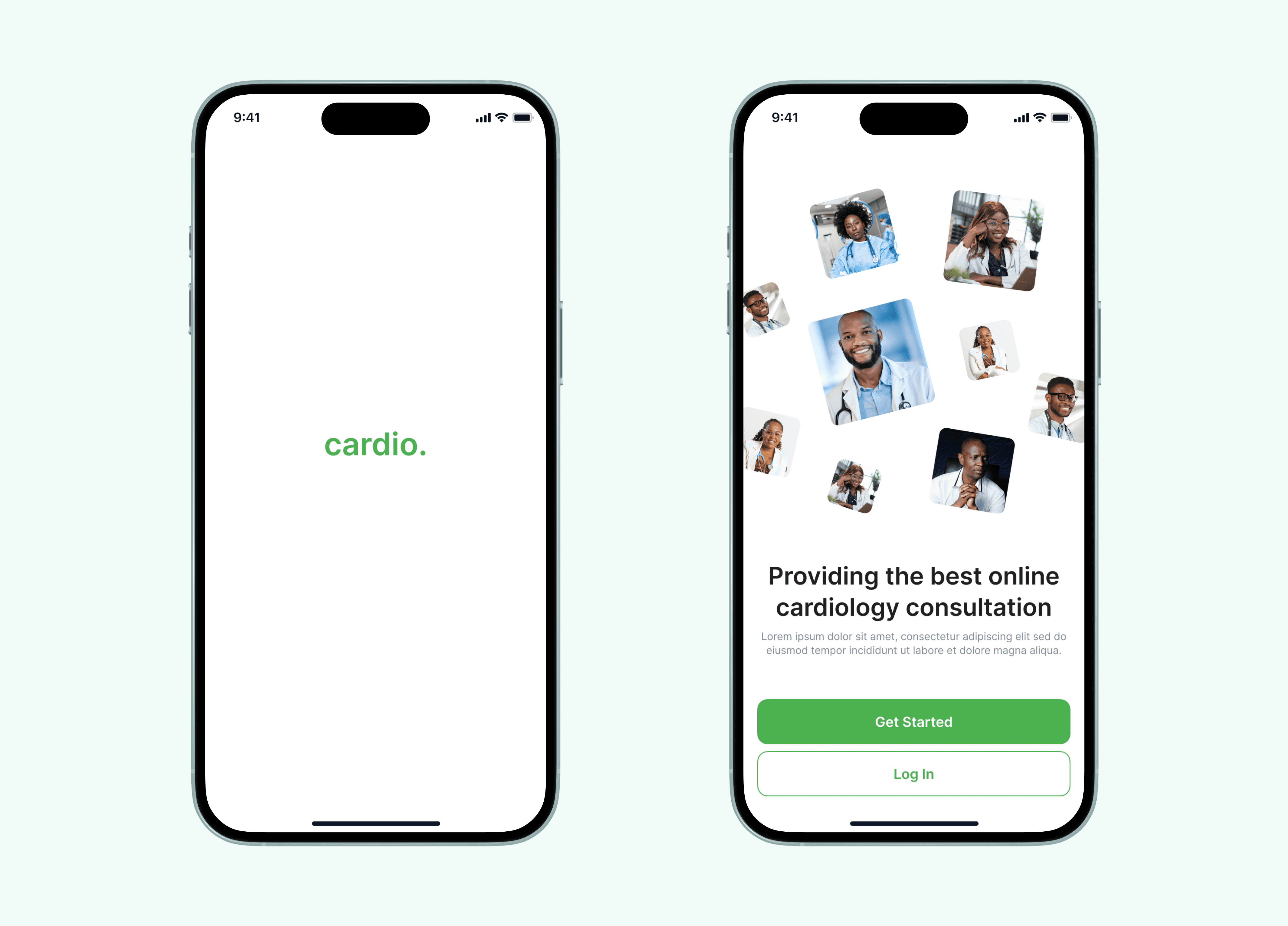
Accessing specialized healthcare can be complex and time-consuming. Cardio is a self-directed concept project exploring how a seamless, mobile-first platform could make booking, pre-consultation preparation, and follow-up cardiology care easier and more reliable.
View Figma Prototype ↗
Patients often struggle to book specialist consultations, provide necessary health information in advance, and stay connected with doctors between appointments.
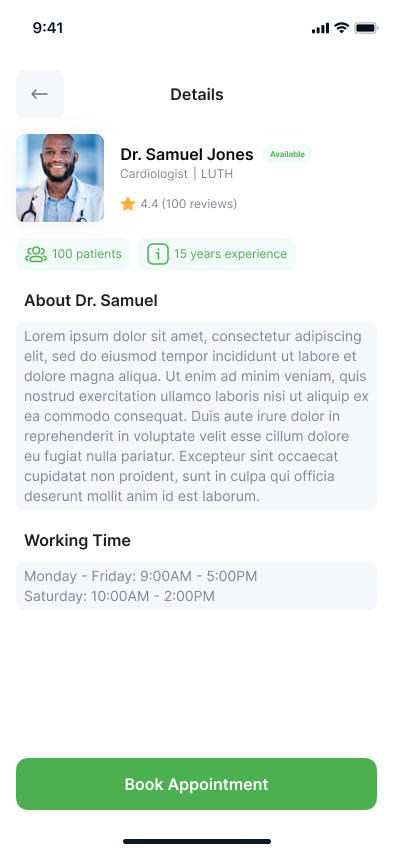
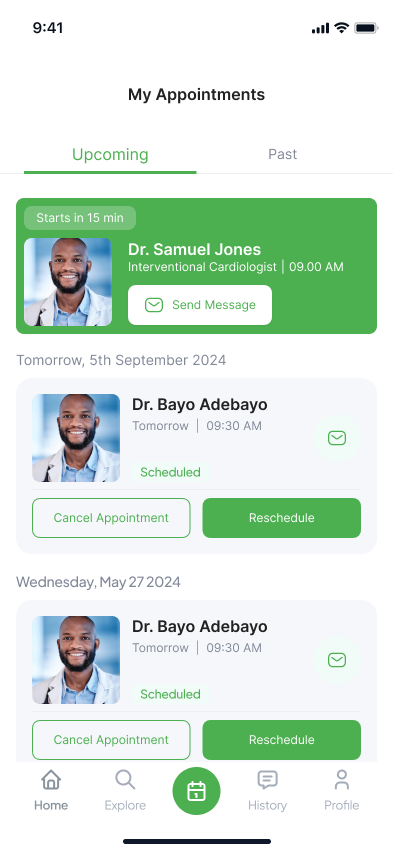
Key objectives for the concept: specialist consultation booking, preliminary vital input, a consultation dashboard, and secure messaging.
As a self-directed concept, this started with secondary research: reading up on existing telehealth and remote patient-monitoring experiences, alongside articles on how patients and clinicians interact with health data remotely.
A recurring theme was that these platforms become overwhelming when they try to surface too much information at once, and that remote monitoring only works when health data is made understandable and actionable for both patients and clinicians, not treated as raw medical data.
Three things shaped the direction. First, making access to care straightforward, which informed the booking flow. Second, making vitals and health information easy to capture and understand rather than raw medical data, which informed the vitals input step. Third, keeping the patient-provider relationship connected, which led to the dashboard and messaging experience.
Booking, vitals input, a dashboard, and messaging weren't just feature requirements. They came from looking at where existing telehealth experiences created friction and asking how the whole journey could feel more connected and easier to manage.
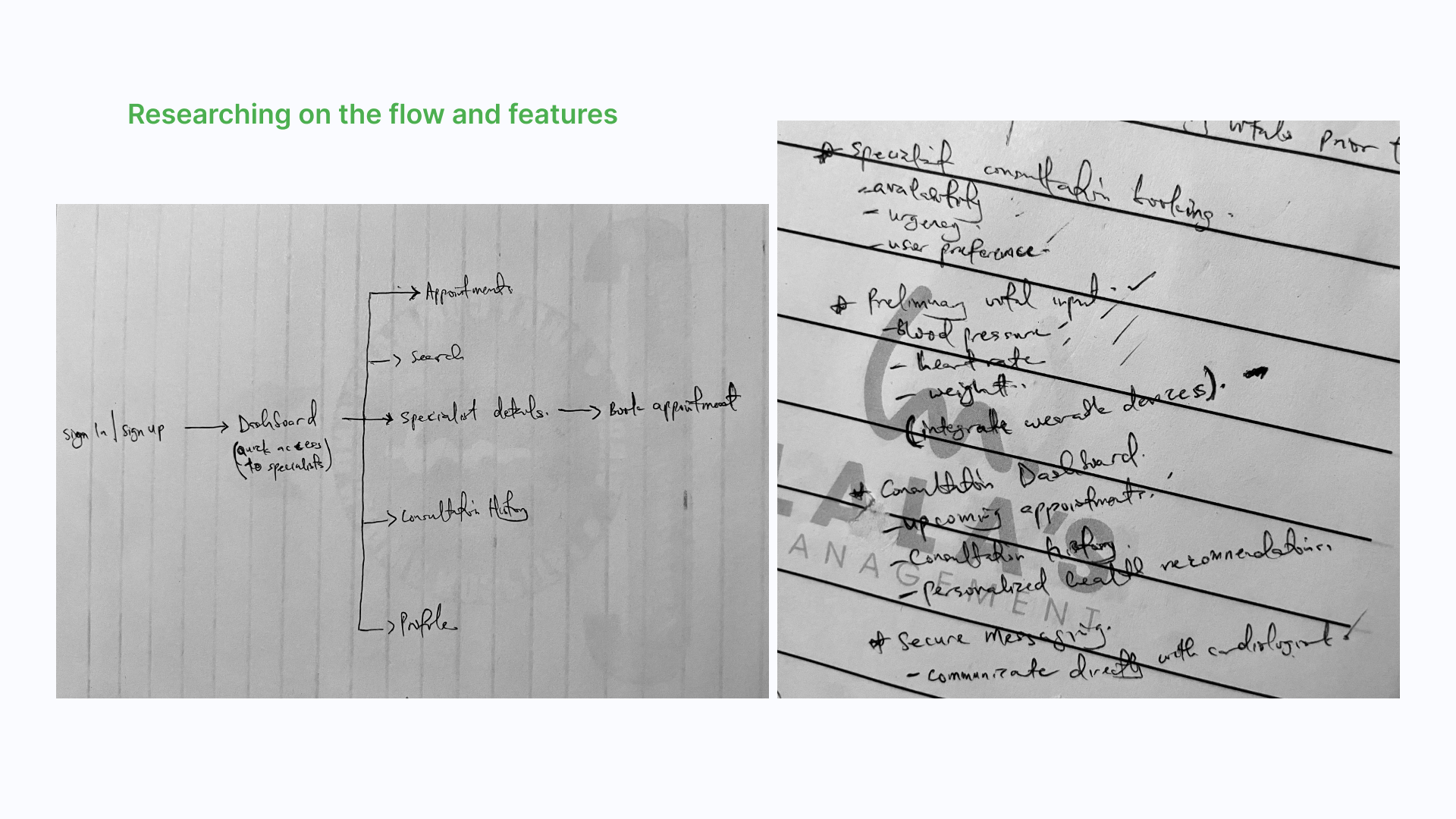
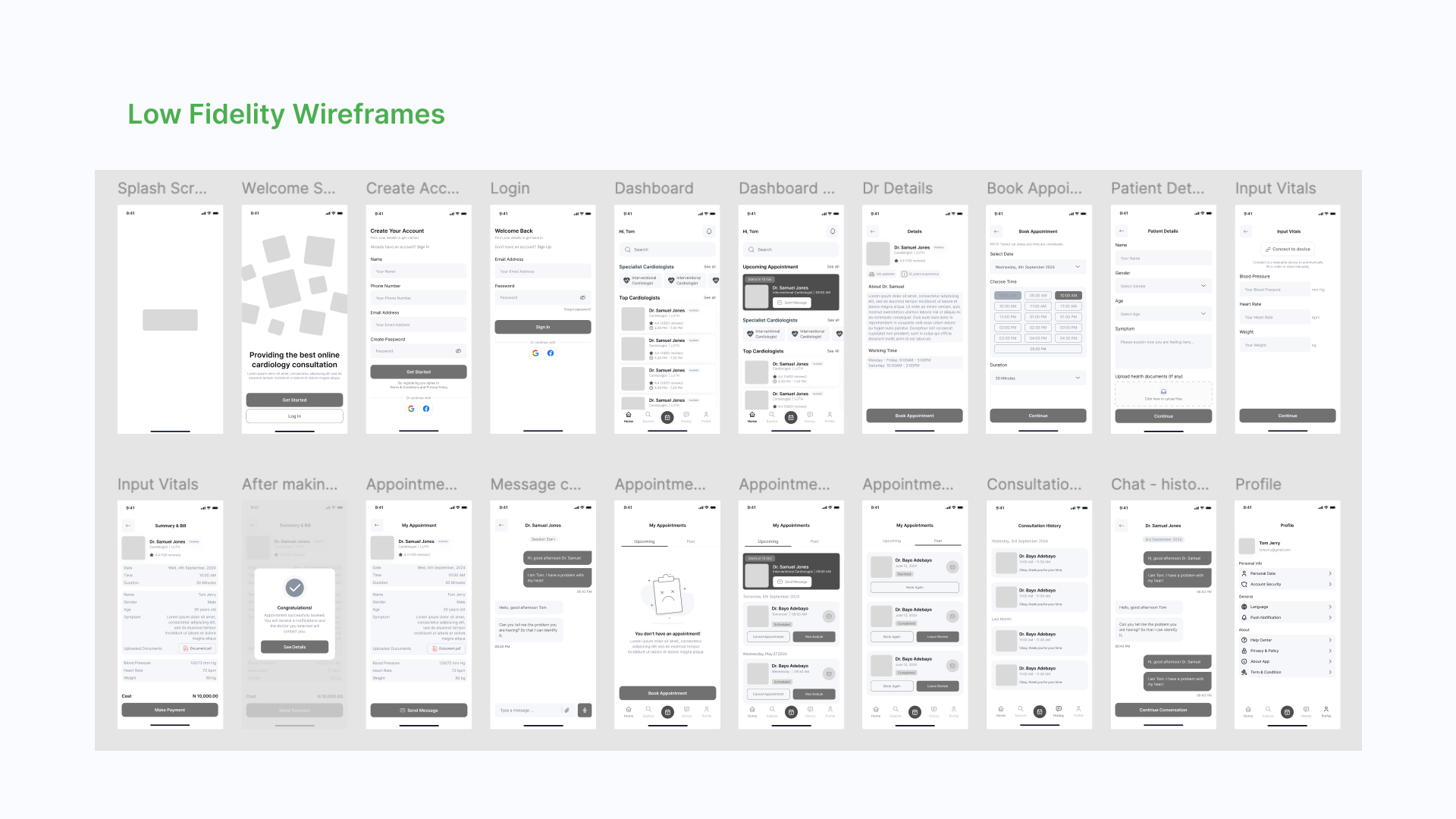
This one did go through a proper low-fidelity phase: hand-sketched flow diagrams mapping sign in/sign up through to the dashboard, appointments, specialist details, consultation history, and profile, followed by a full low-fidelity screen set (Splash, Welcome, Create Account, Login, Dashboard, Dr Details, Book Appointment, Patient Details, Input Vitals, Appointments, Messages, Consultation History, Chat History, Profile) before moving to high fidelity. The key flow and feature-note sketches below are from that process.


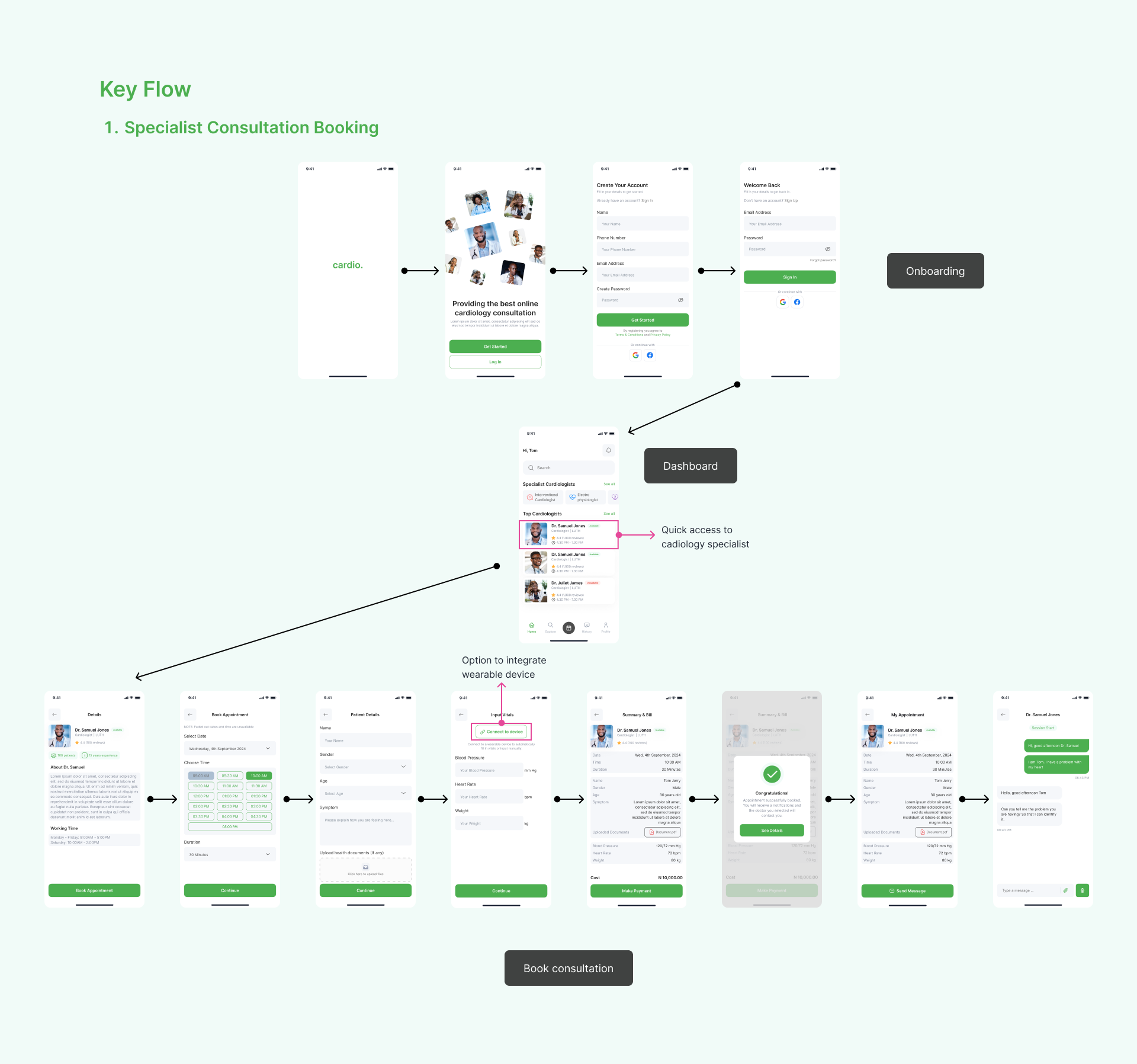
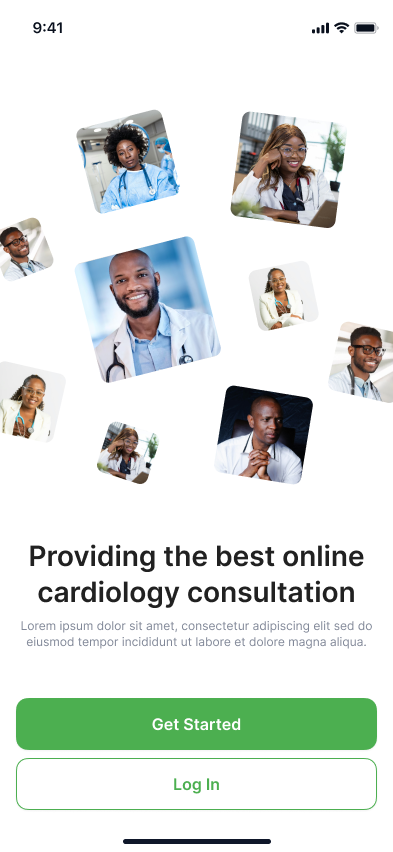
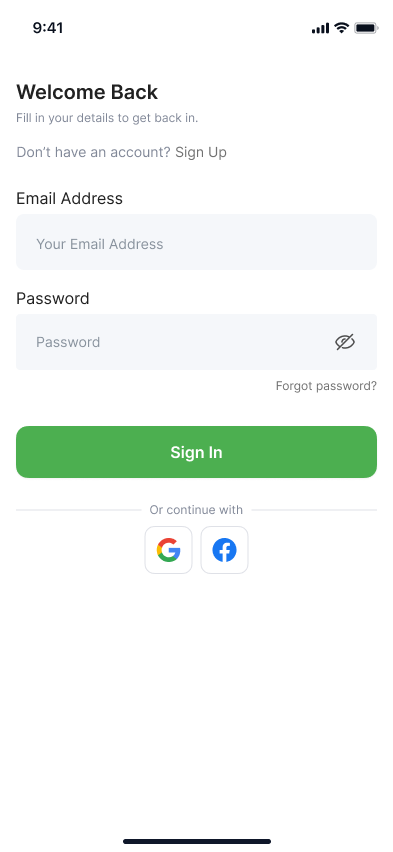
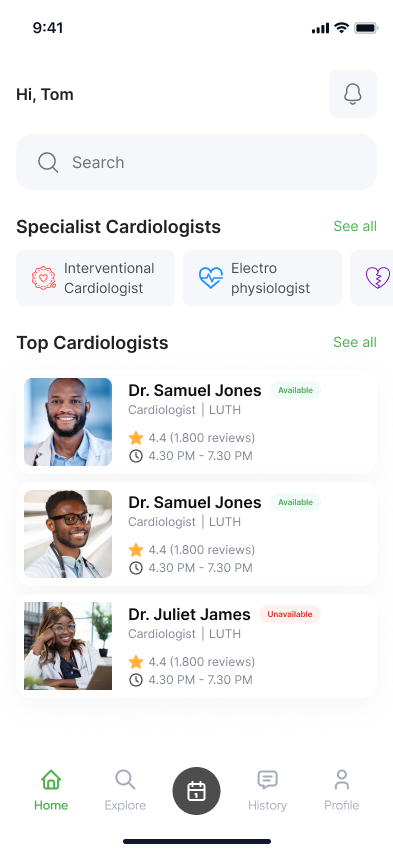
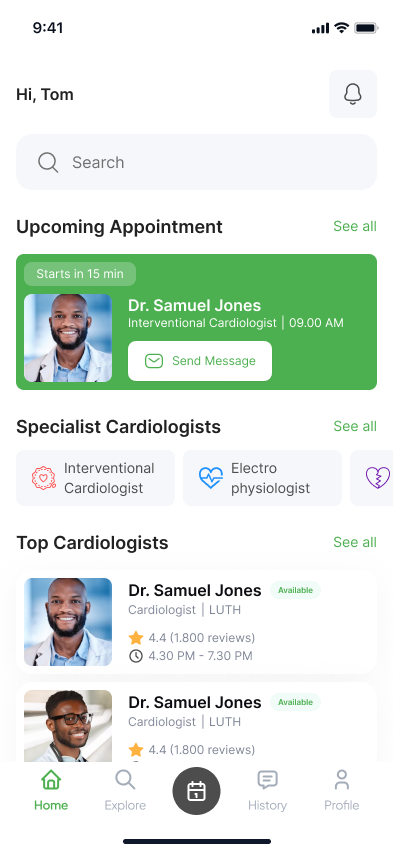
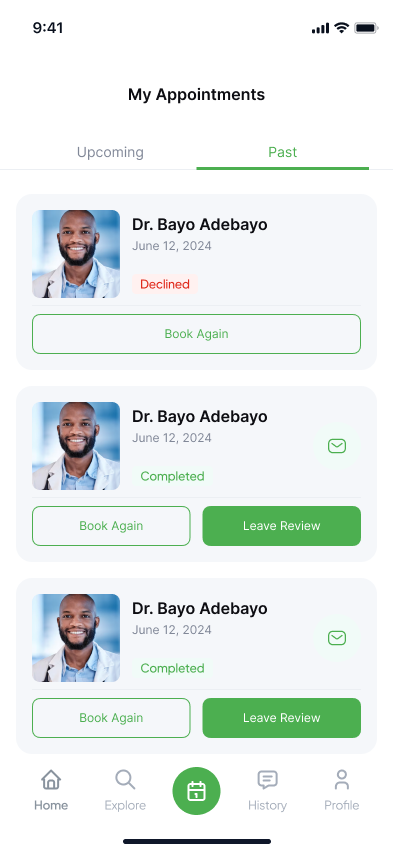
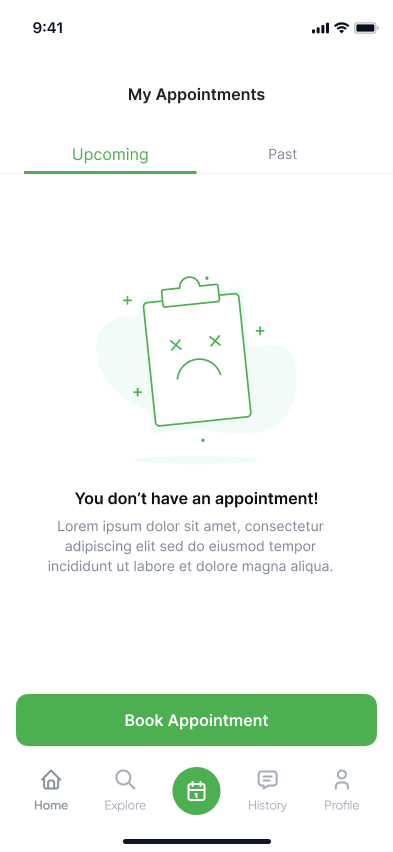
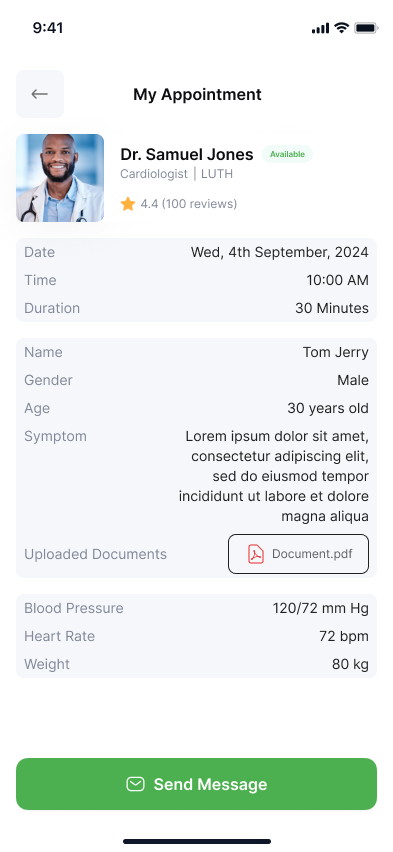
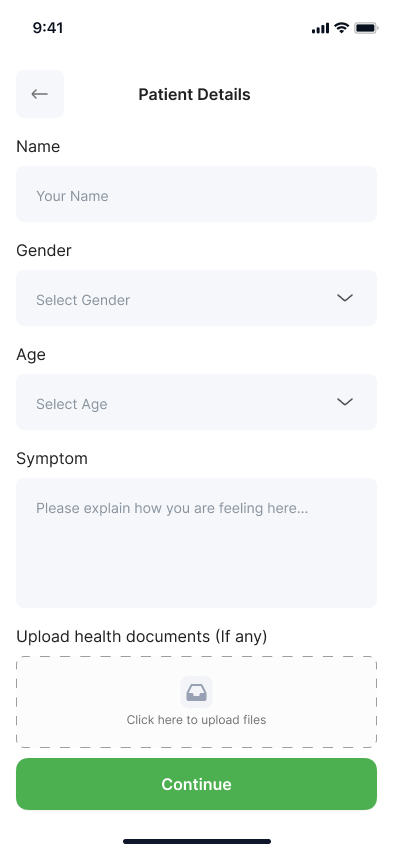
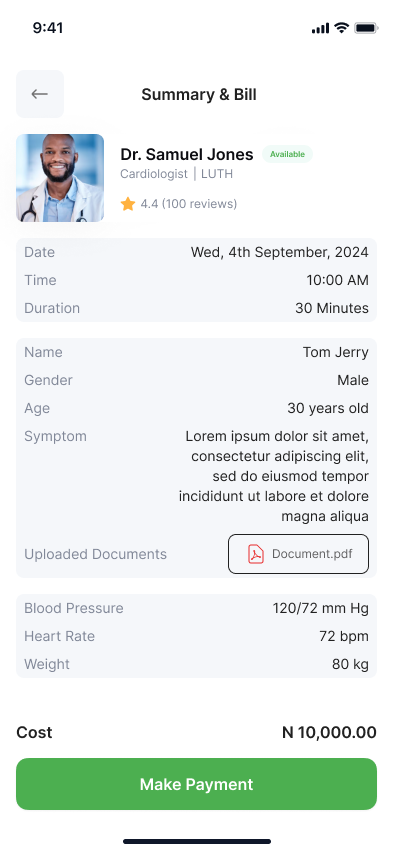
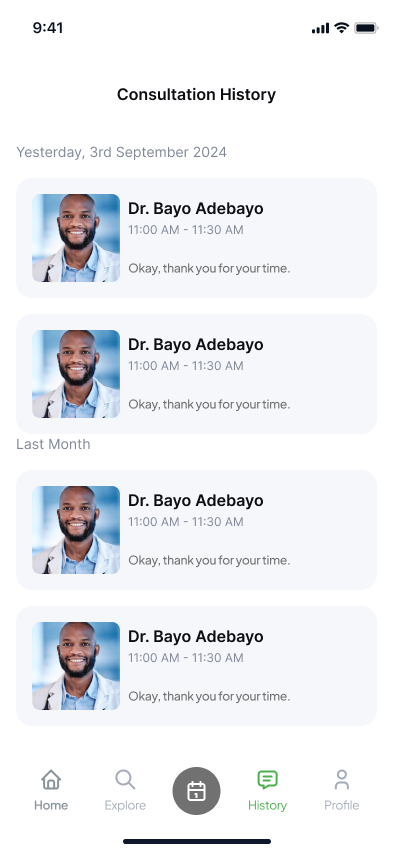
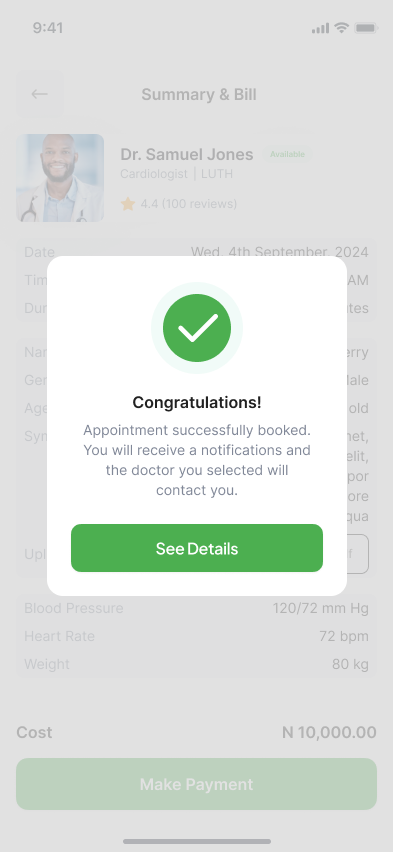
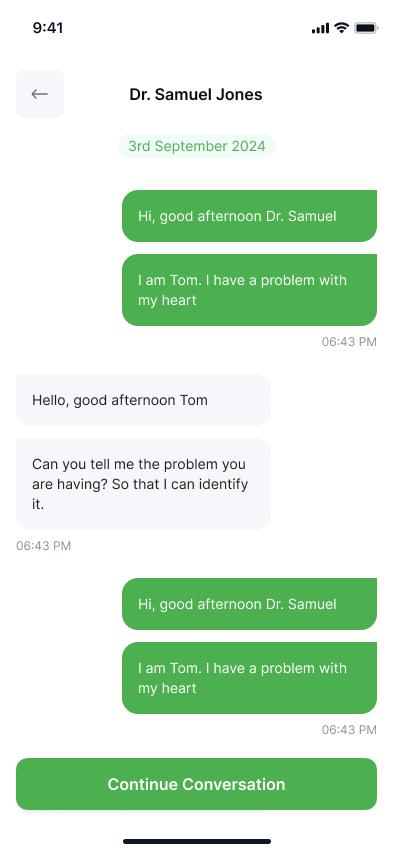
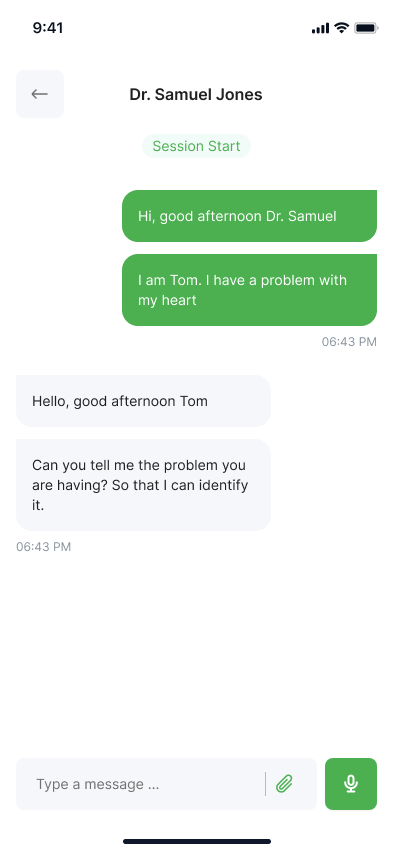
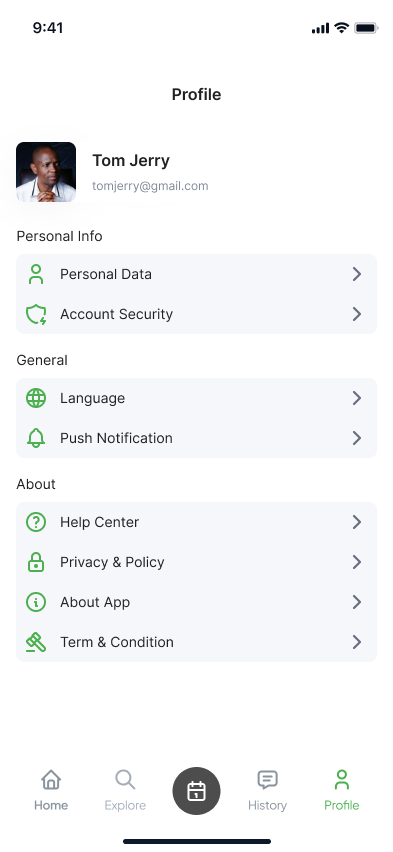
The full high-fidelity set, from first launch through booking a consultation, entering vitals, and messaging a doctor.


As the designer on this self-directed concept, I designed mobile-first experiences while supporting key desktop workflows — starting with low-fidelity wireframes to test layouts and user flows, then iterating into high-fidelity screens.
That included full workflows for onboarding, booking, vitals input, dashboards, and secure messaging, with an emphasis on responsiveness and consistency throughout.
Cardio was an exercise in designing for a domain with real stakes — healthcare, trust, and connectivity constraints — without a live user base to validate against. It pushed me to lean more heavily on domain research to compensate for the lack of real usage data.
If this became a live product, the next step would be co-designing with actual cardiologists and patients rather than relying on assumptions about the consultation flow.