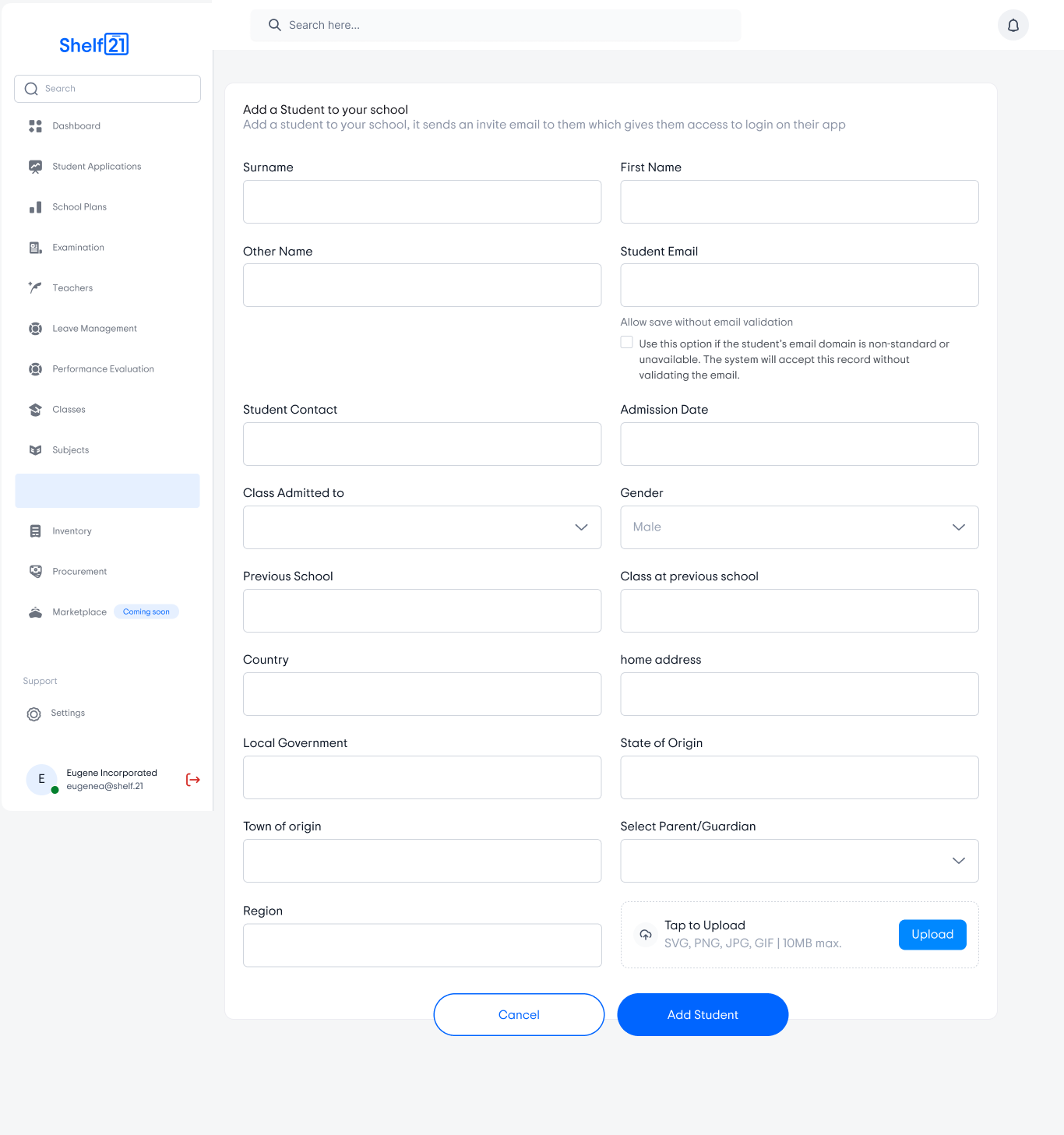
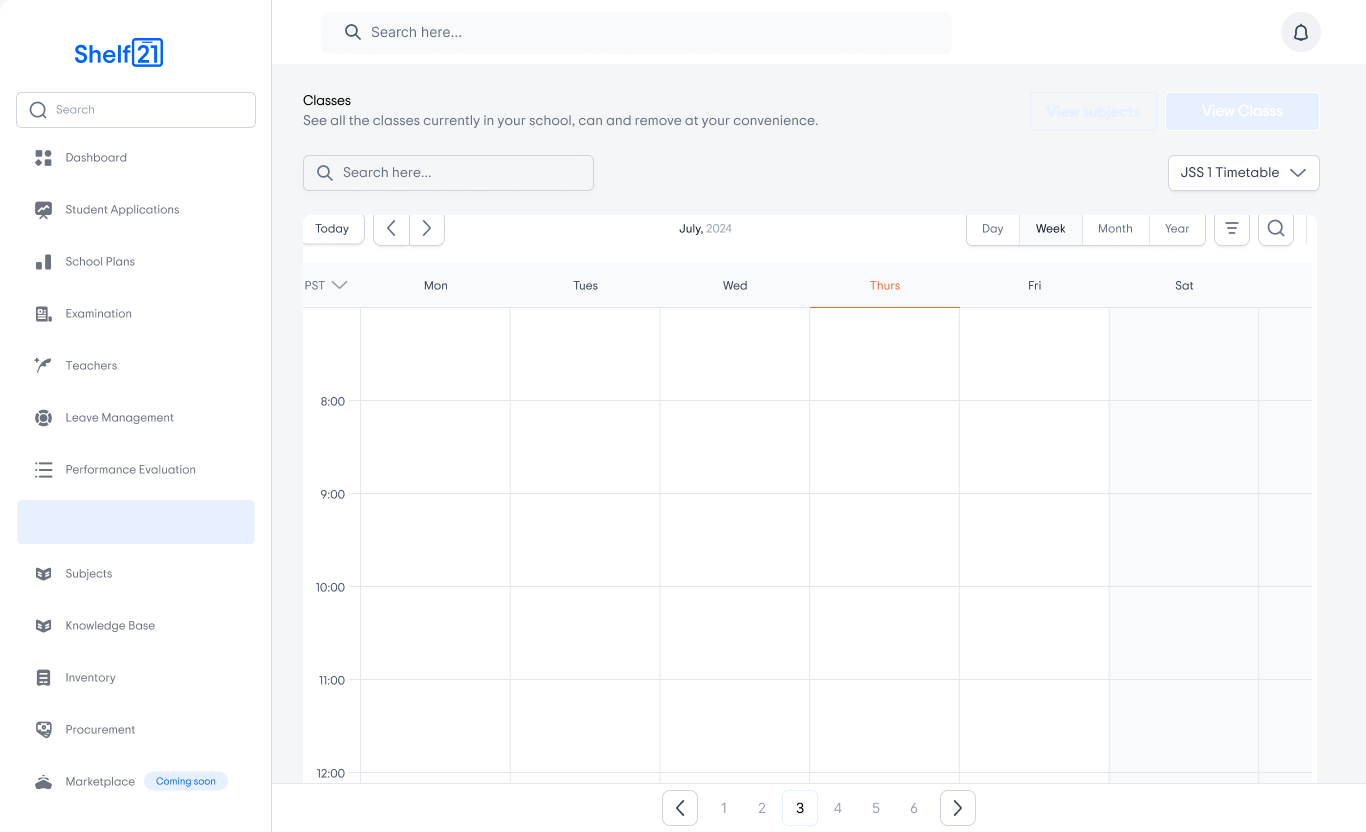
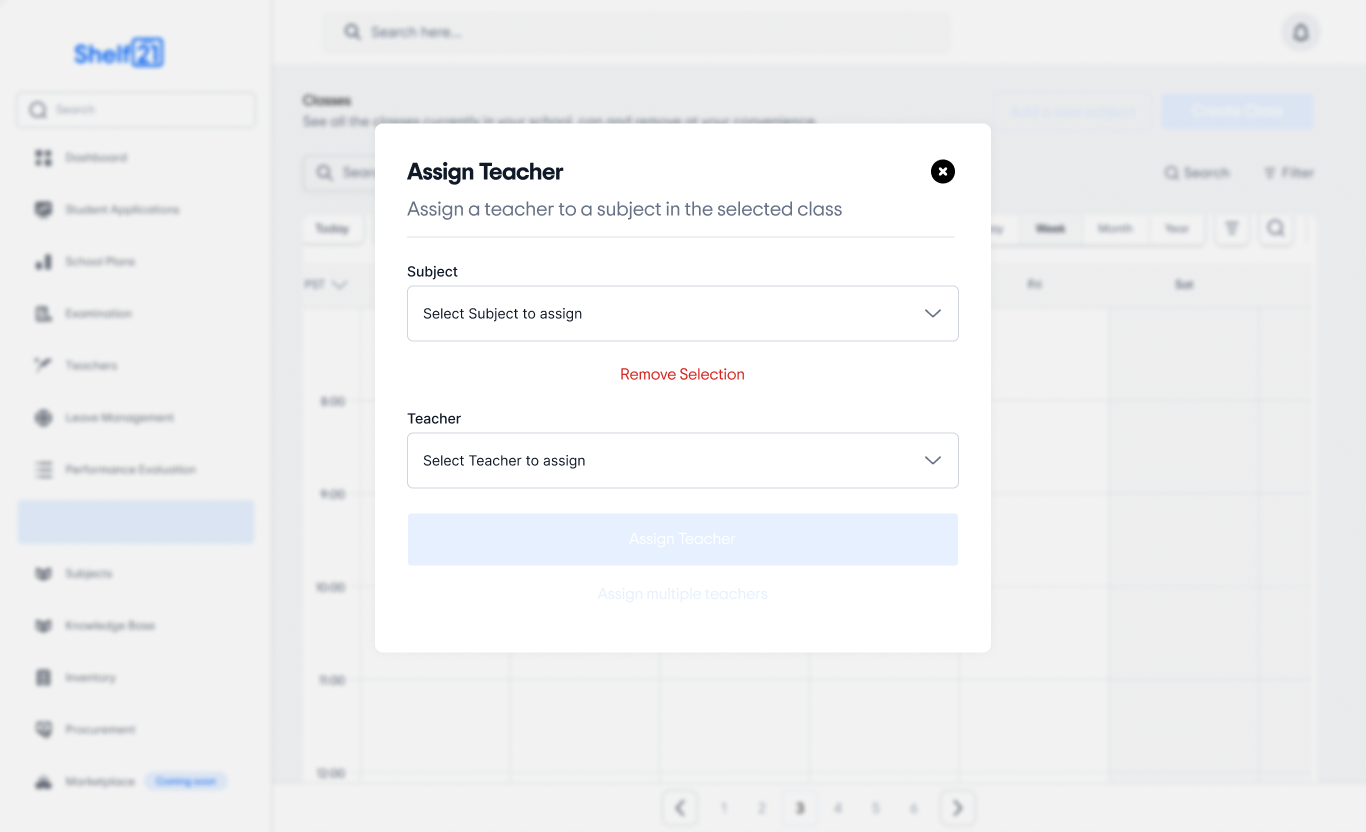
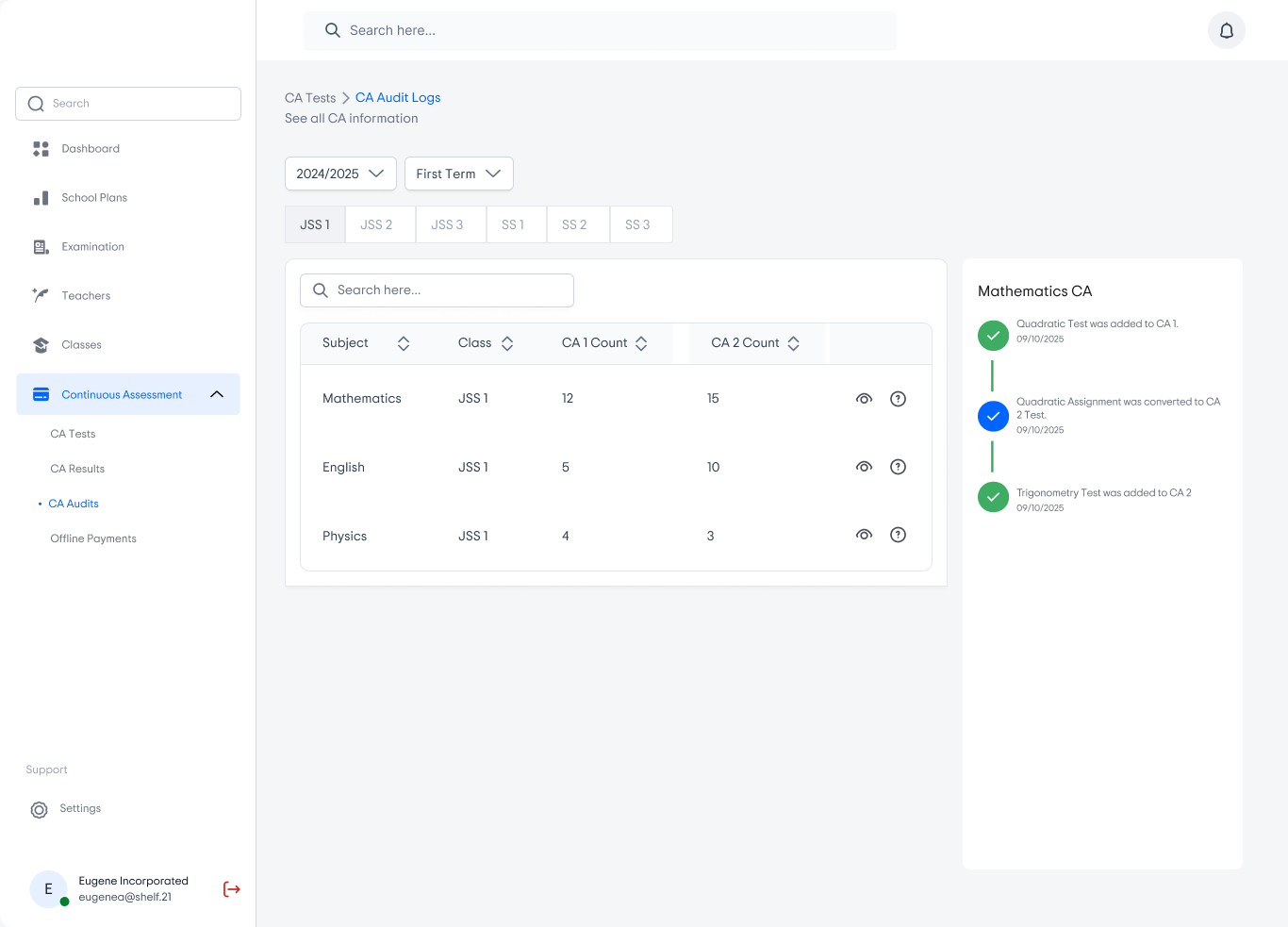
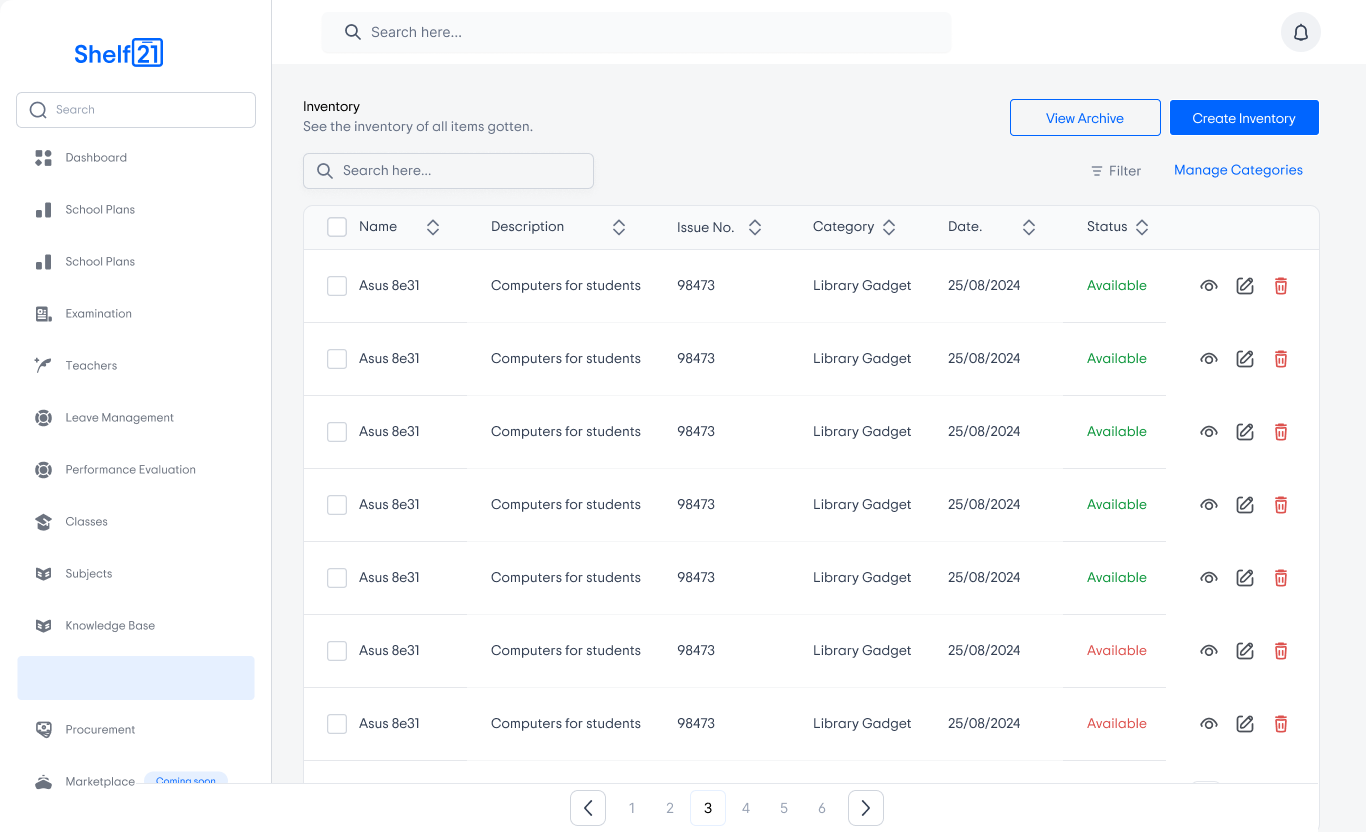
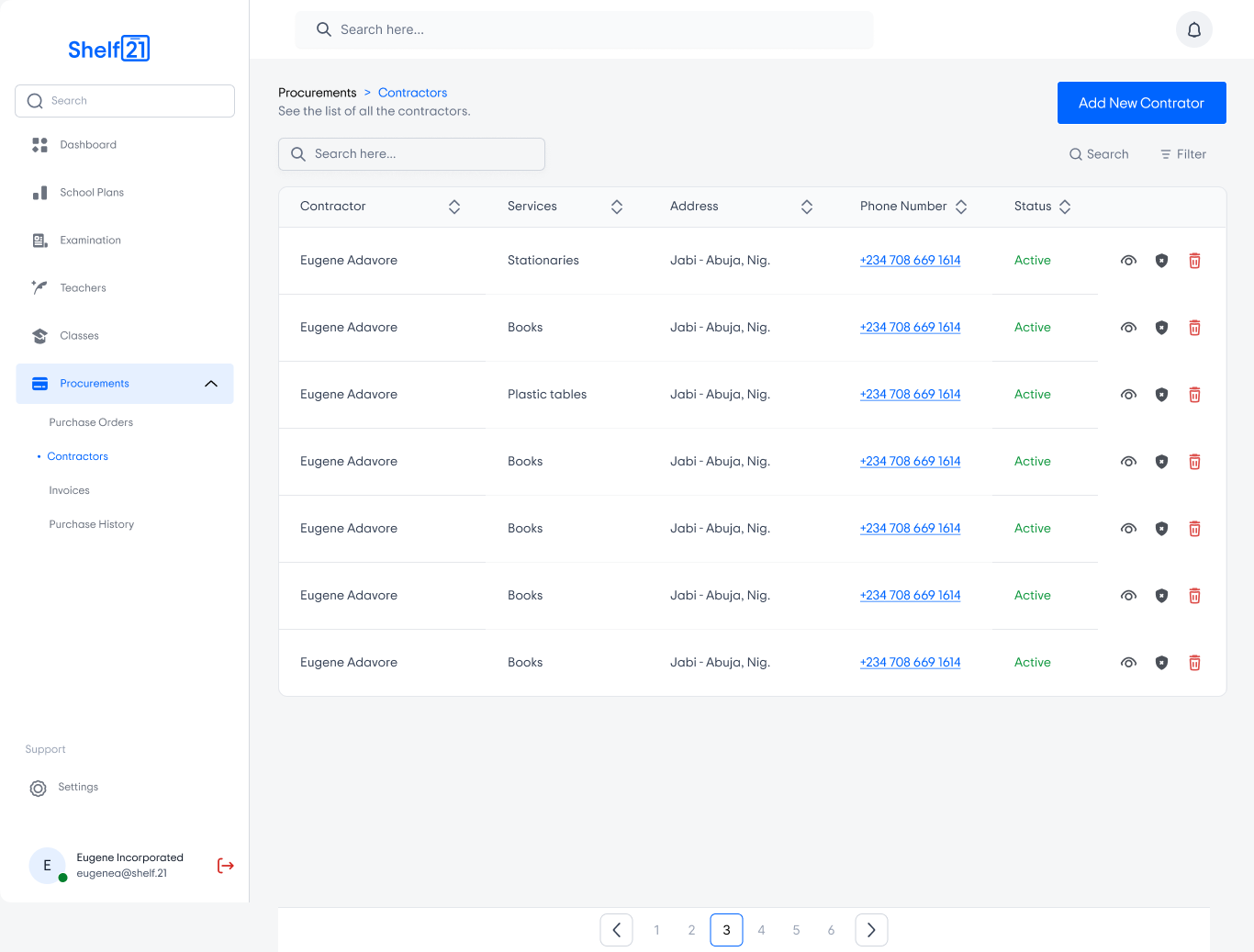
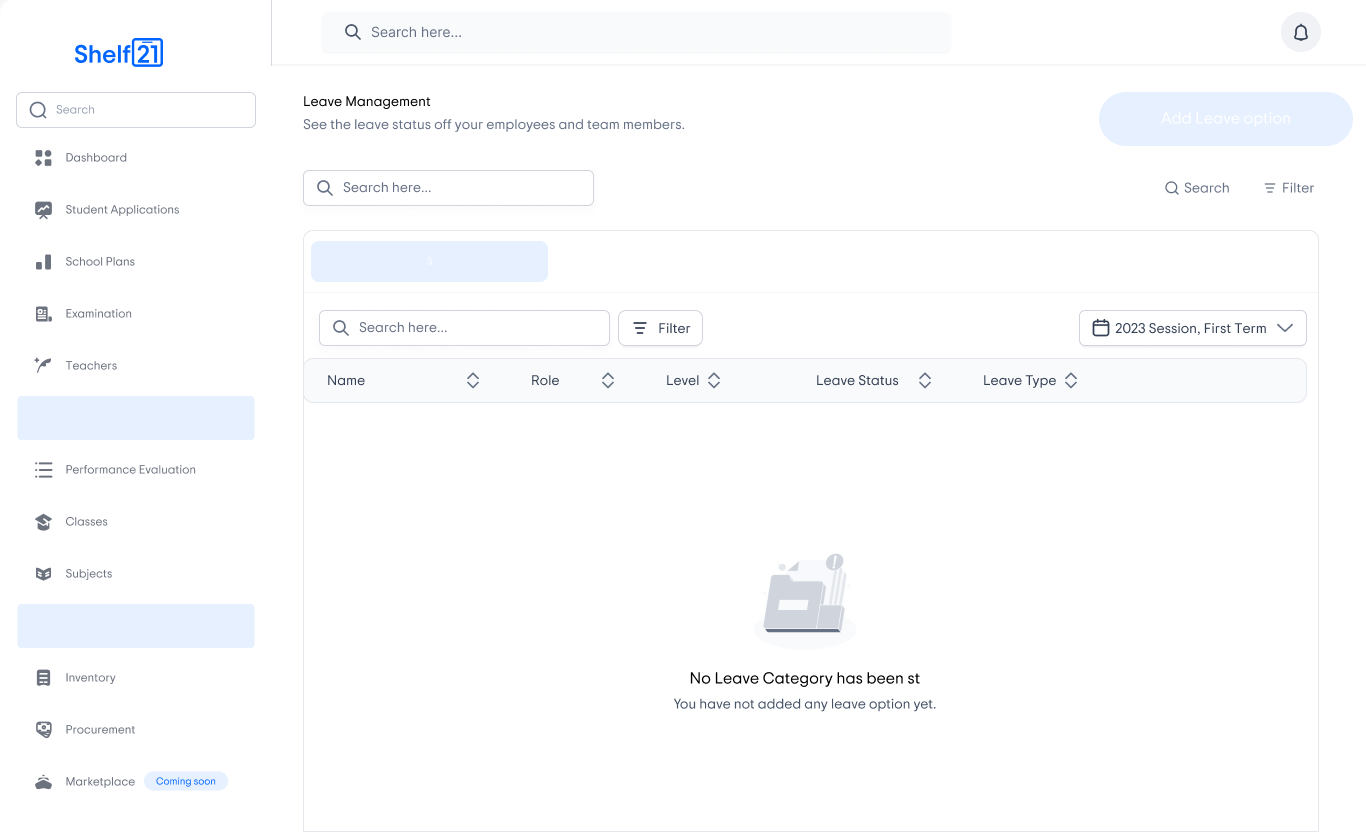
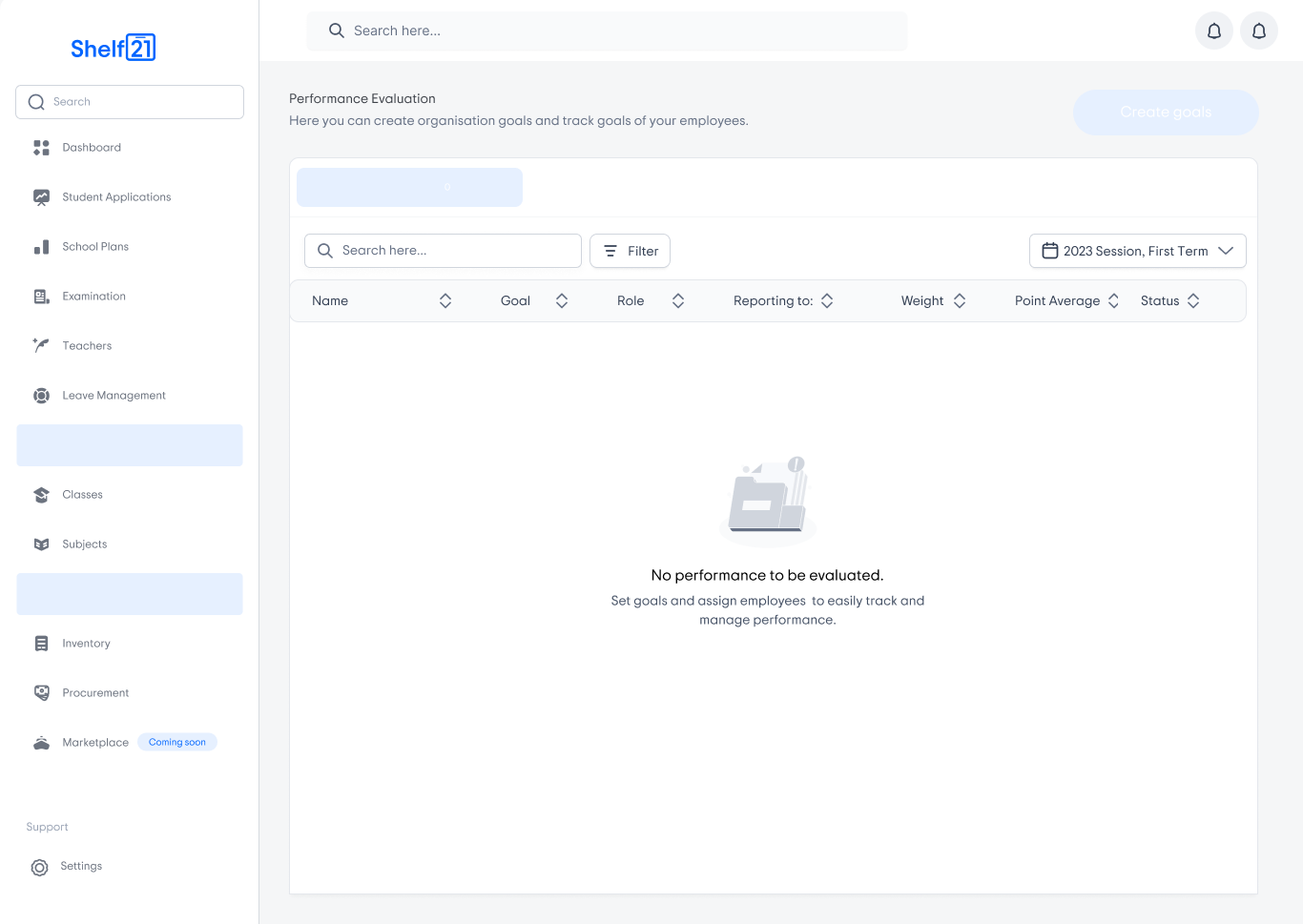
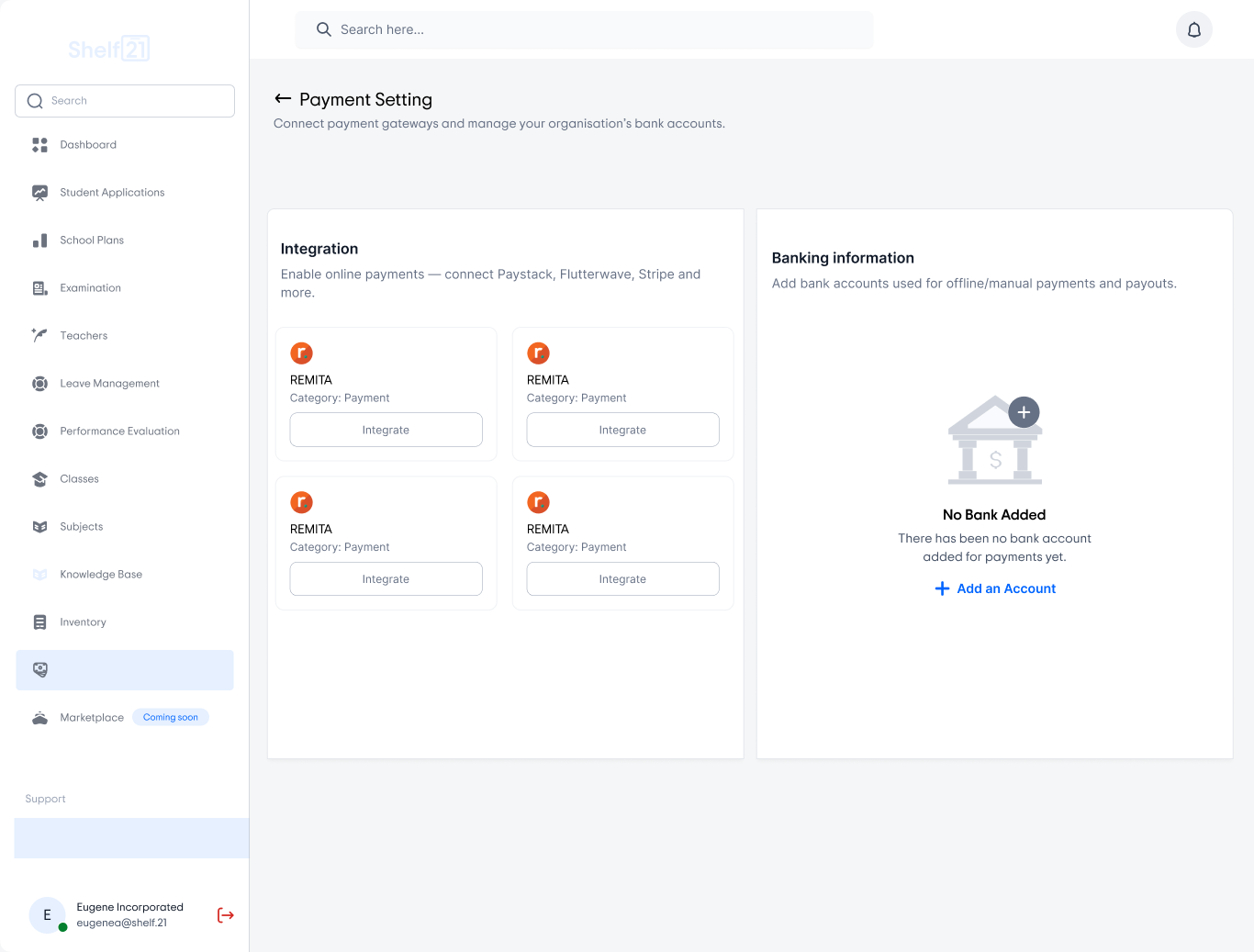
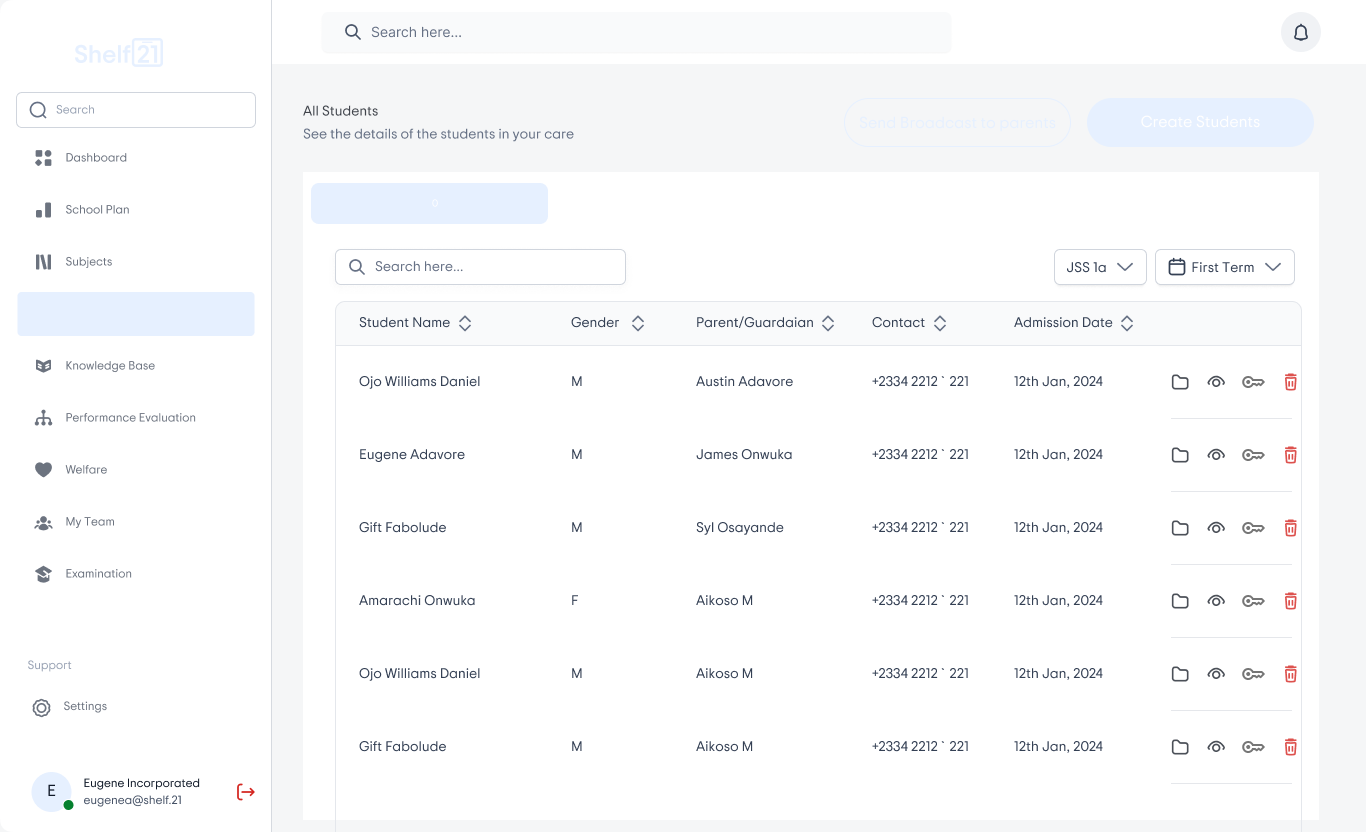
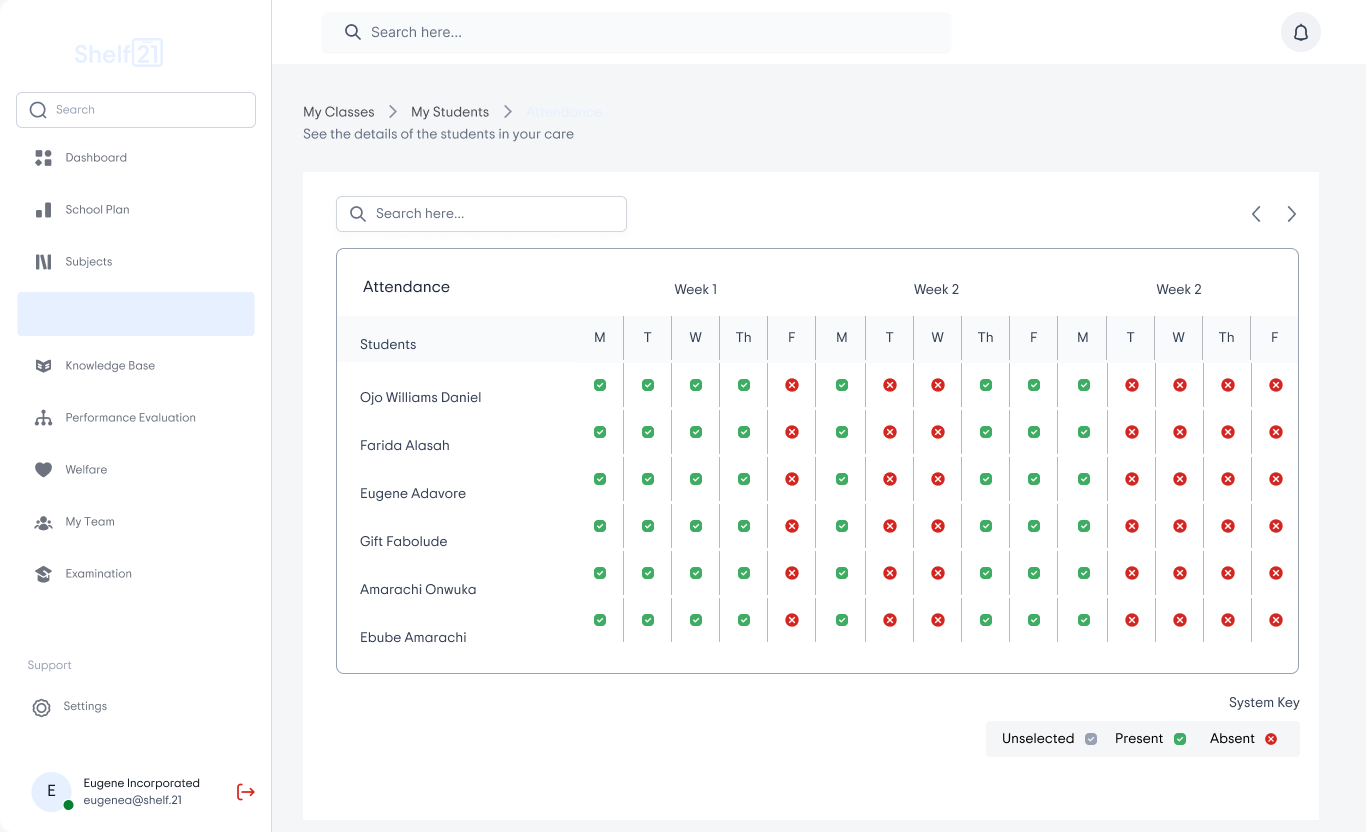
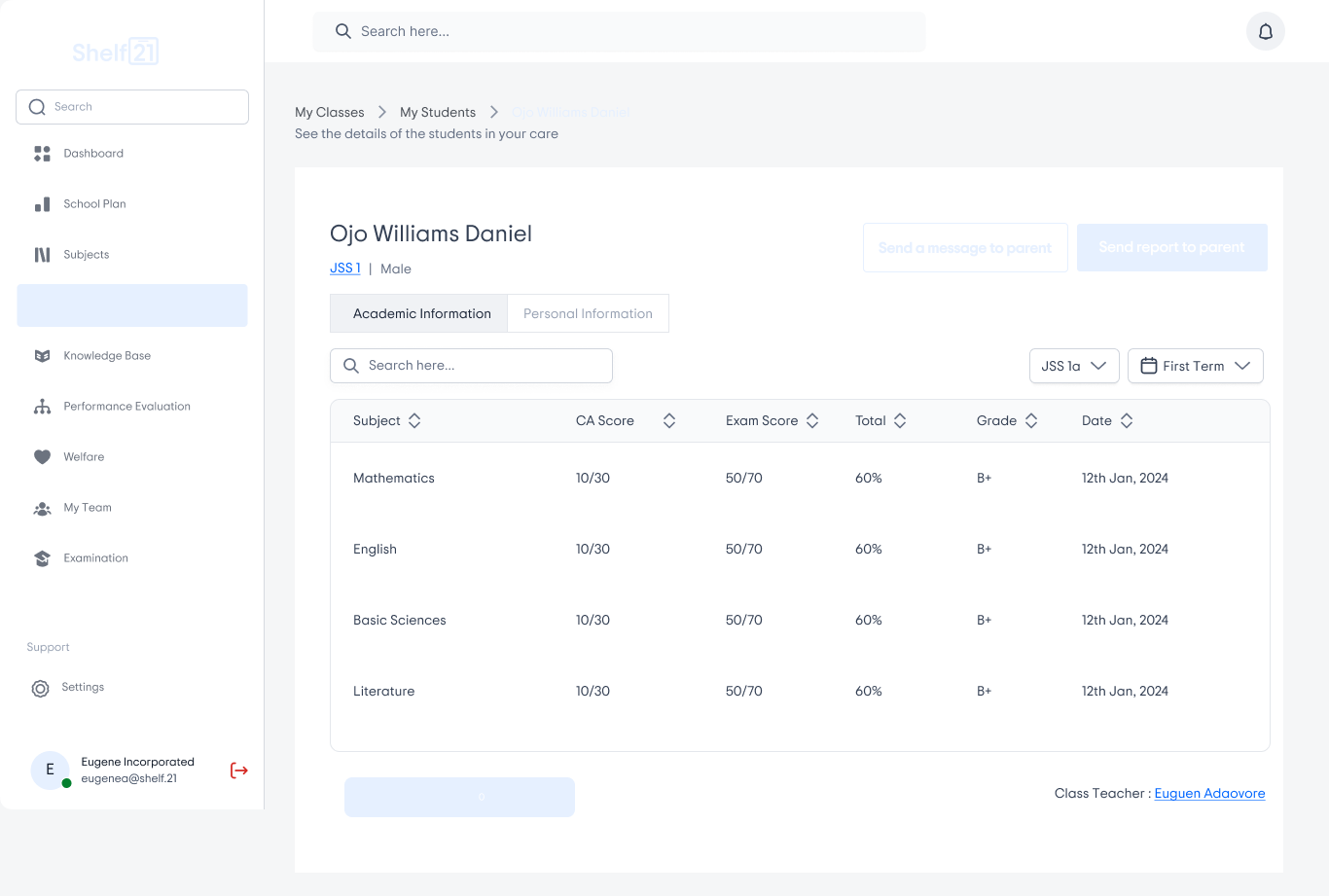
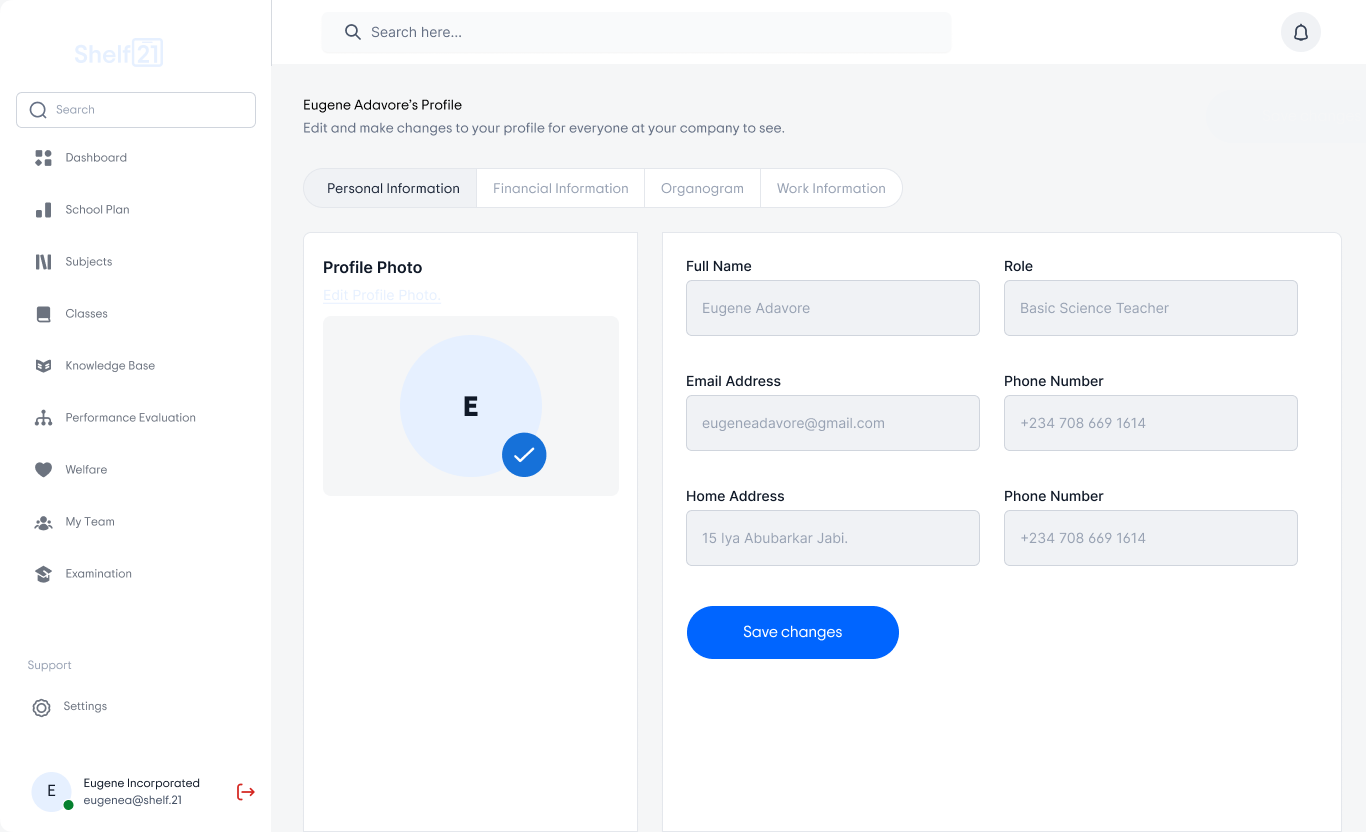
Schools in Nigeria struggle with fragmented systems, manual processes, and lack of visibility. Shelf21 was created to unify school operations, simplify workflows, and make education management intuitive for teachers, parents, students, and admins.
Visit Live Site ↗
Teachers spent too much time on admin work instead of teaching.
Parents had no clear view of their child's progress, and students lacked timely access to schedules, grades, or resources.
Existing systems on the market were costly and complicated for most schools to adopt.
Shelf21 touches four different people around a school: teachers, admins, parents, and students, so research meant hearing from each group directly rather than designing around one point of view.
I spoke with about 3 teachers and 2 school admins, 3 parents, and 2 students, walking through how they currently handle student records, fees, assignments, and results. That was grounded in domain knowledge from working with schools directly, not just secondhand assumptions about how they operate.
Each group's friction was distinct, but all of it traced back to the same root cause: information that lived on paper or in someone's head instead of in one accessible place.
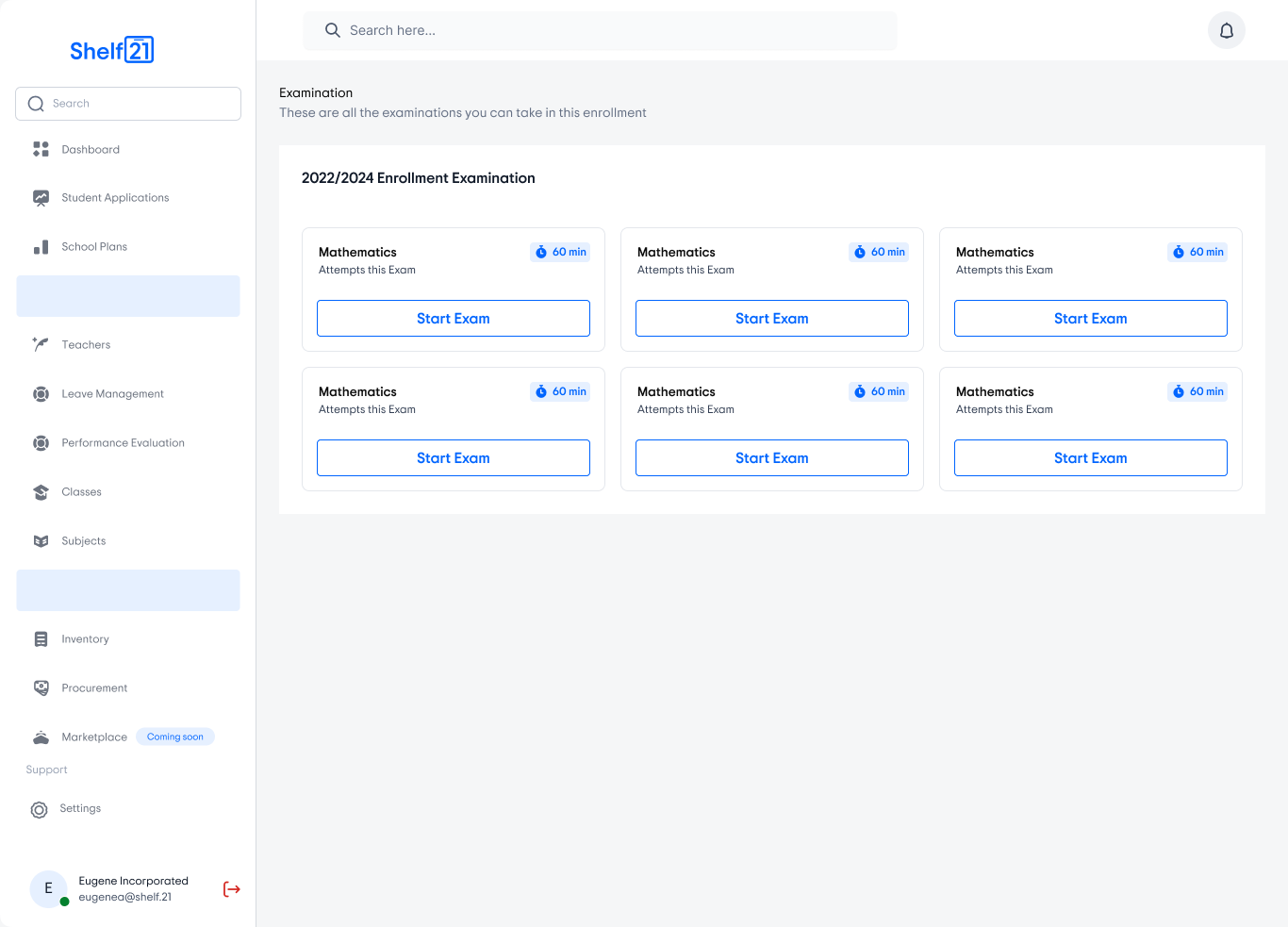
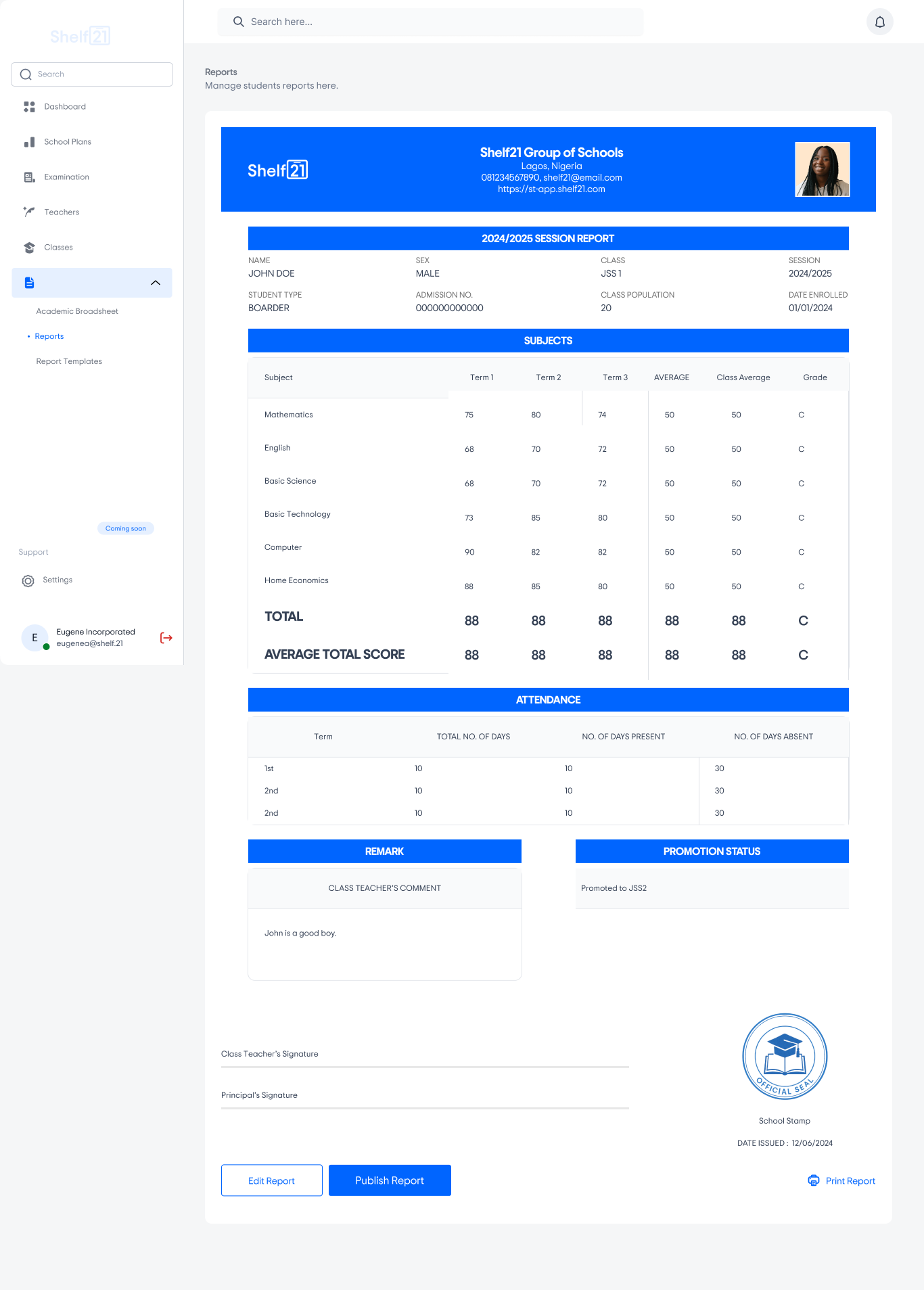
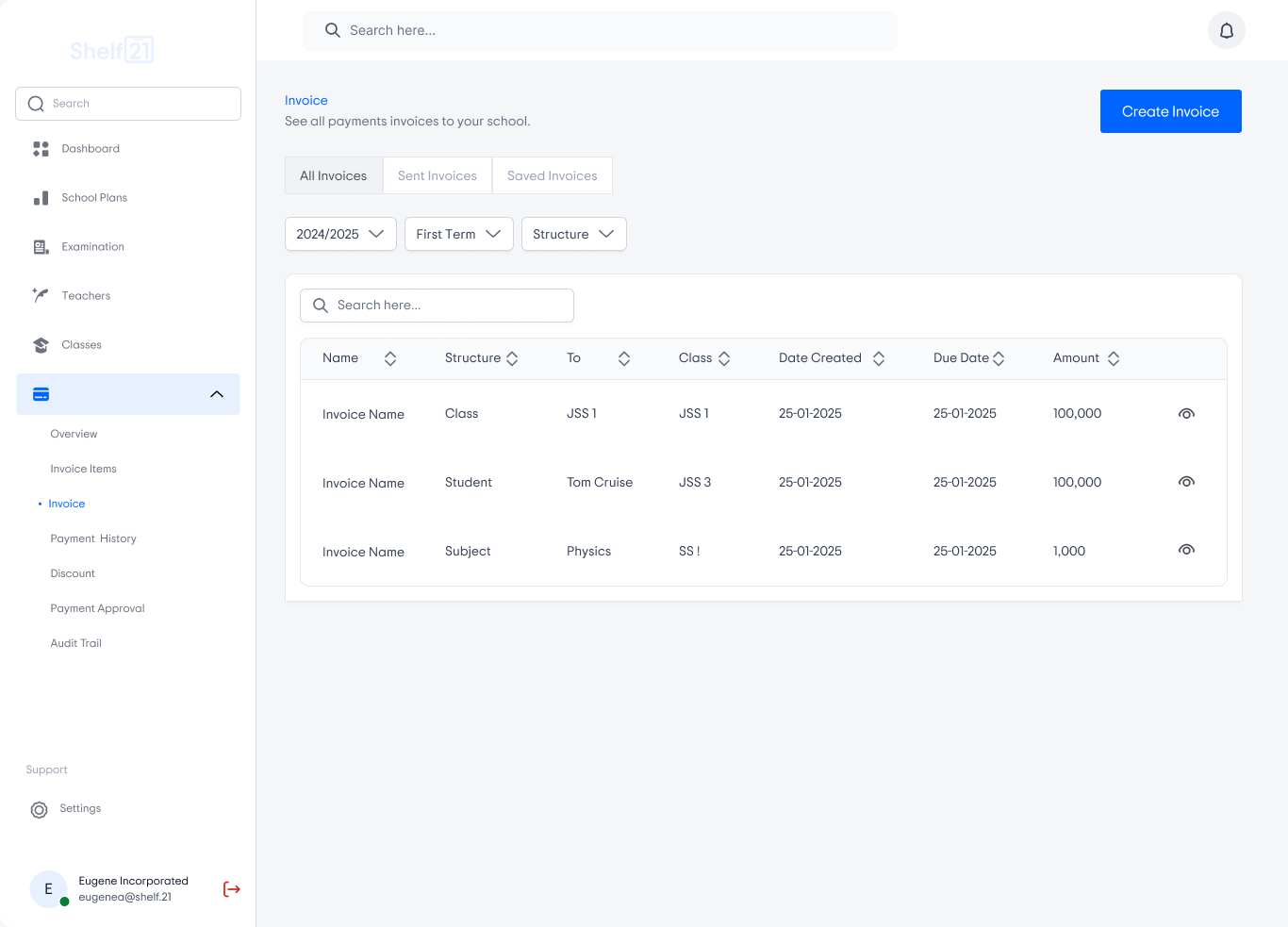
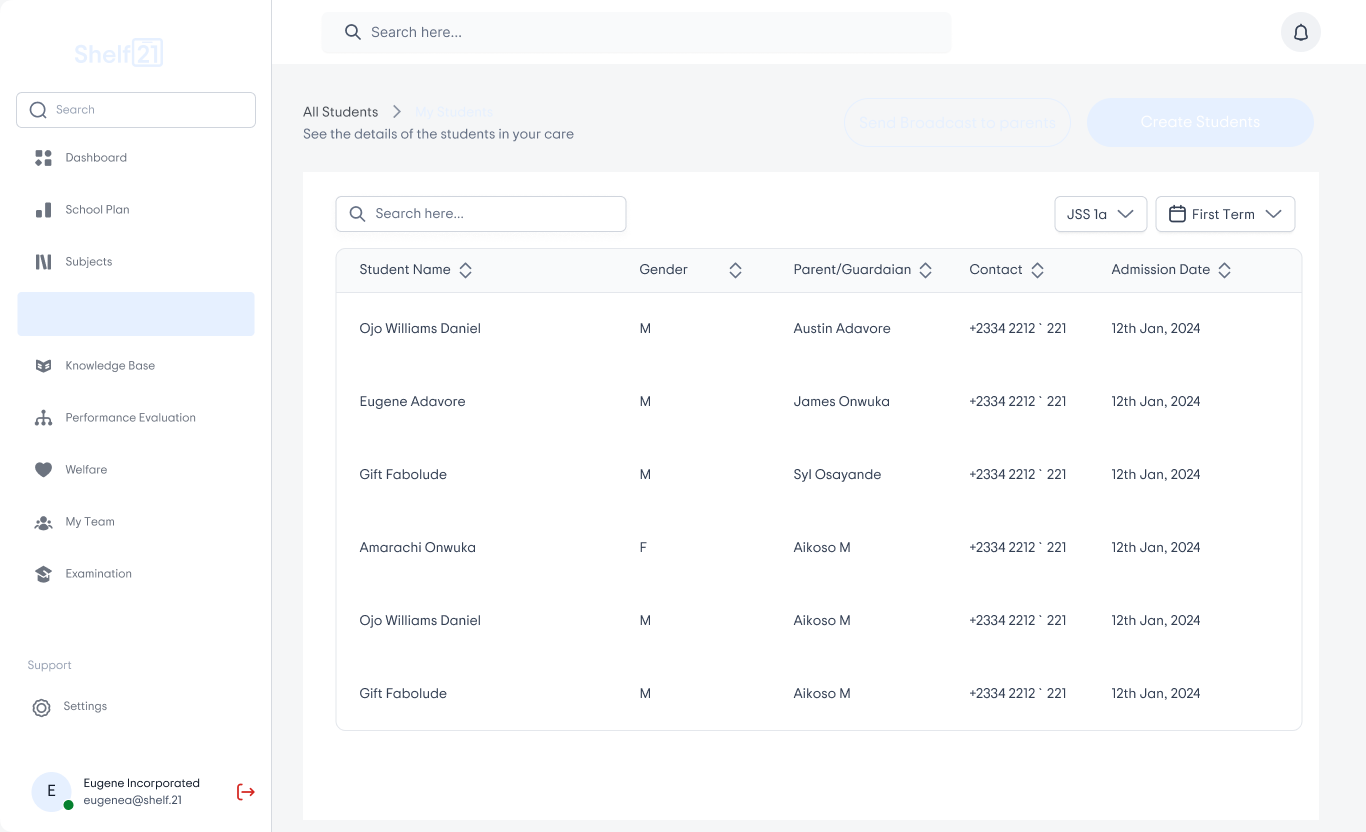
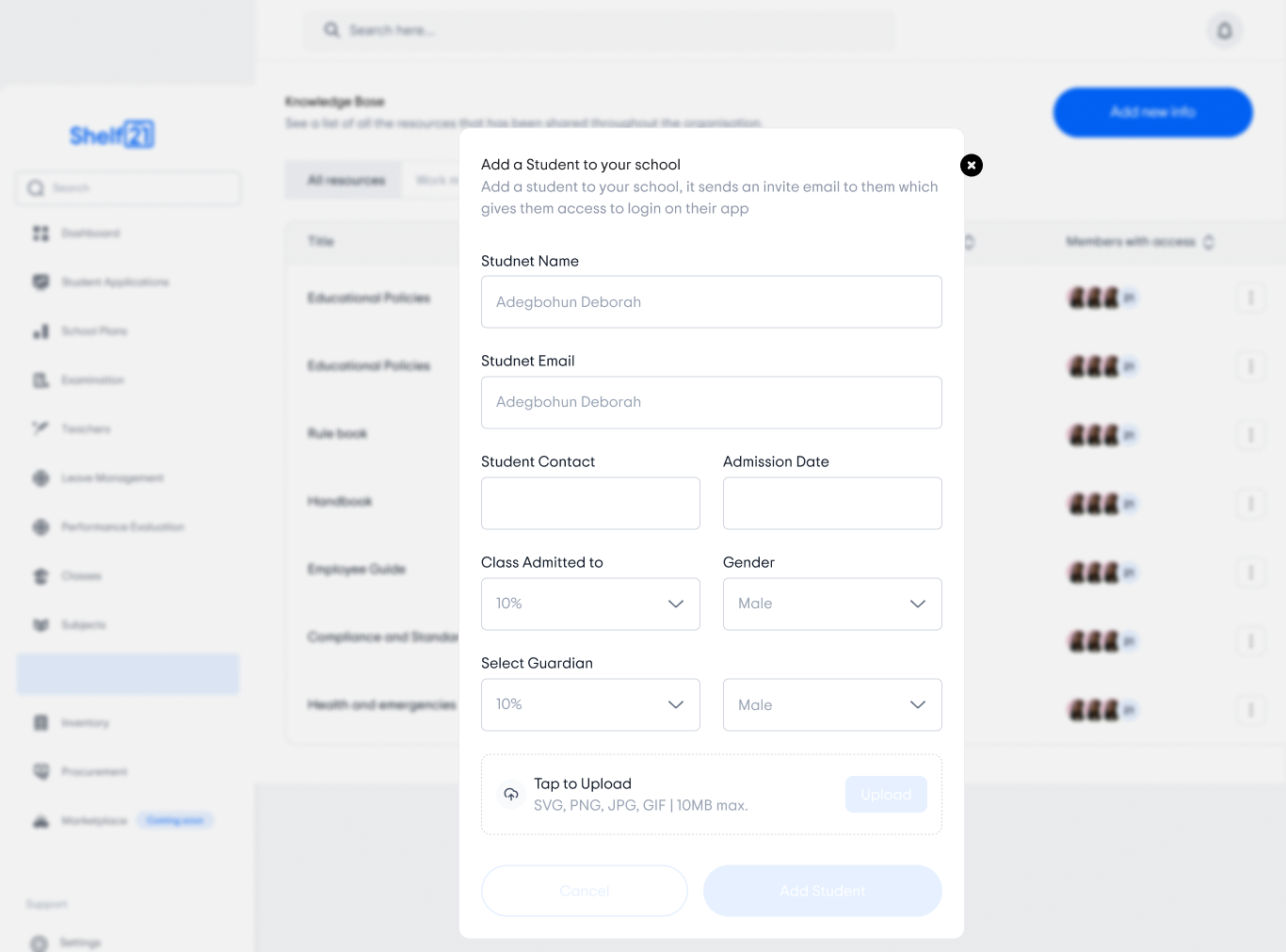
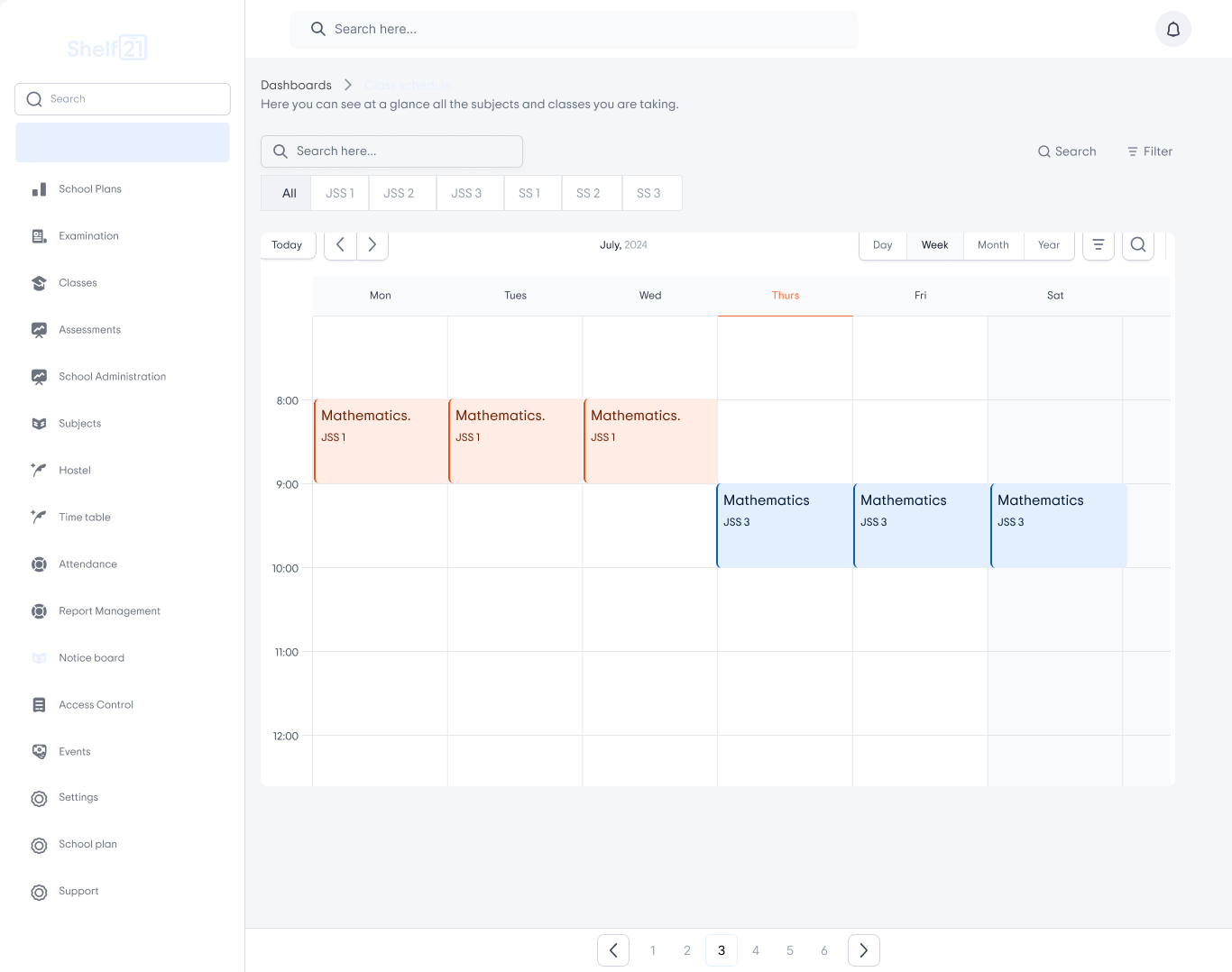
Teachers and admins were tracking student info on paper, and files were getting lost. Attendance, examinations, and assessments needed to move to digital, and invoicing for school fees and other payments needed a way to send and track them on time. Parents wanted to check their kids' performance on the go and pay school fees and other charges easily. Students wanted to submit assignments online and see their results and performance without waiting on someone else.
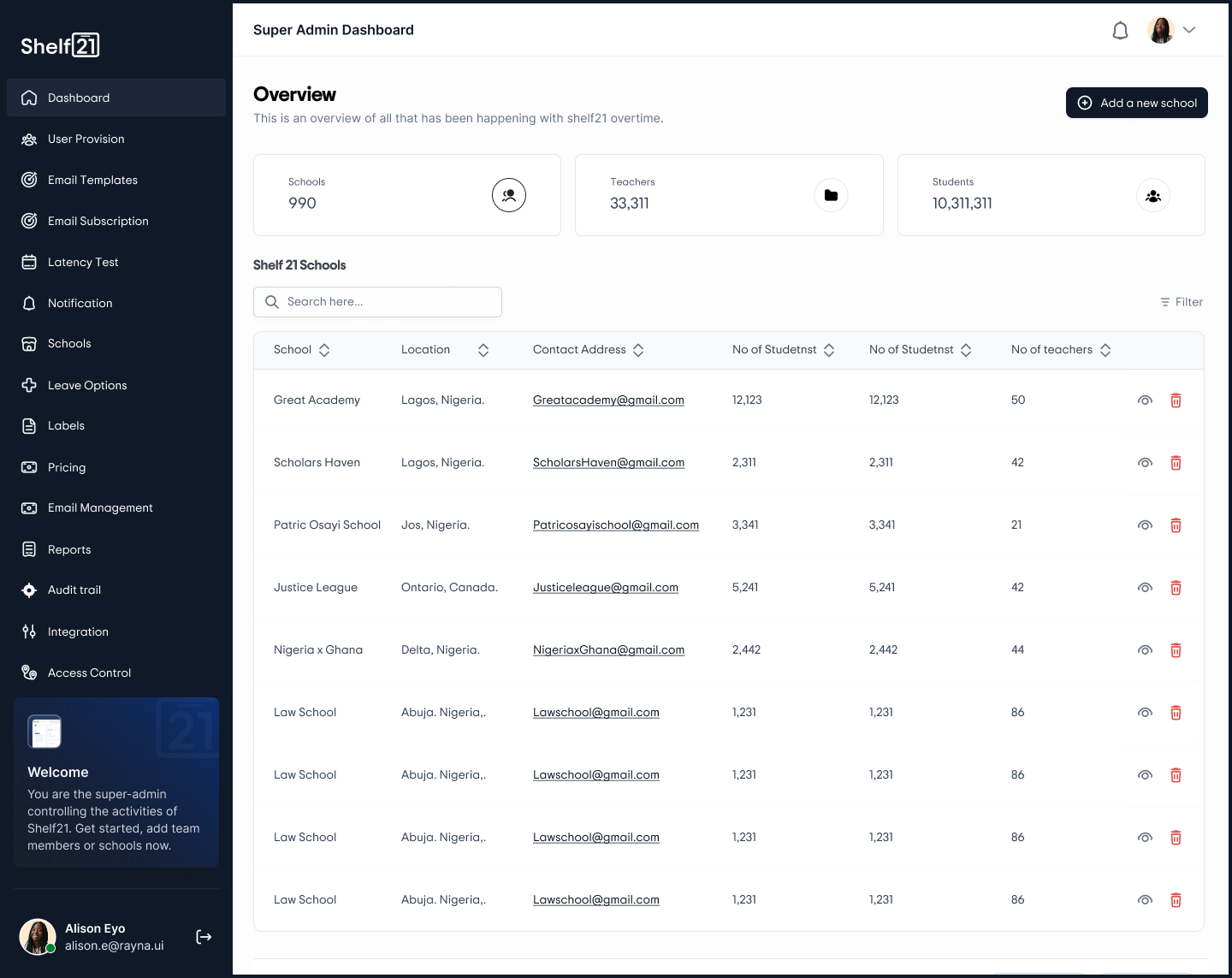
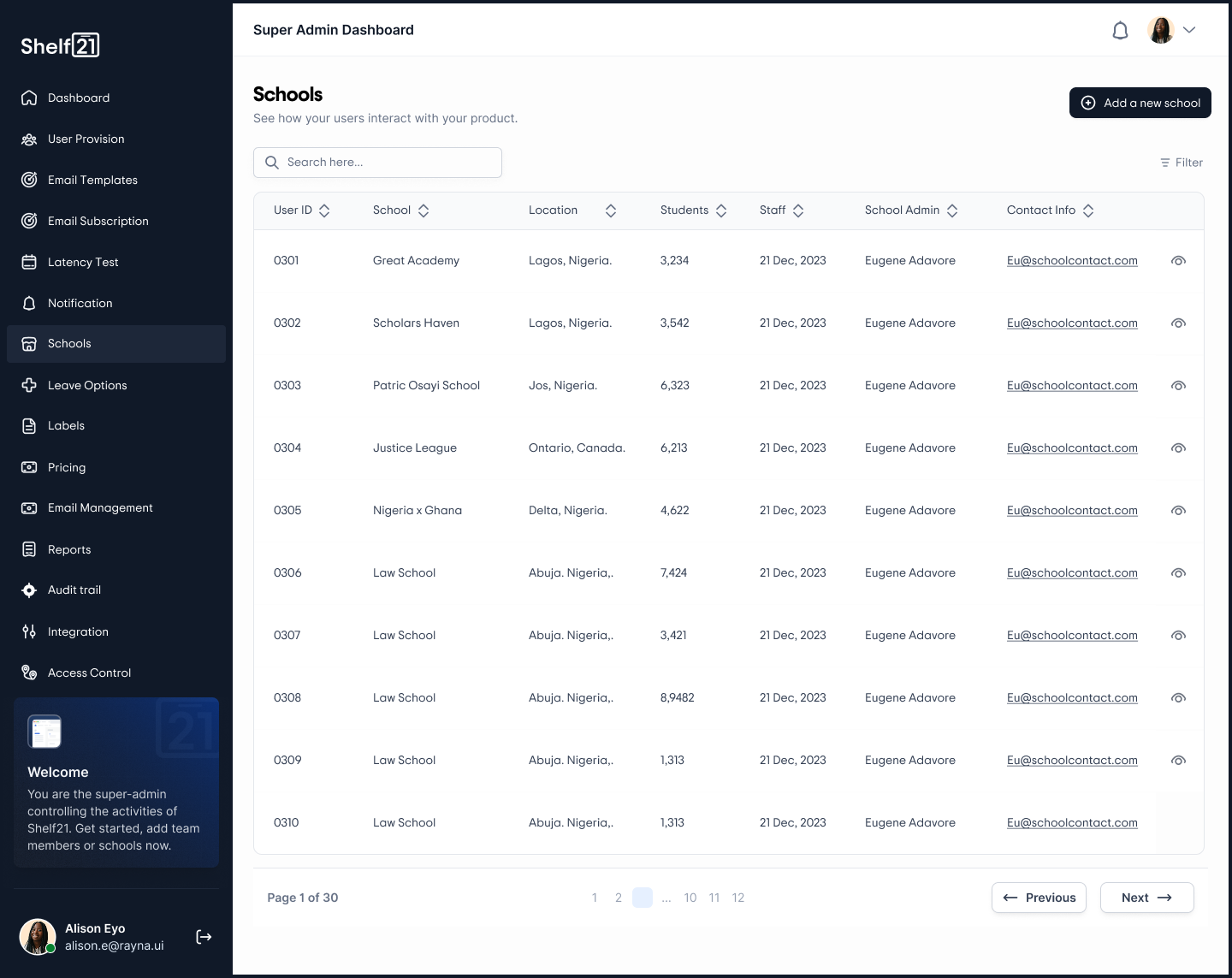
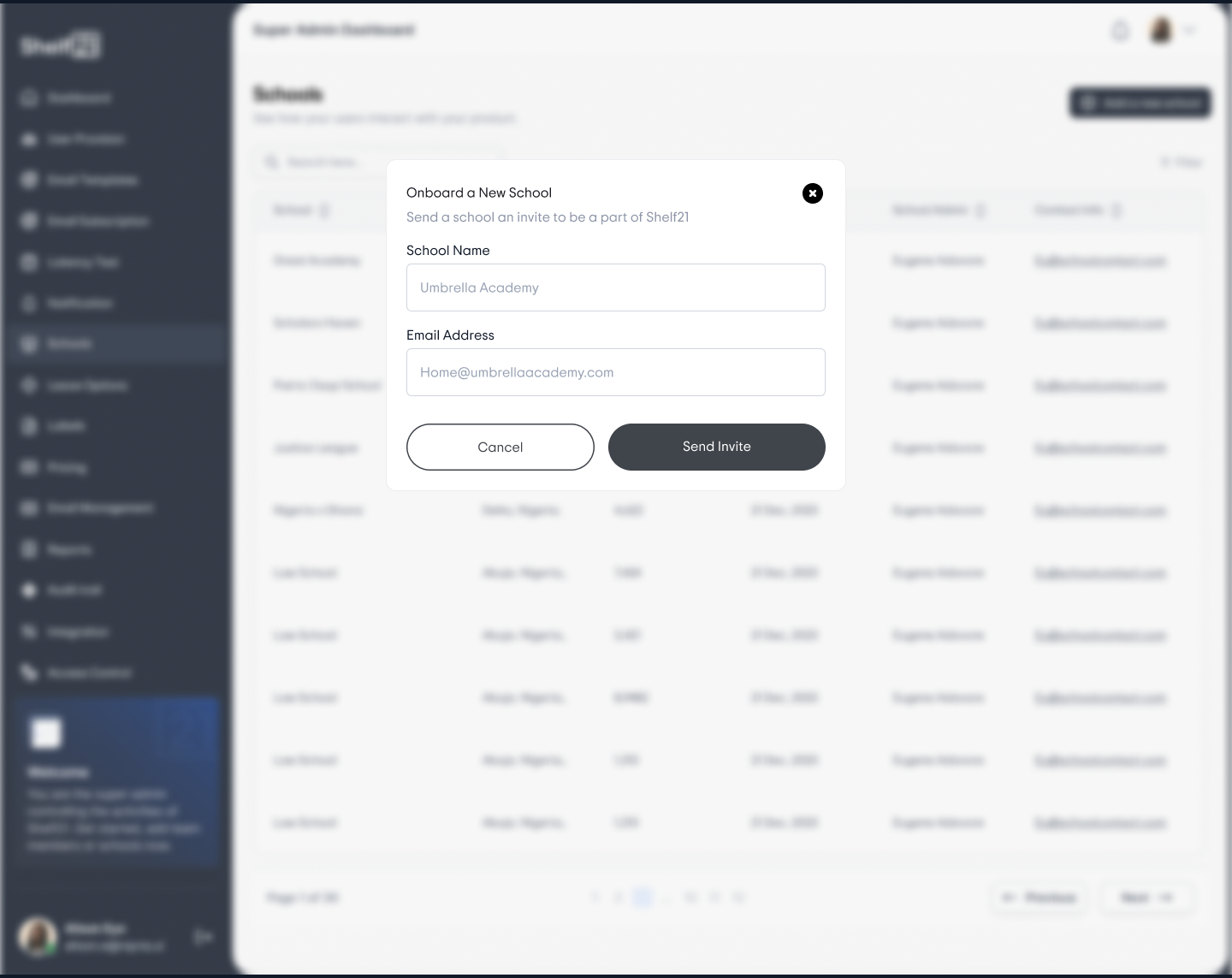
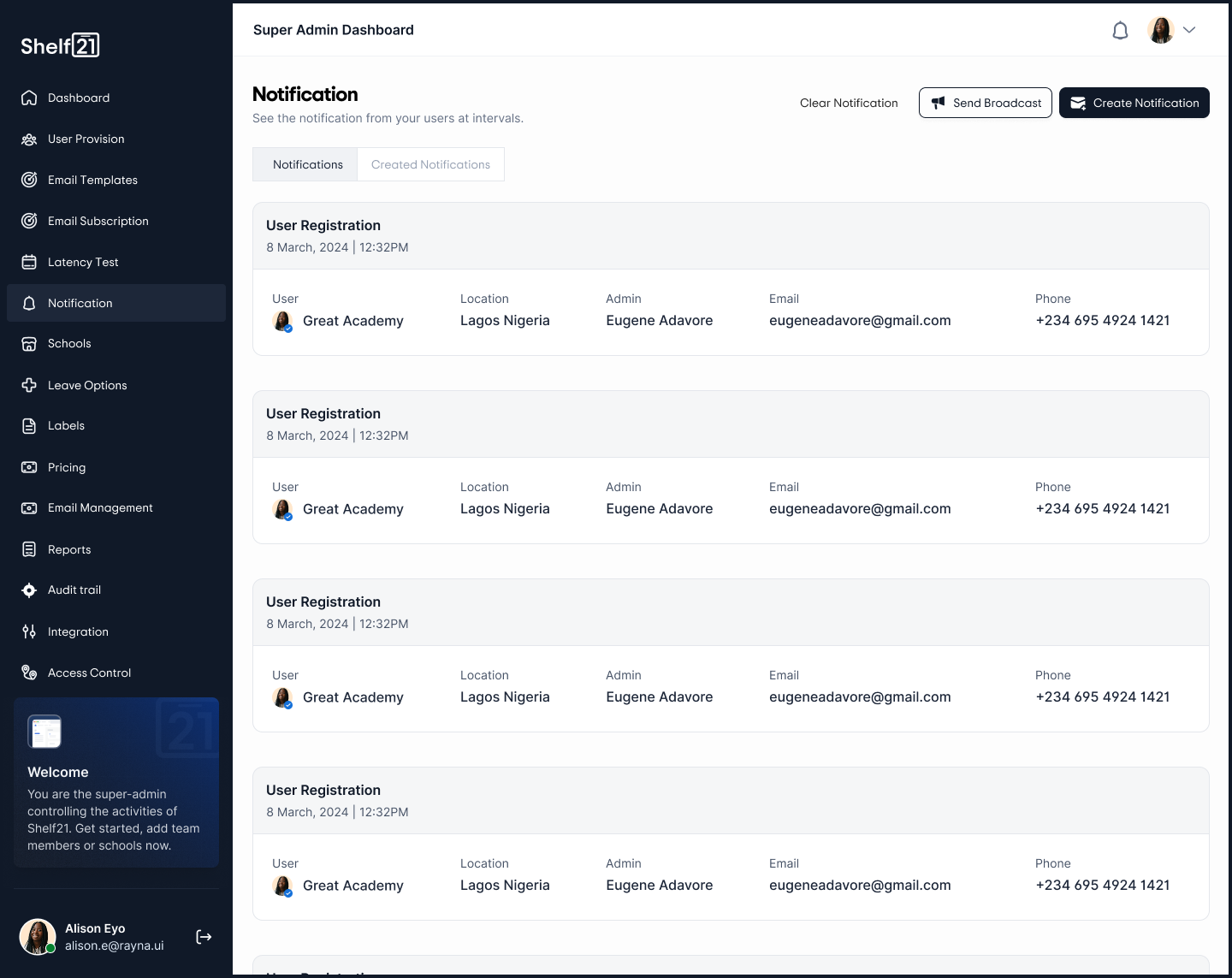
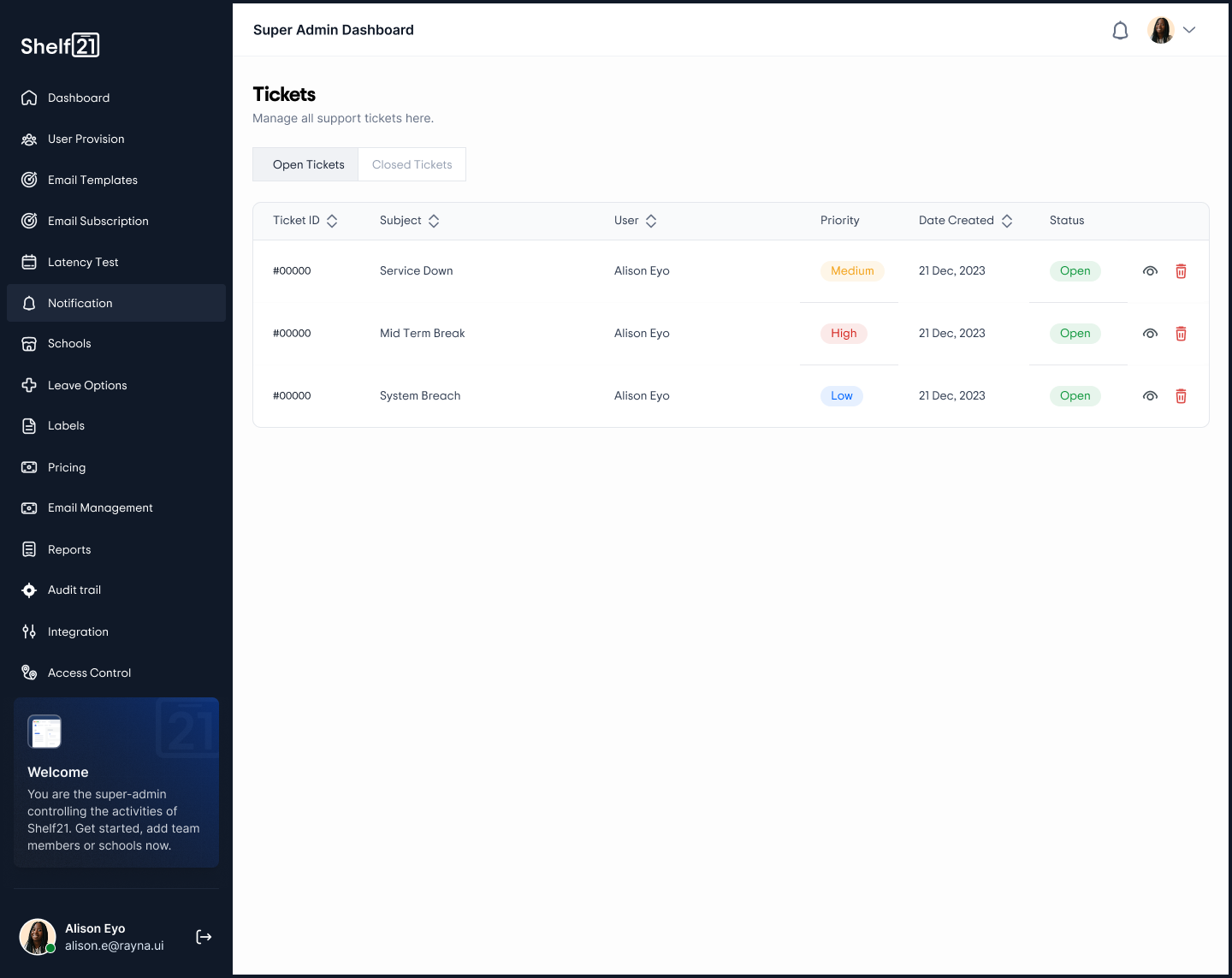
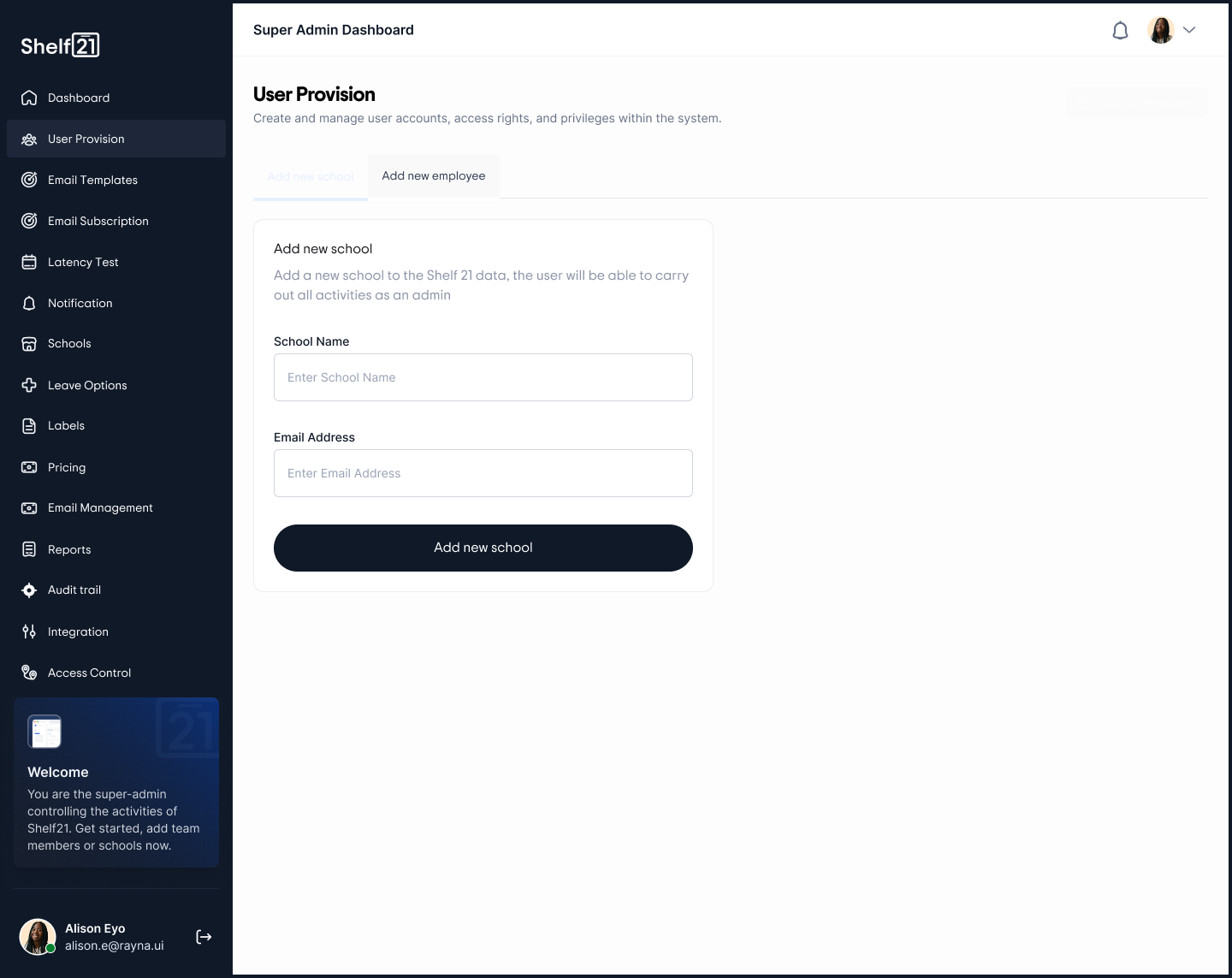
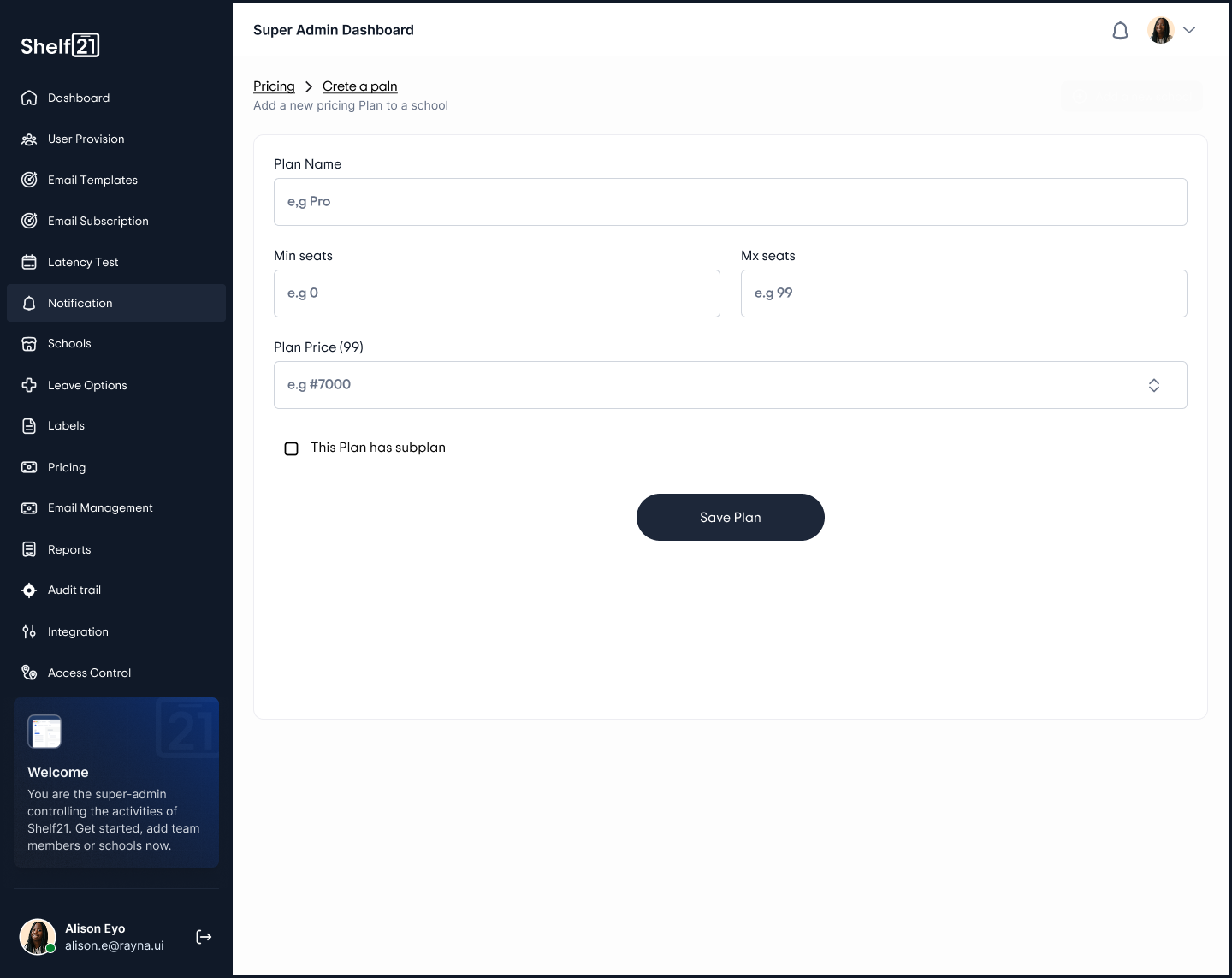
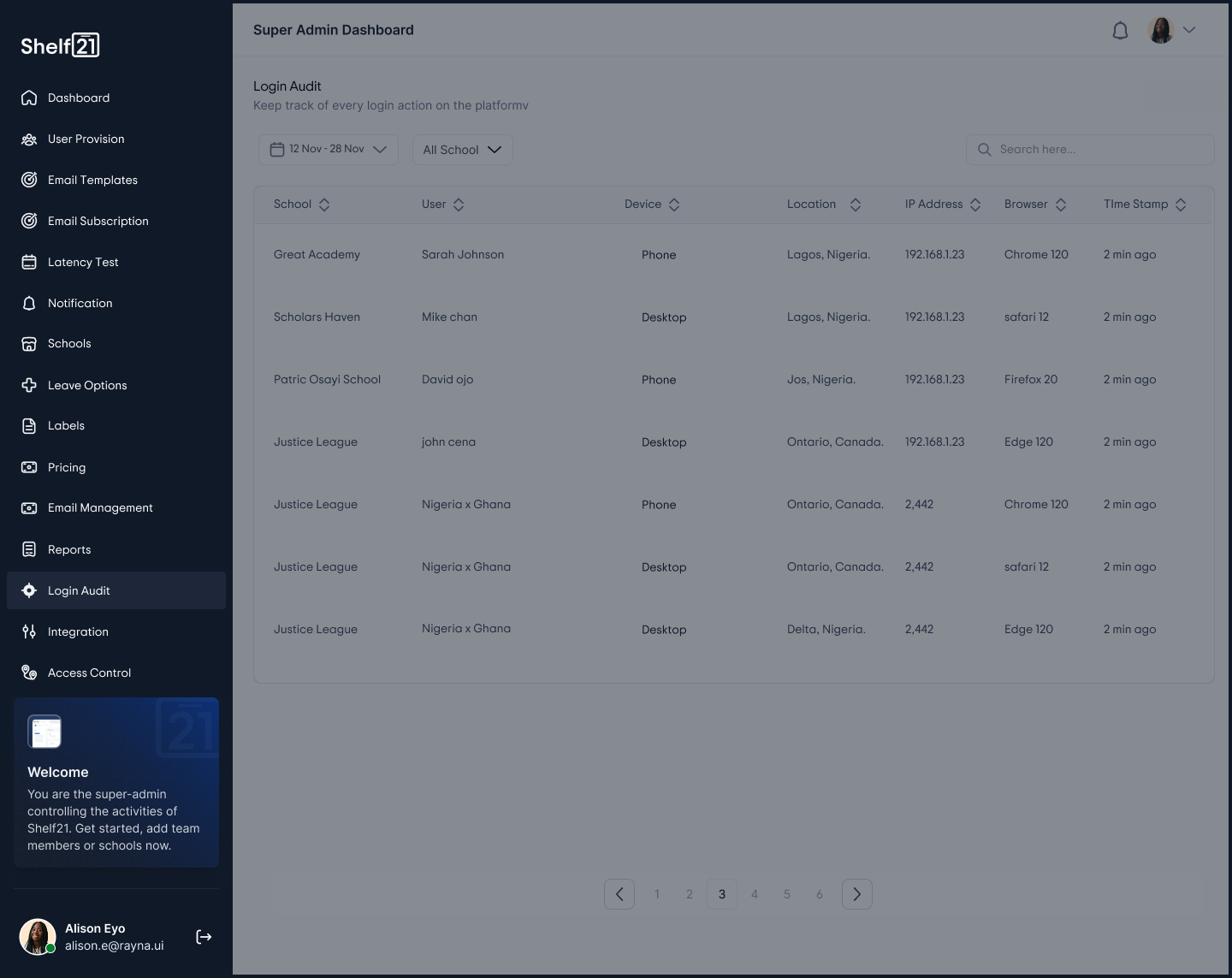
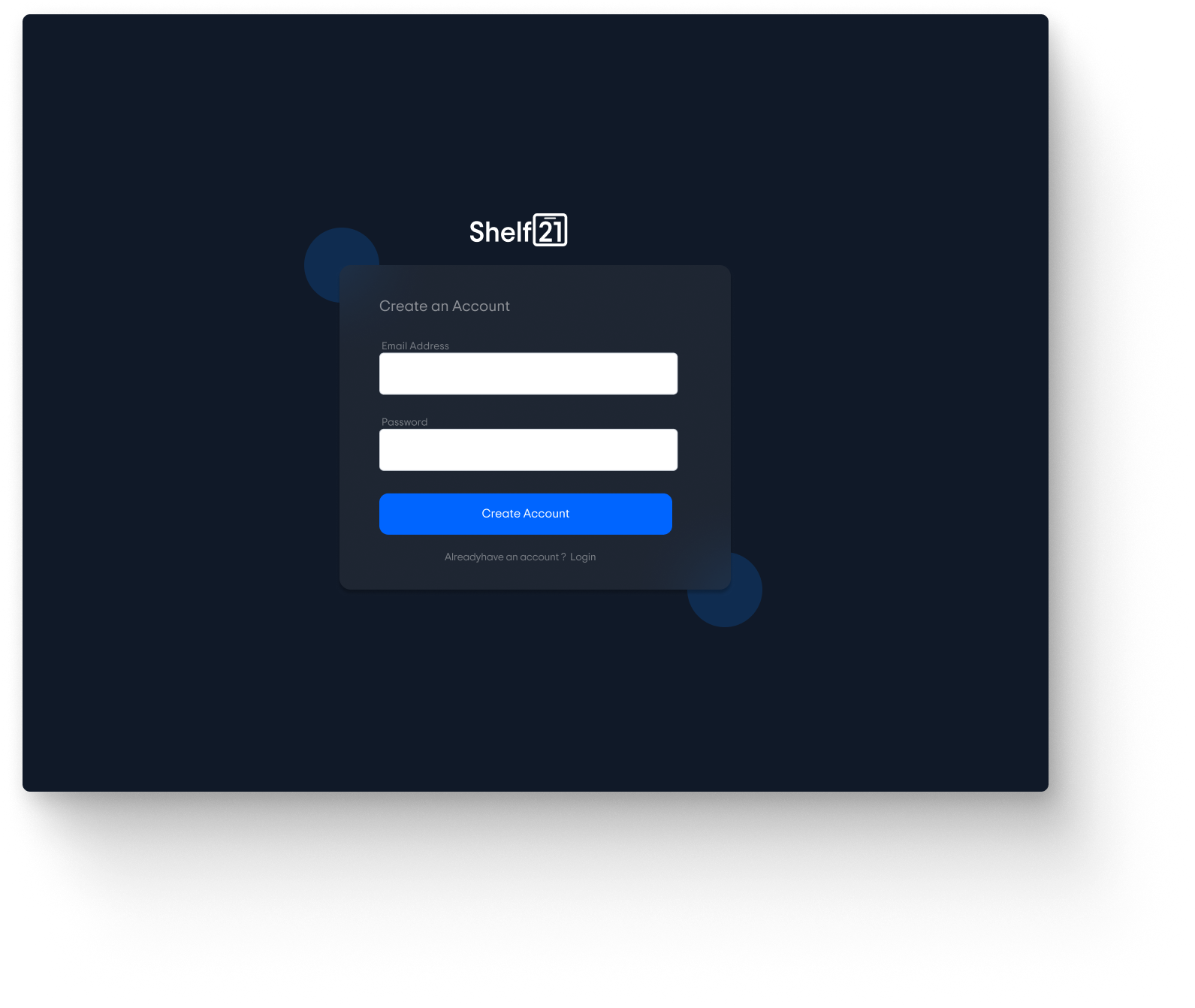
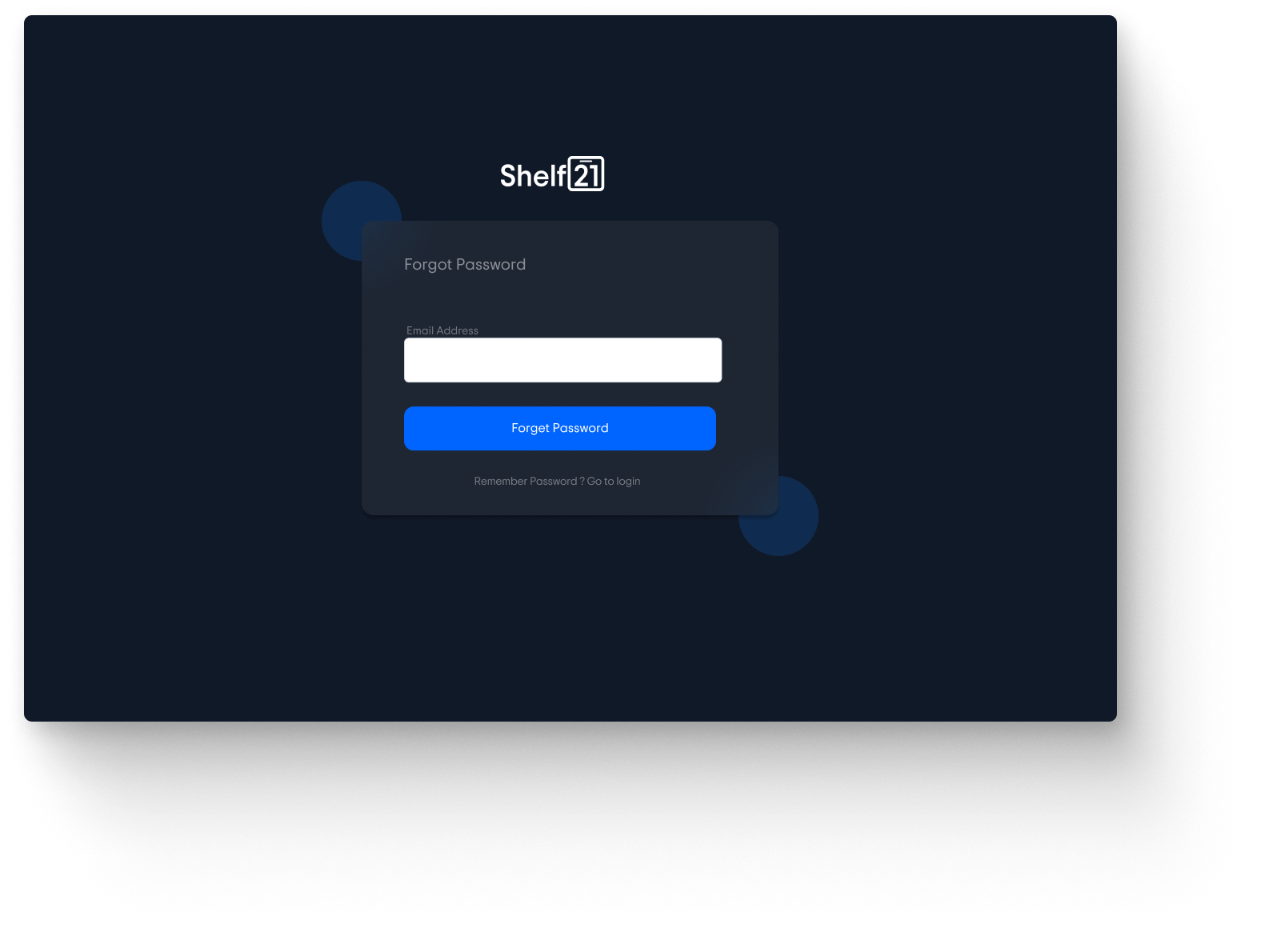
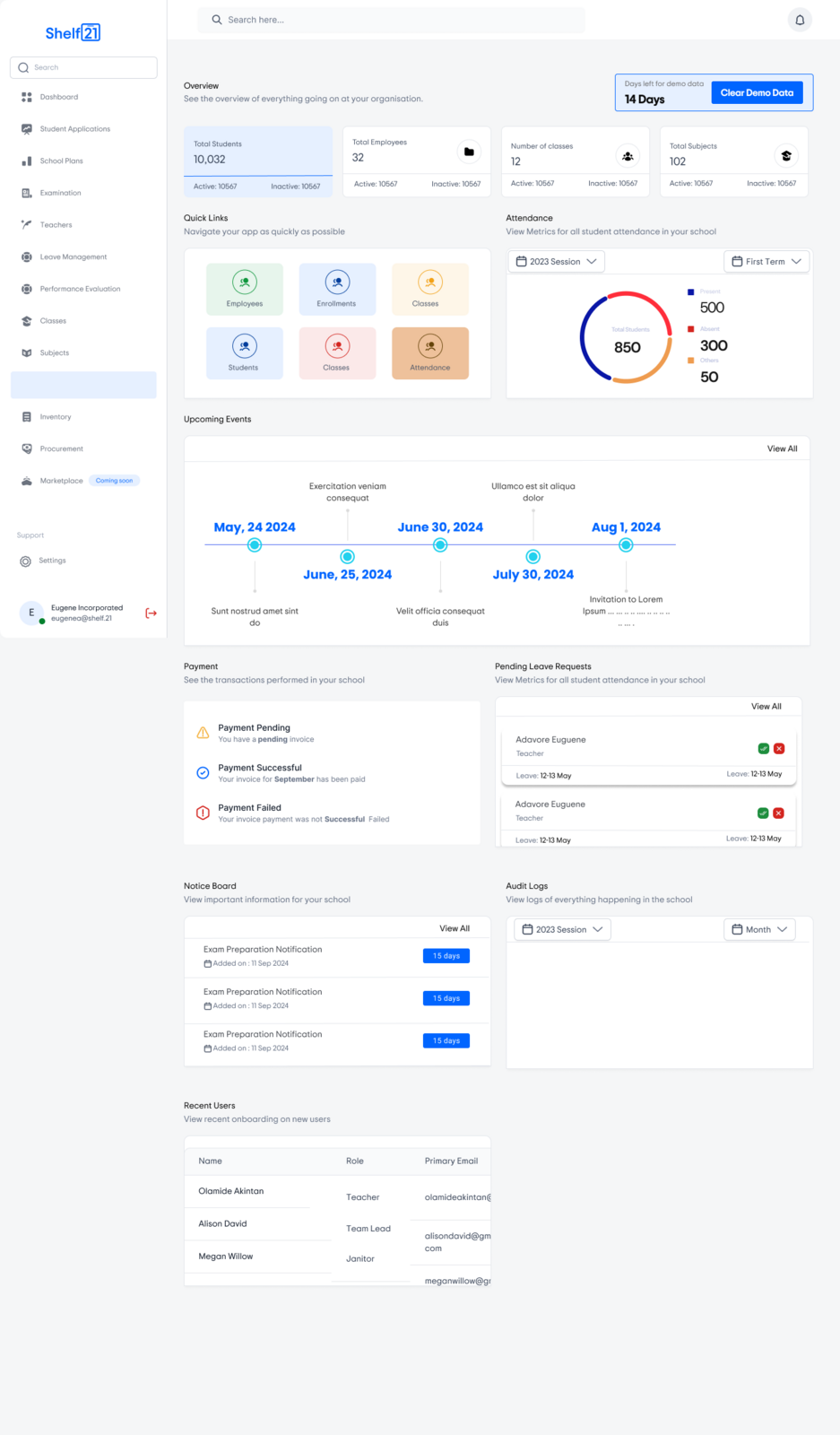
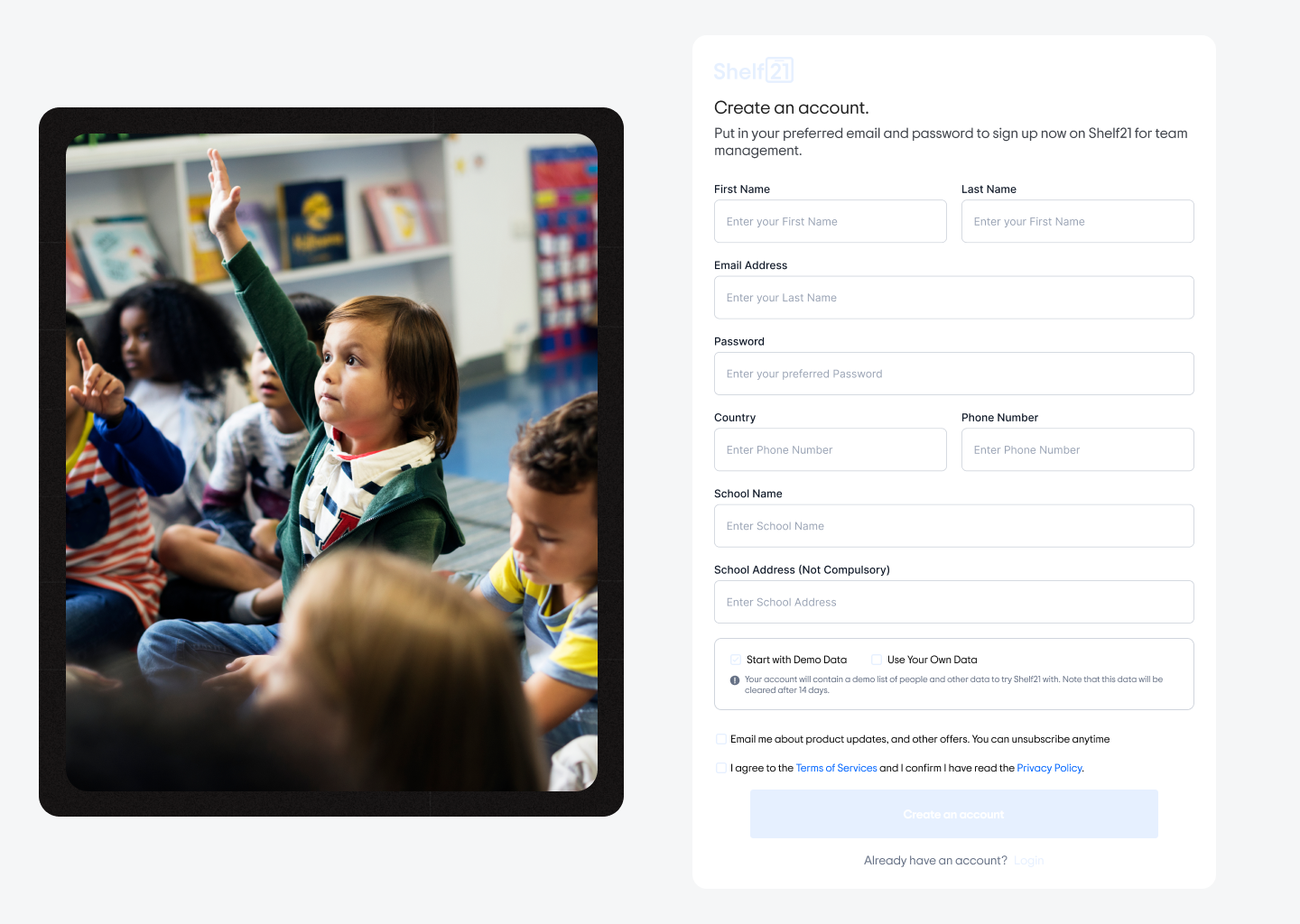
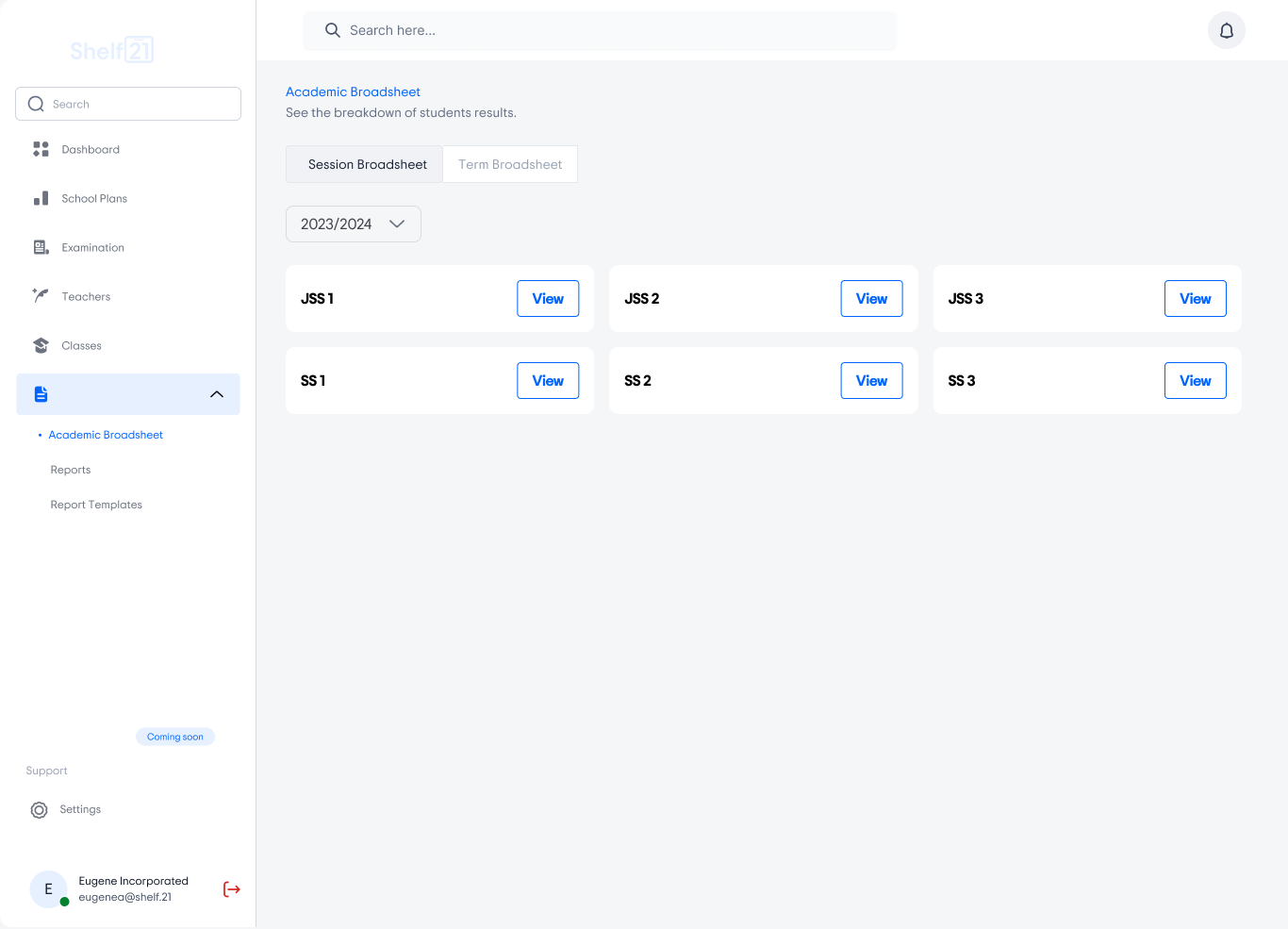
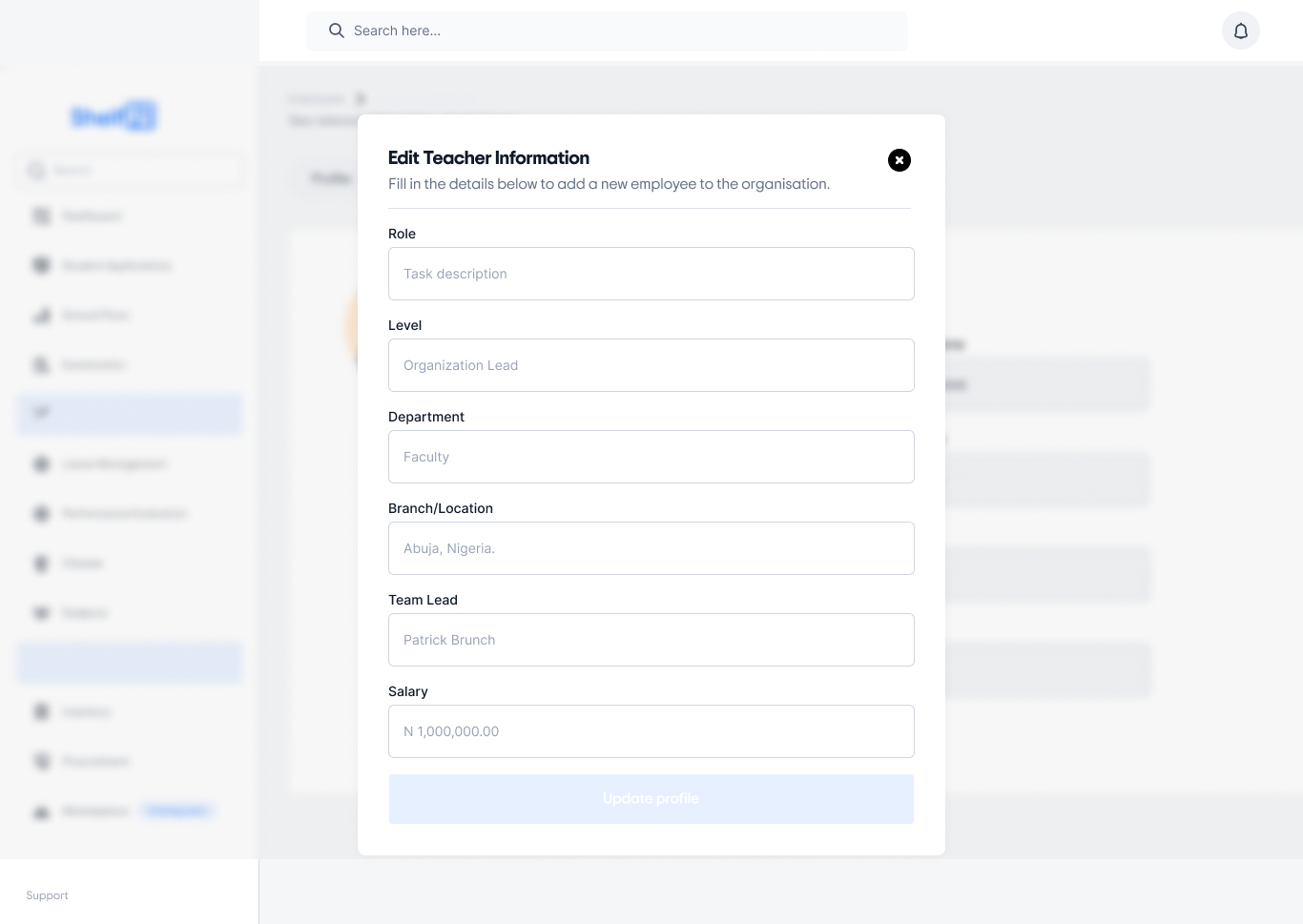
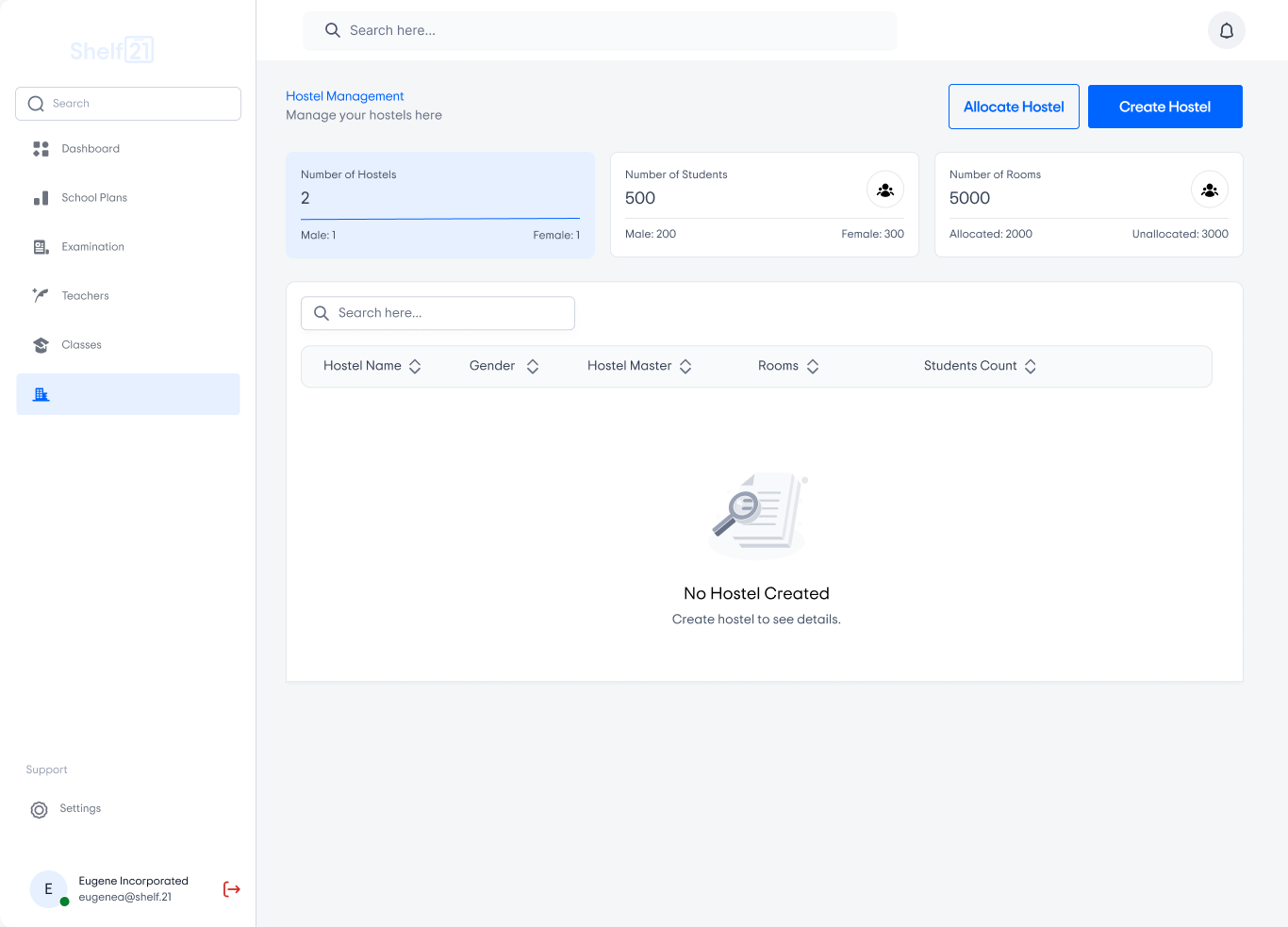
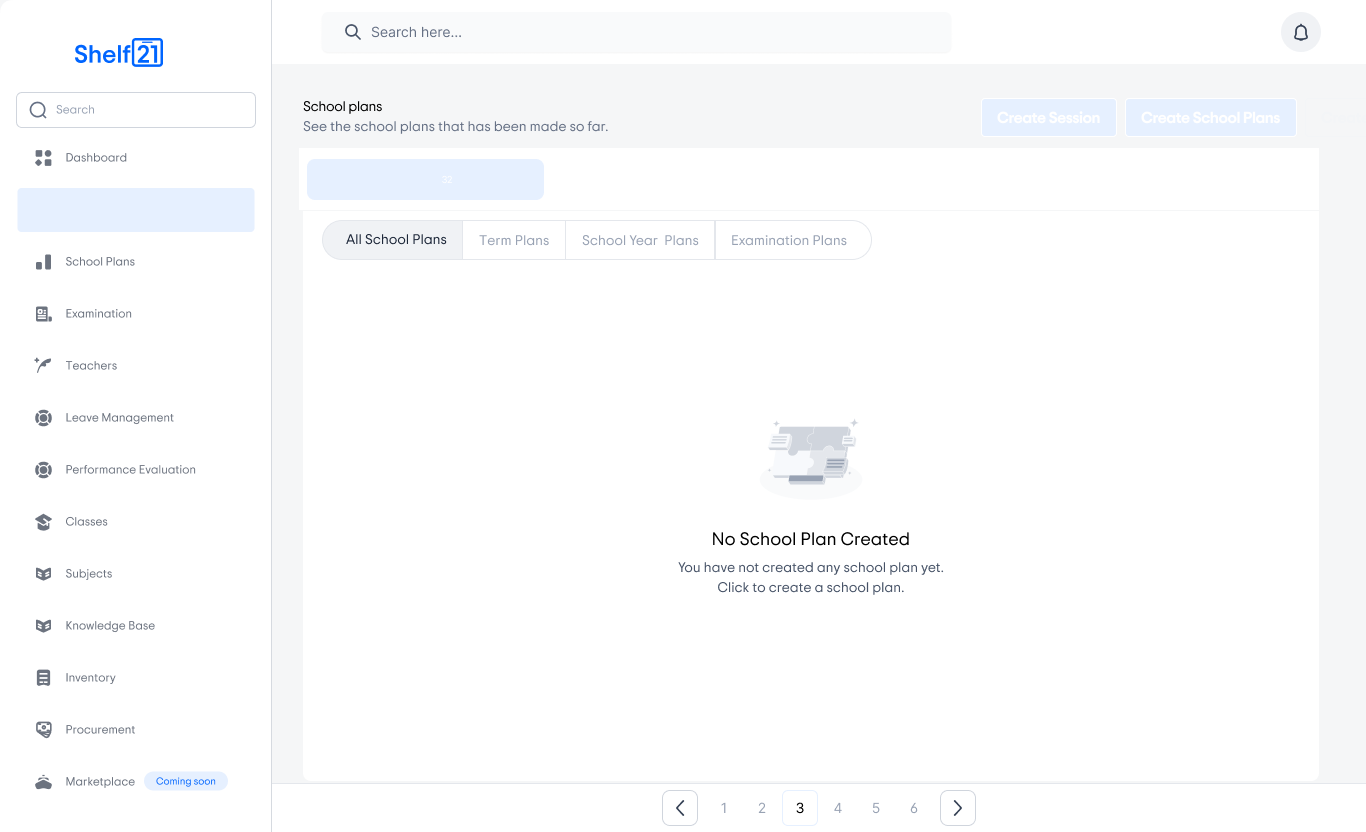
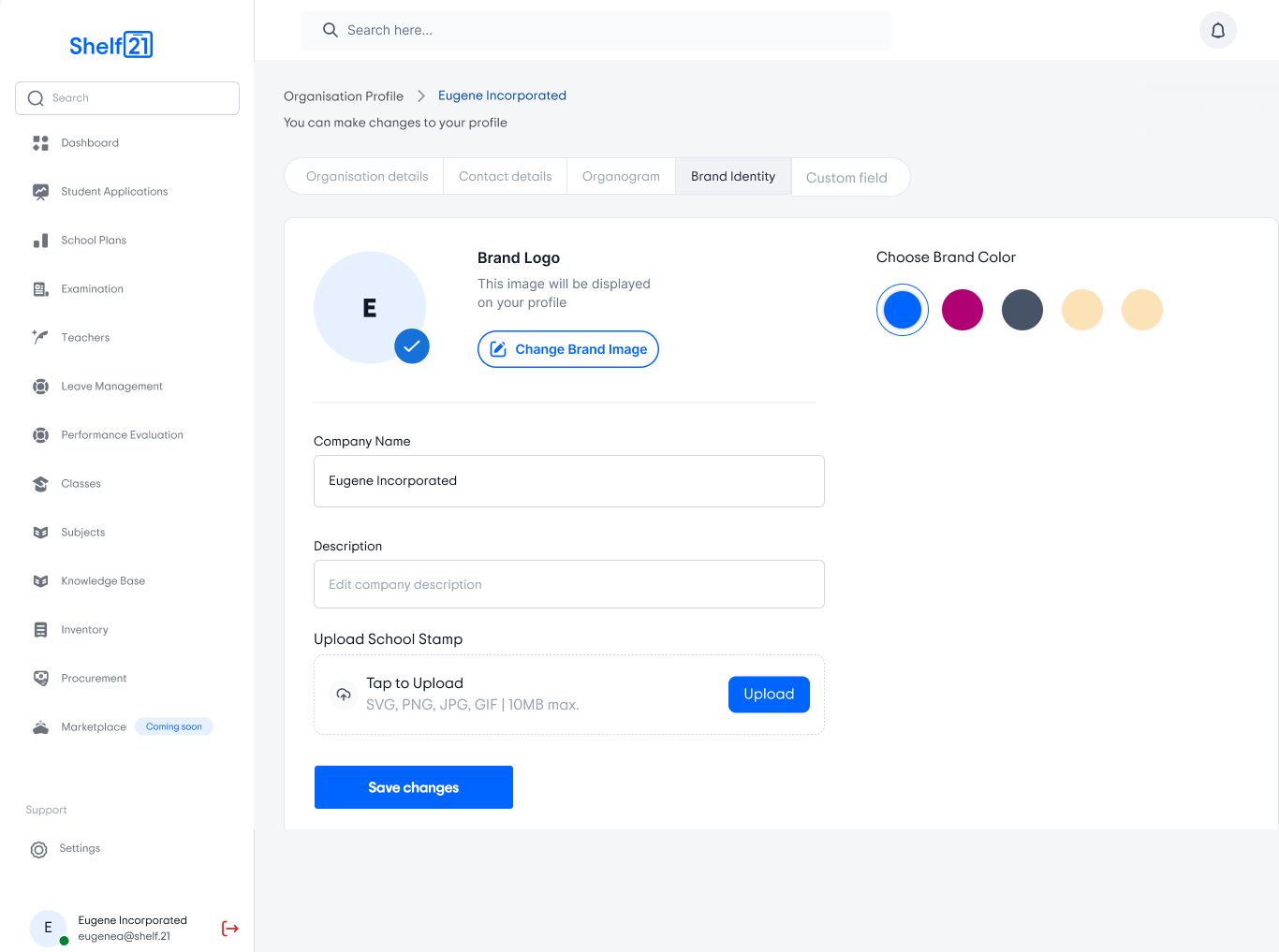
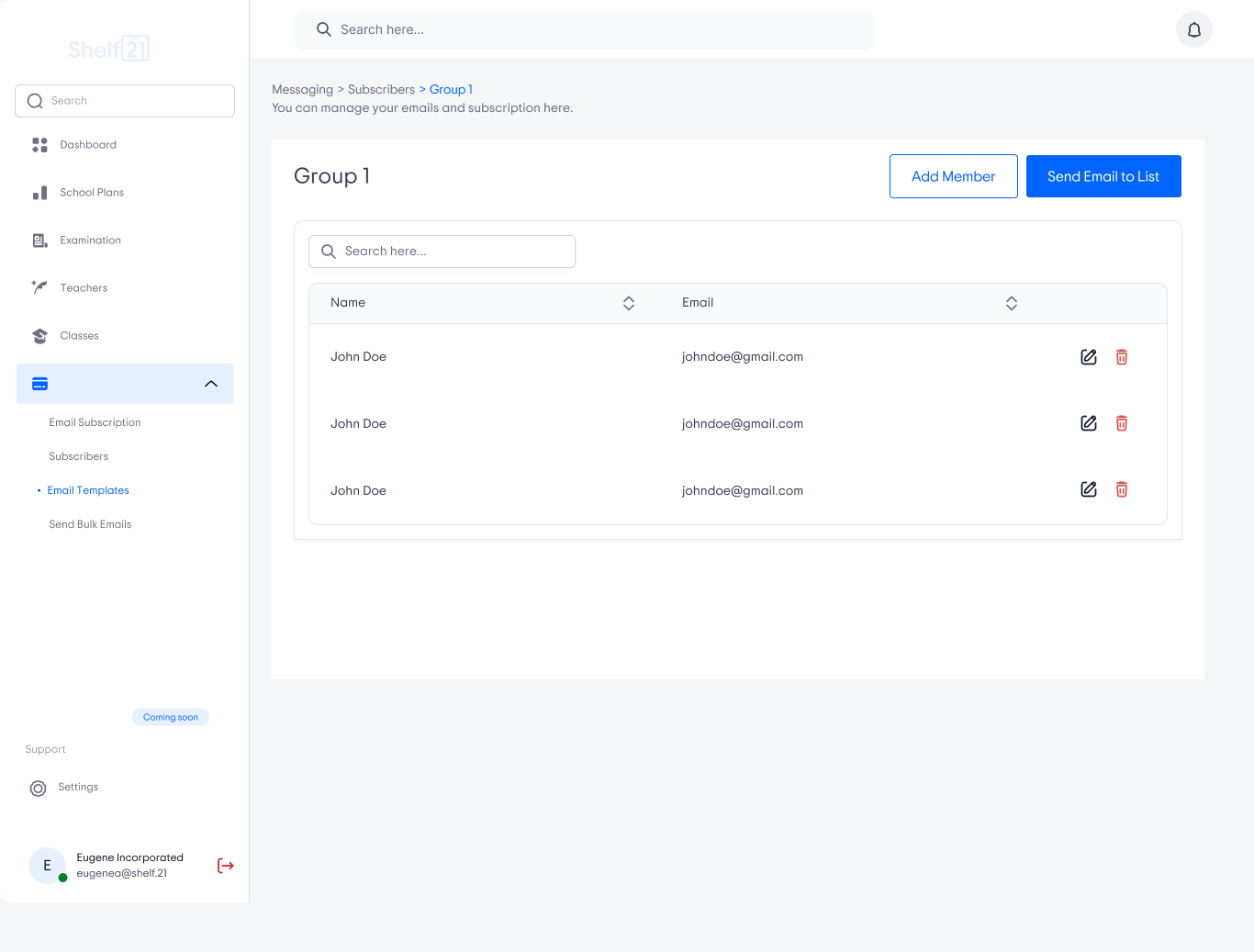
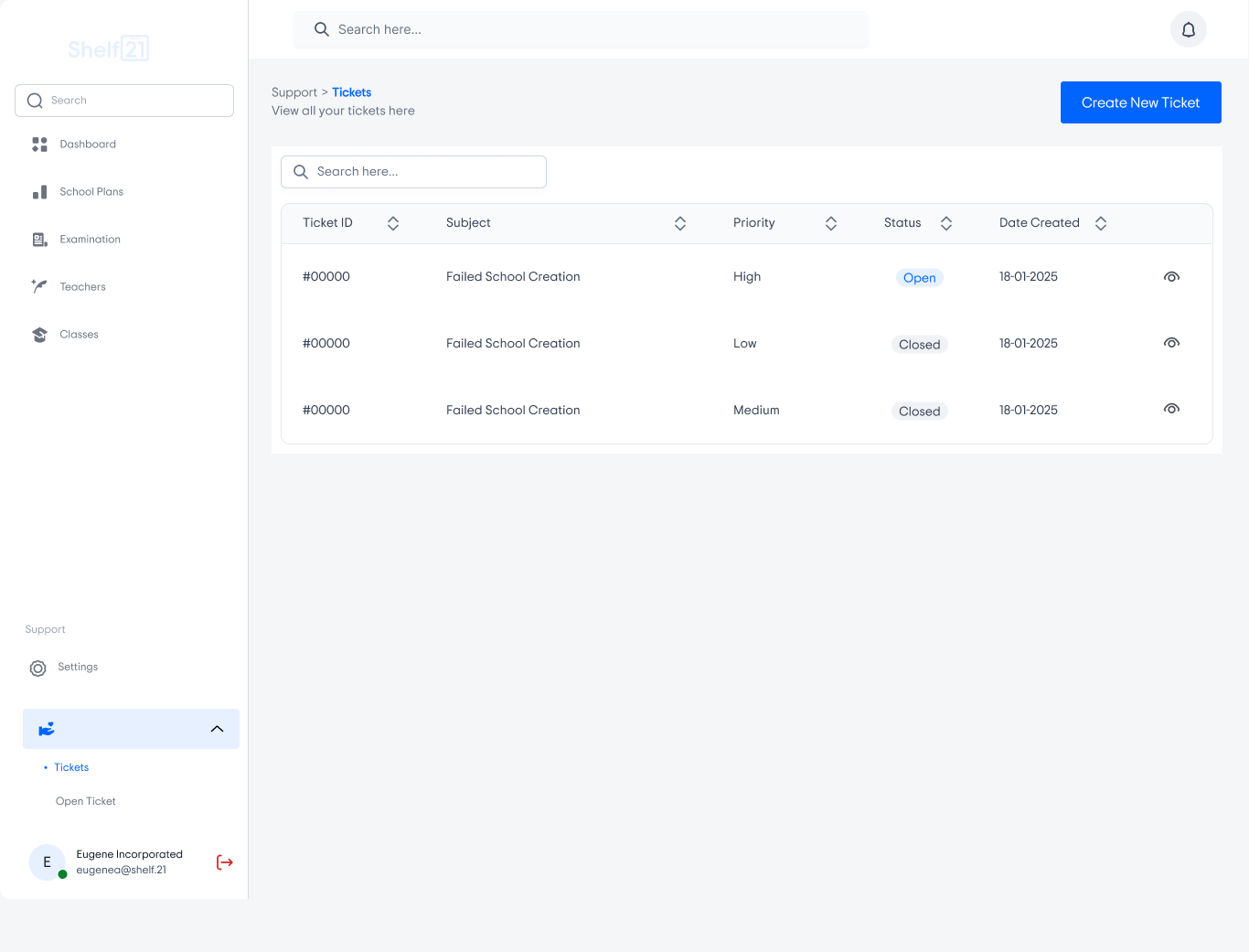
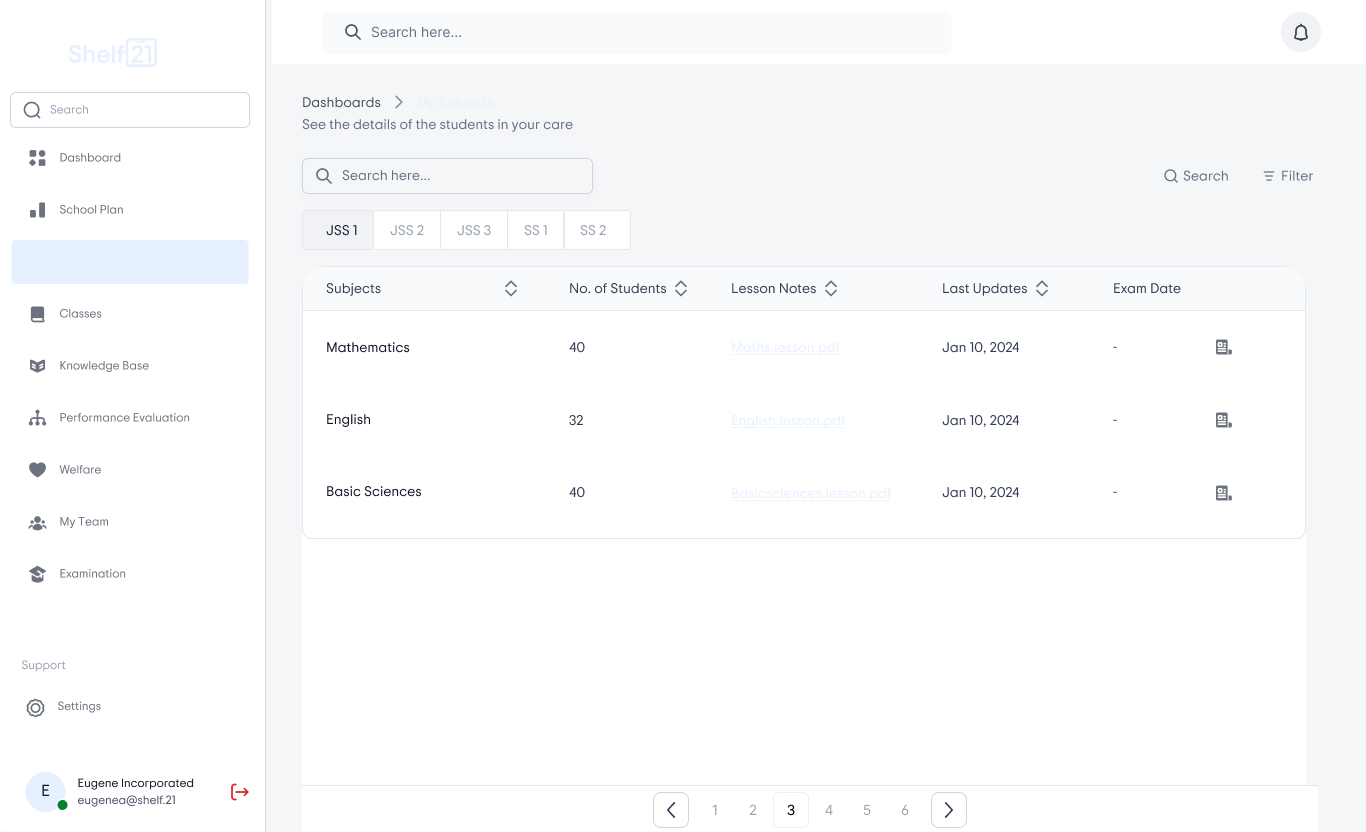
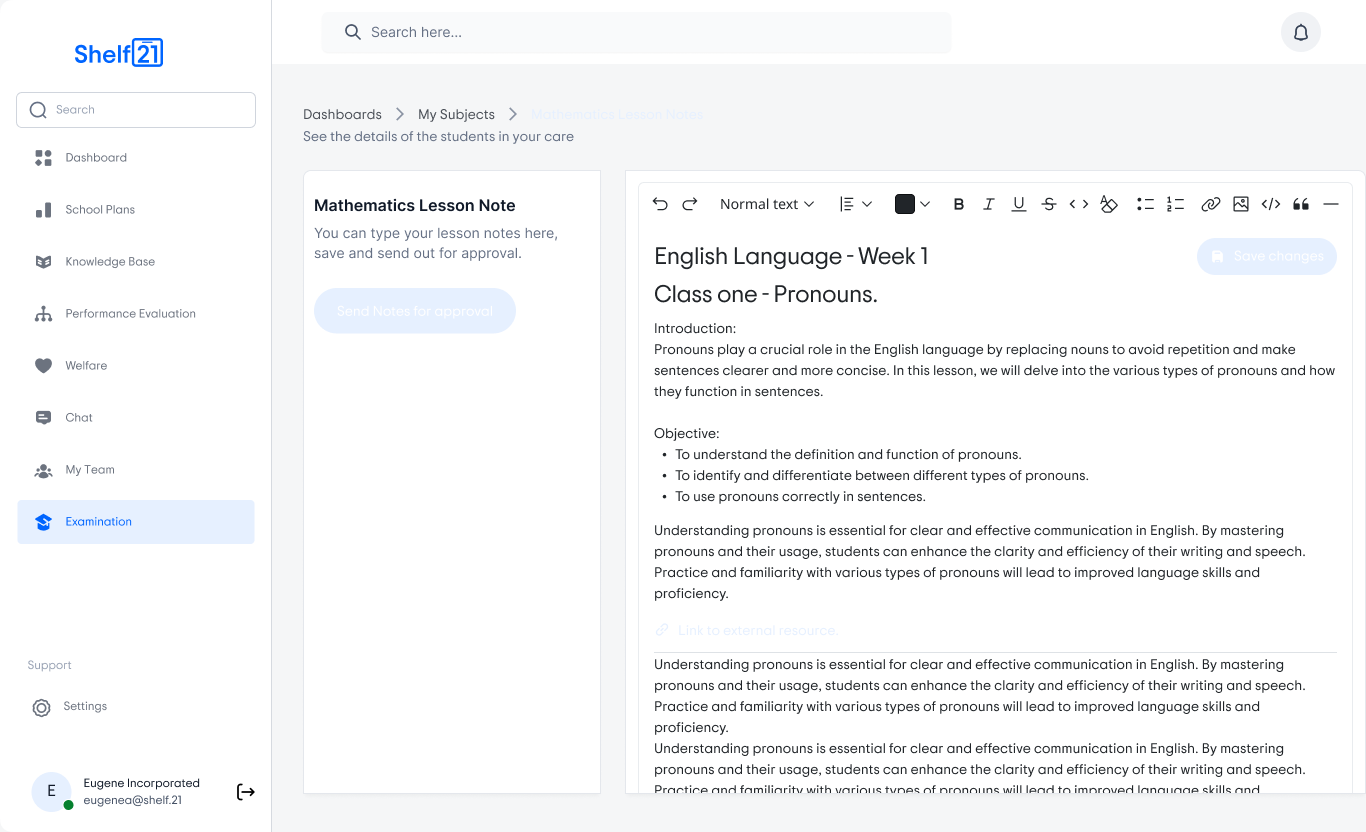
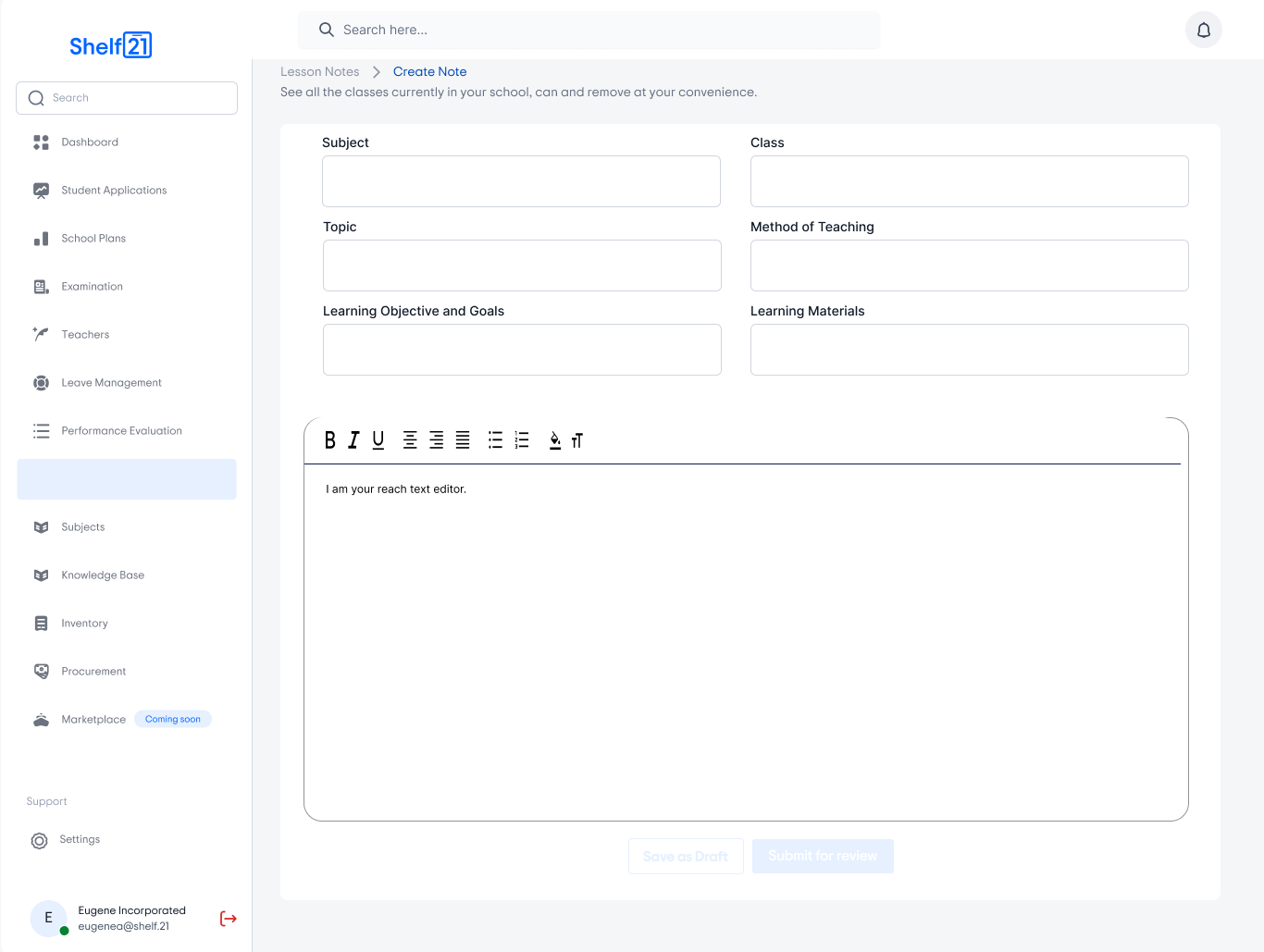
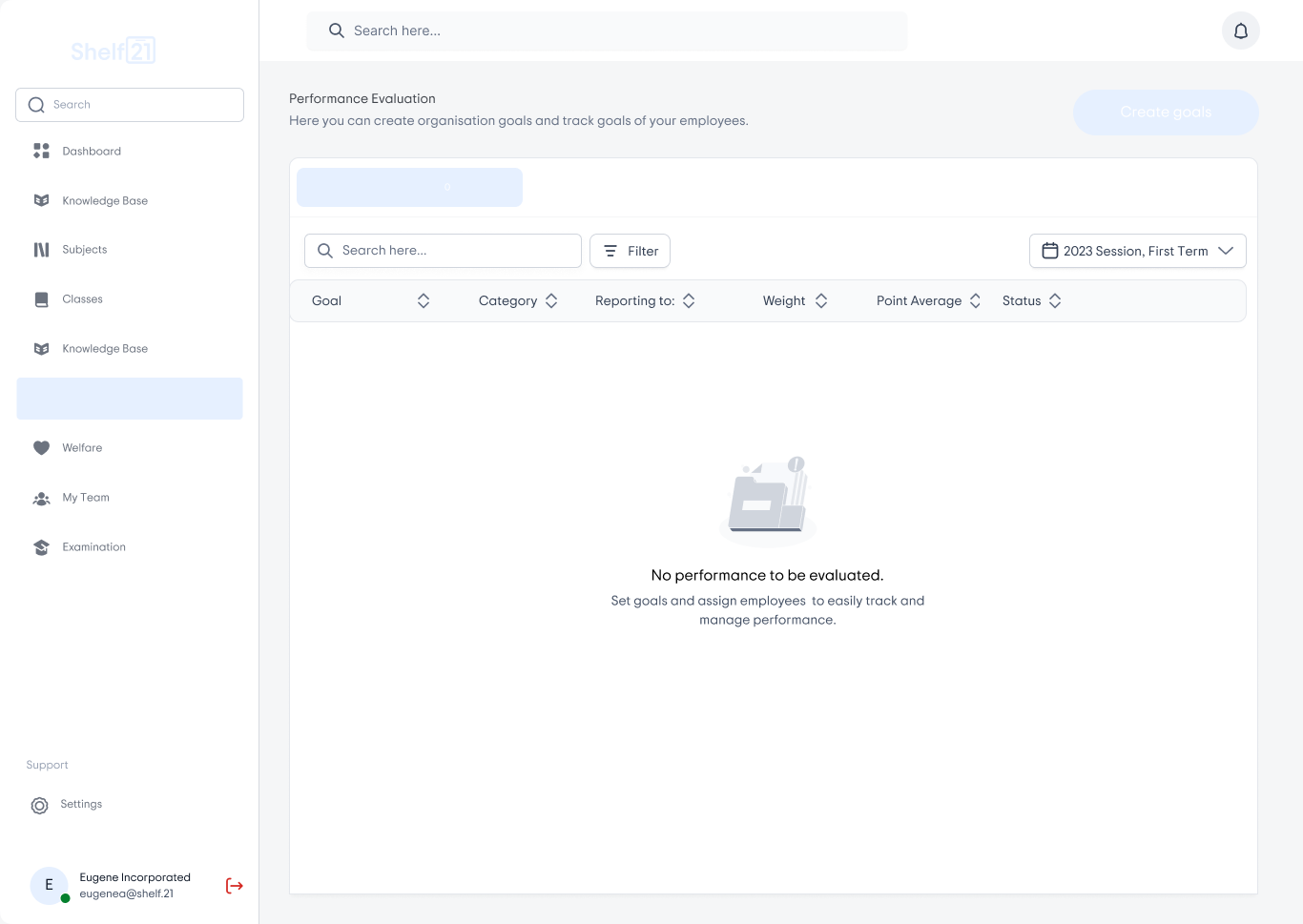
Screens grouped by role: Super Admin (platform-wide, across schools), School Admin (a single school's operations), Teacher, and Parent-facing touchpoints.


As Product Designer at Shelf21, I worked alongside a co-designer and engineers to bring the platform to life. I led research with educators, parents, and admins, then translated that into role-specific wireframes and prototypes.
I also built the scalable design system the engineering team built against, collaborated closely with developers through implementation, and designed the pitch deck that helped secure stakeholder support for the project.
Worked alongside a co-designer and engineers throughout implementation. The shared design system cut design-to-development turnaround by 24%.
Shelf21 sharpened how I think about design as a lever for team velocity, not just user experience — a well-structured design system cut design-to-development turnaround by 24%, which mattered to stakeholders as much as visual polish.
Working with a co-designer and an engineering team also taught me how much a clear stakeholder narrative — in this case, the pitch deck — can determine whether solid design work actually gets the resources to ship. If I were revisiting it, I'd build in more structure earlier for how the design system evolves as new roles and use cases get added.