Fundraising in Africa is full of challenges — people in need often struggle to connect with willing donors, feel ashamed to ask for help, and donors fear being misled. ELPX was built to solve this with a transparent, inclusive, and accessible crowdfunding platform.
Visit Live Site
We summarized the core barriers as CAMTA: Connection, Advocacy, Motivation, Trust, Ability.
Difficulty connecting donors and fundraisers, shame or fear in asking for help, lack of incentive for donors to give, trust concerns over misuse of funds, and financial constraints on donors all compounded to keep fundraising inaccessible for the people who needed it most.
We spoke mostly with fundraisers and people involved in running or supporting fundraising campaigns, trying to understand where the biggest challenges were around getting campaigns seen, building trust, and getting people to actually contribute.
Those conversations surfaced recurring pain points around visibility, credibility, and motivation to give, the raw material that later became the CAMTA framework.
The workshop was a synthesis and co-creation exercise. We brought the interview findings together, looked for recurring patterns and pain points, and worked through them as a team.
CAMTA (Connection, Advocacy, Motivation, Trust, Ability) came out of that process, our way of turning what we'd learned from research into a framework that could guide product and design decisions.
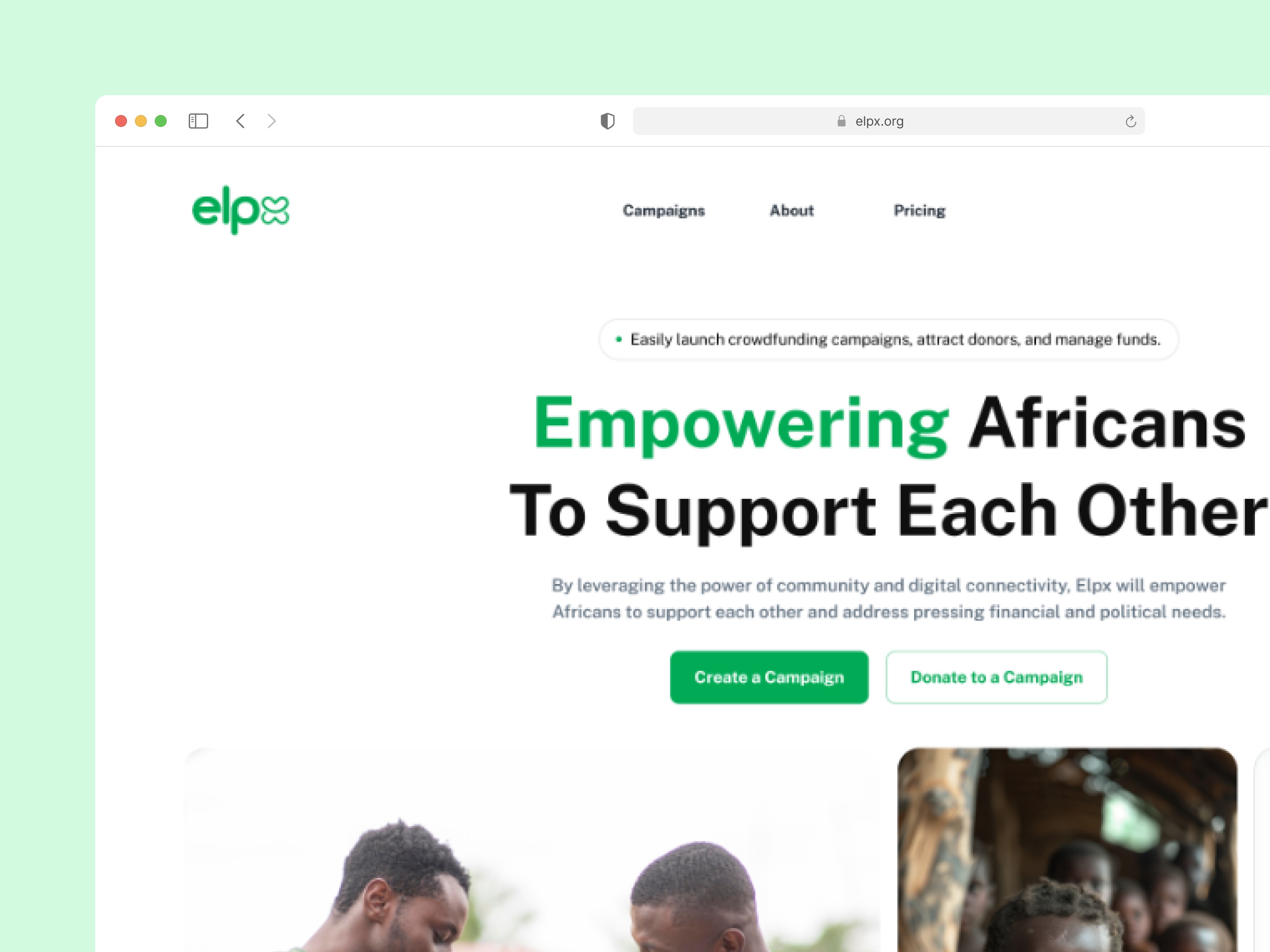
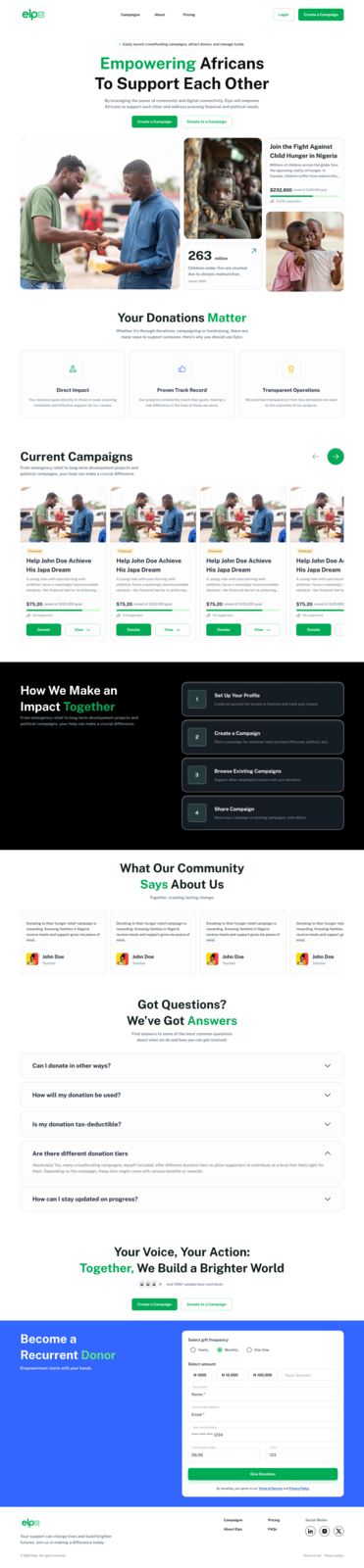
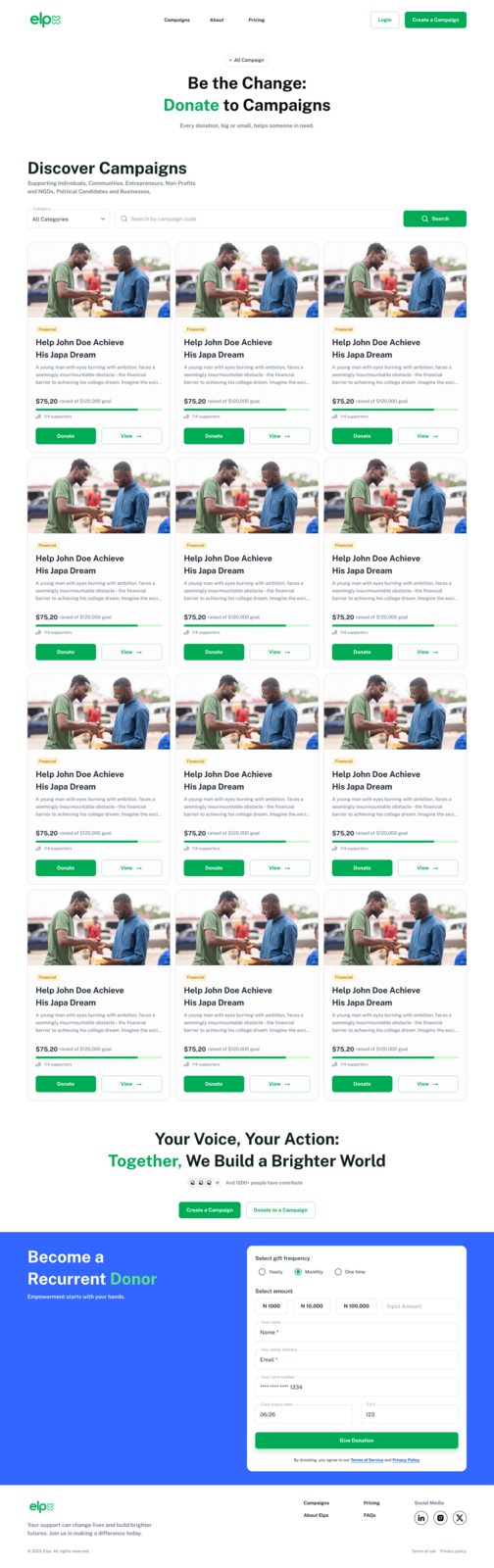
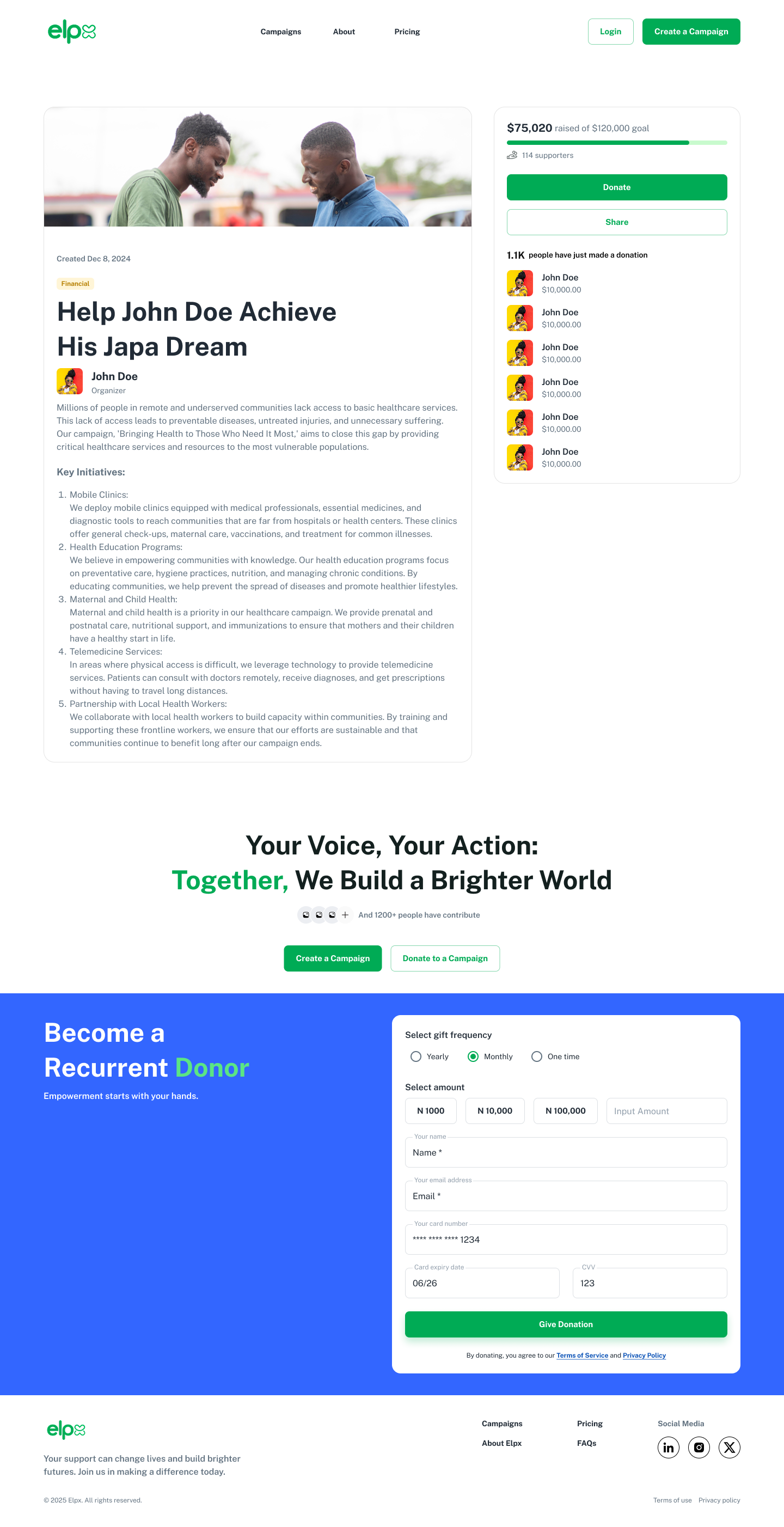
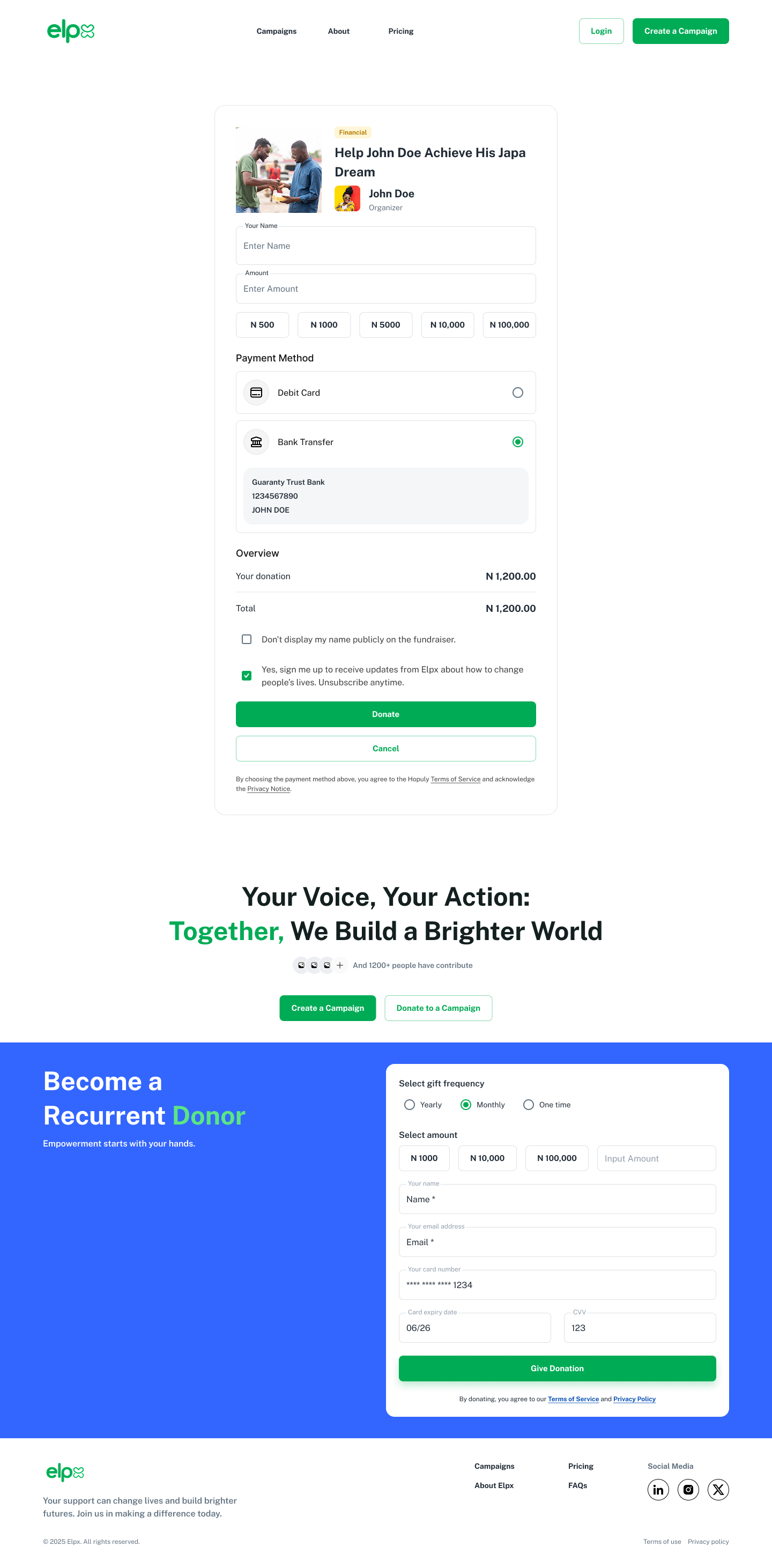
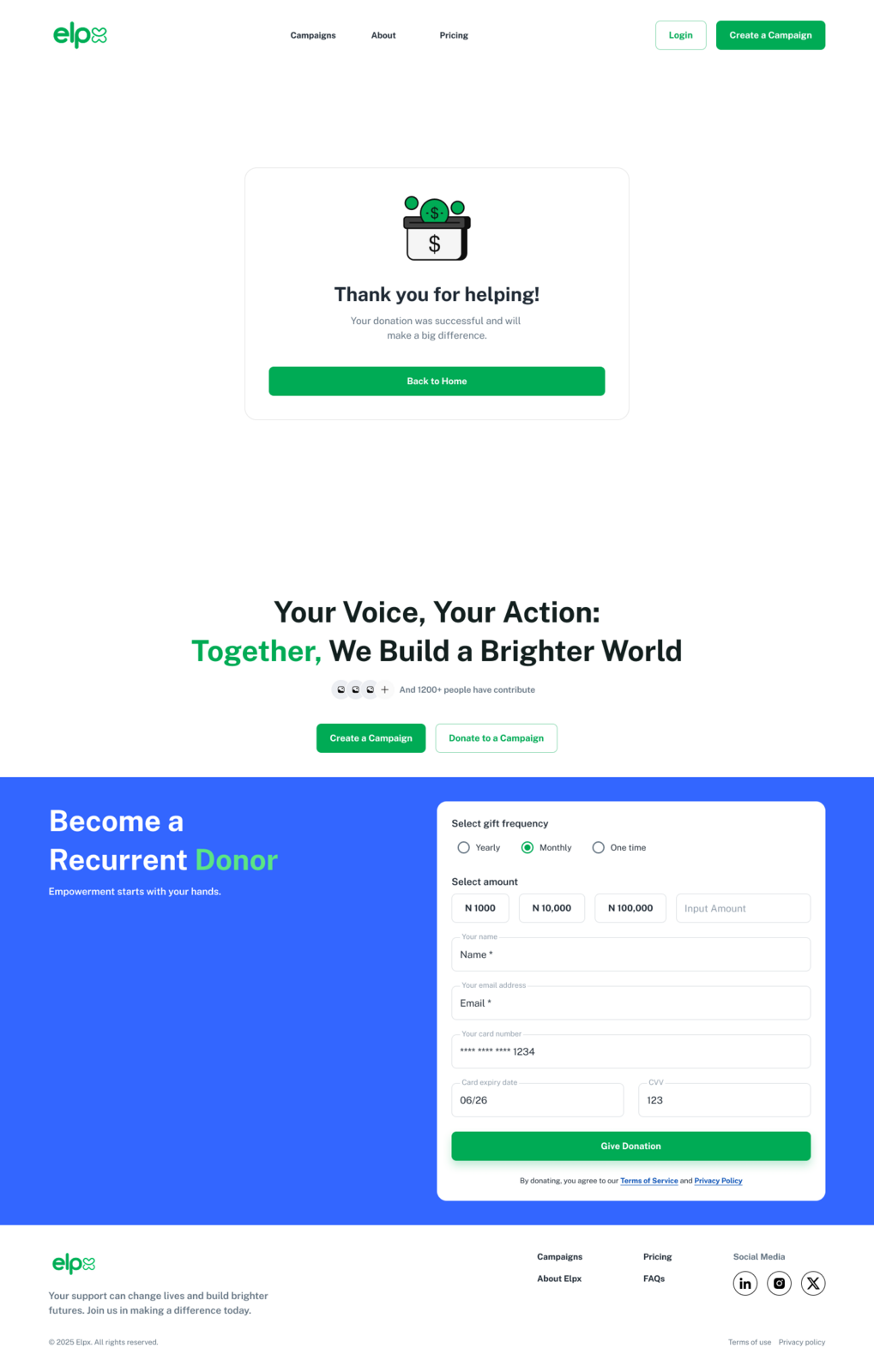
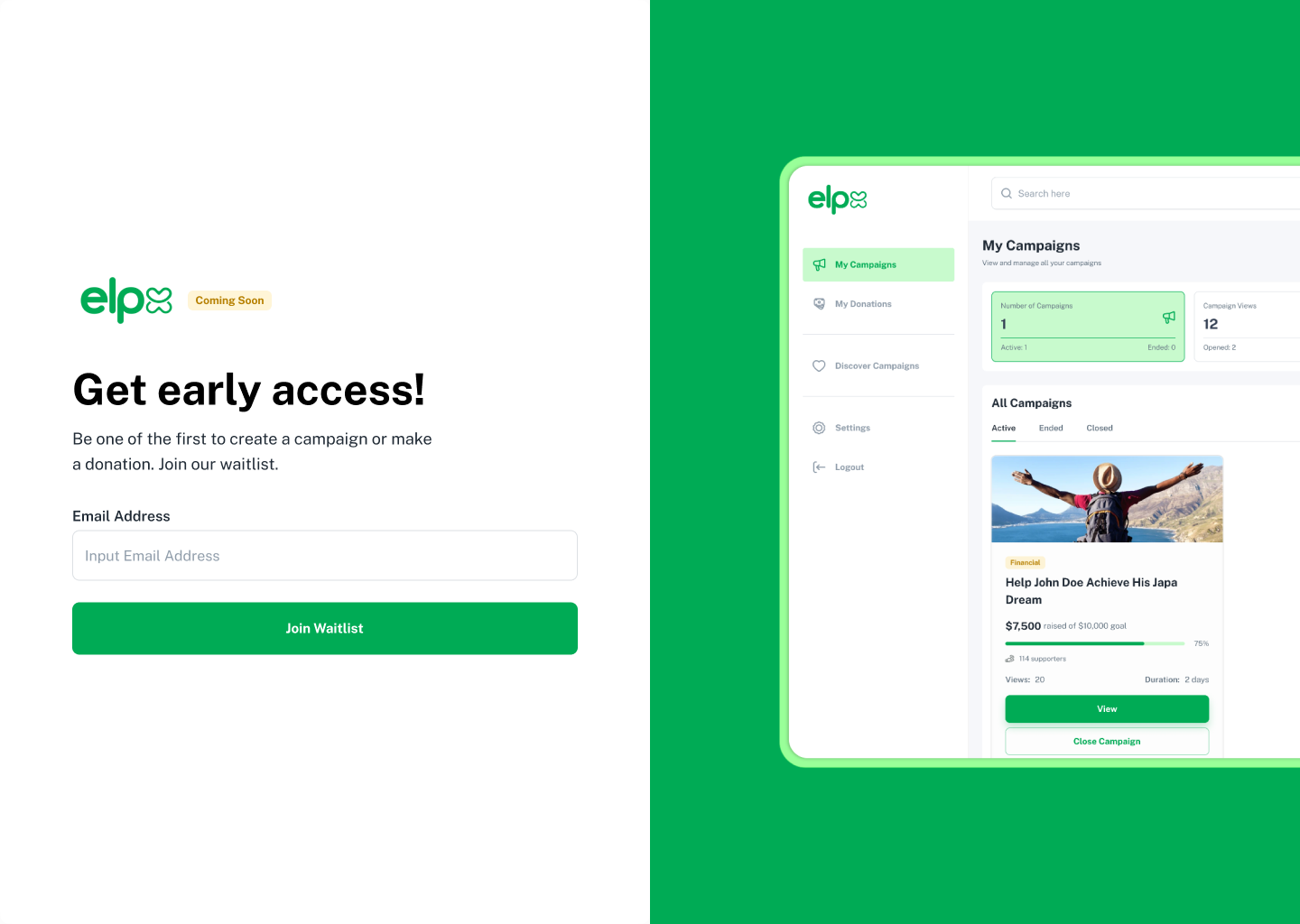
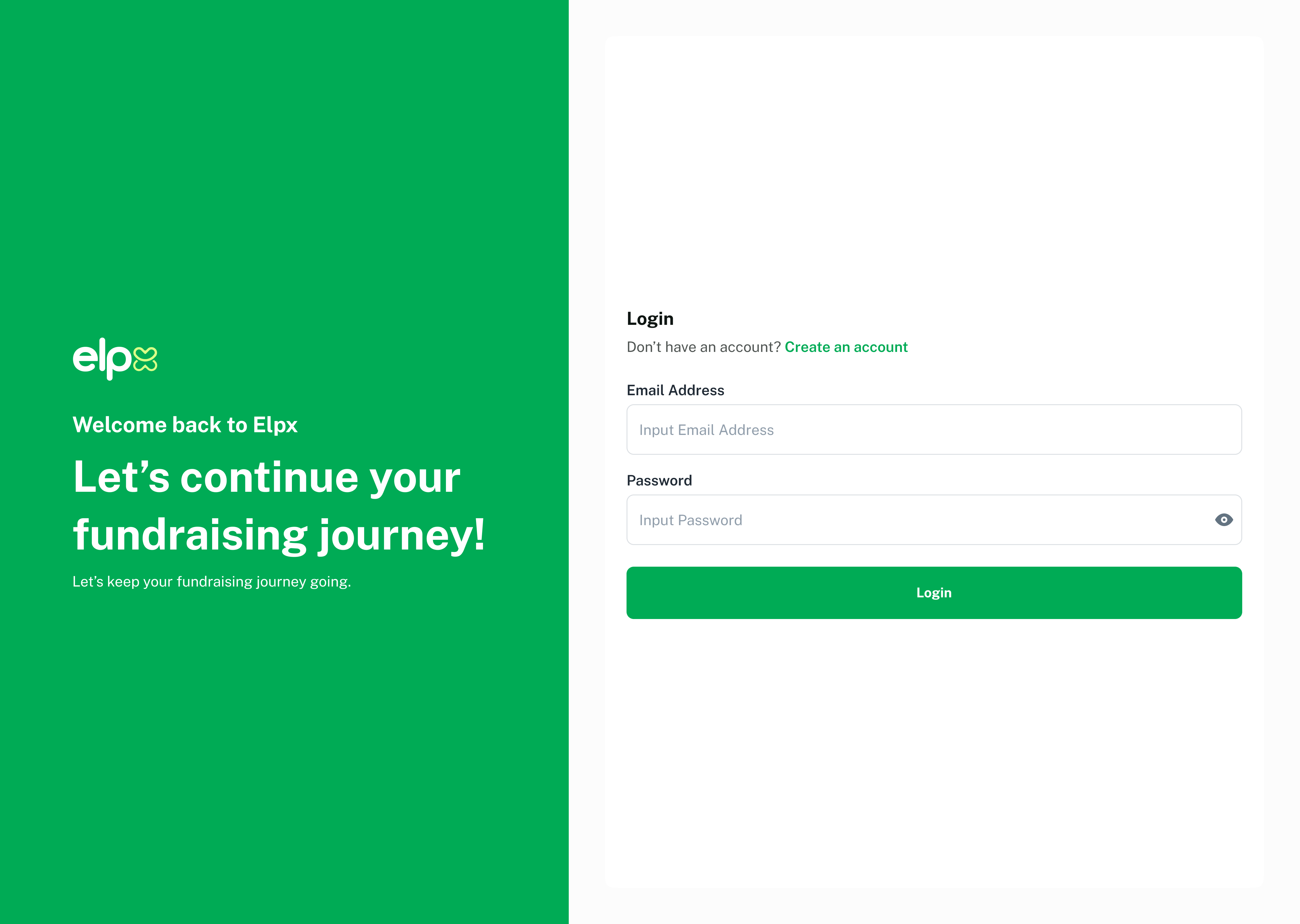
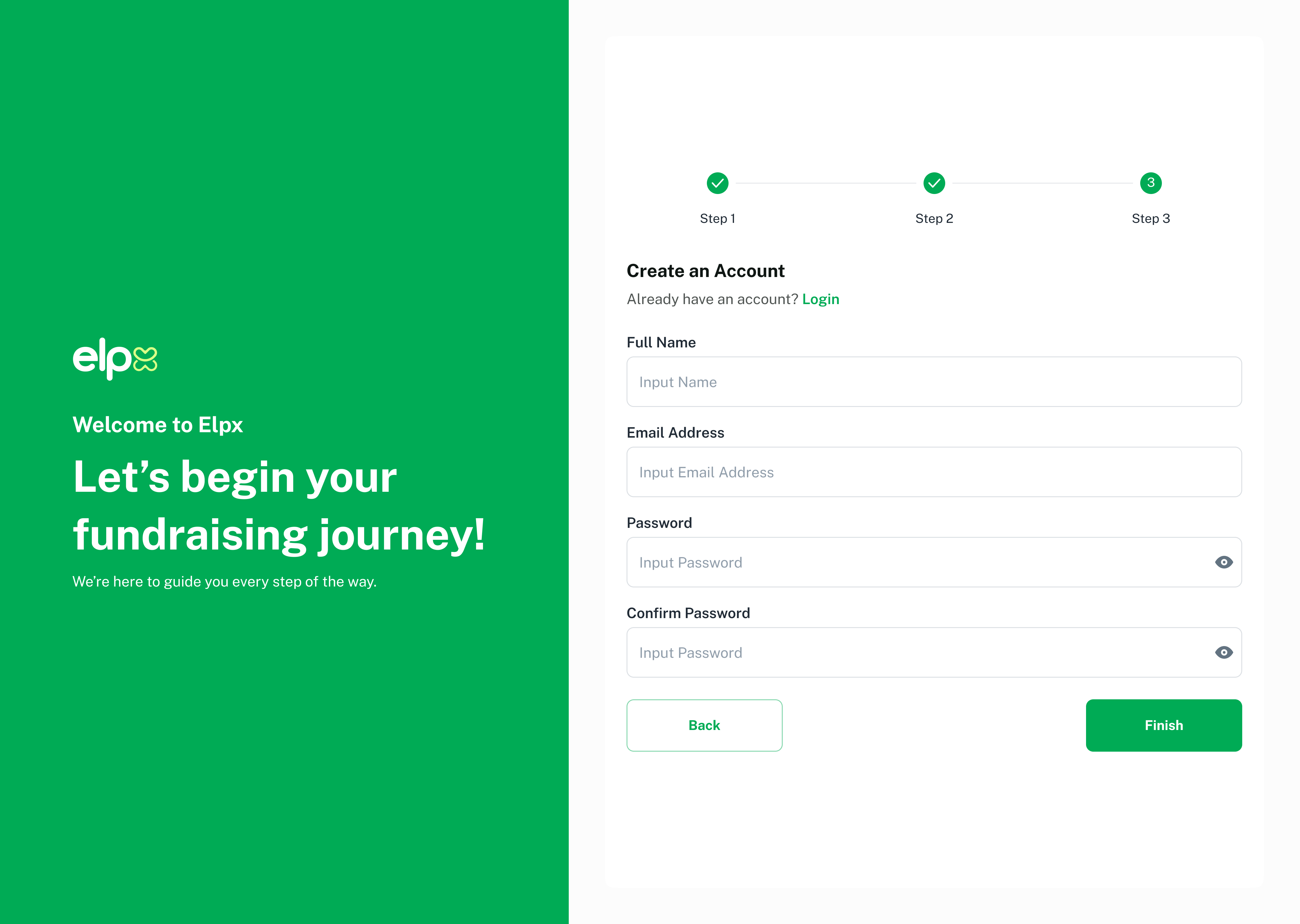
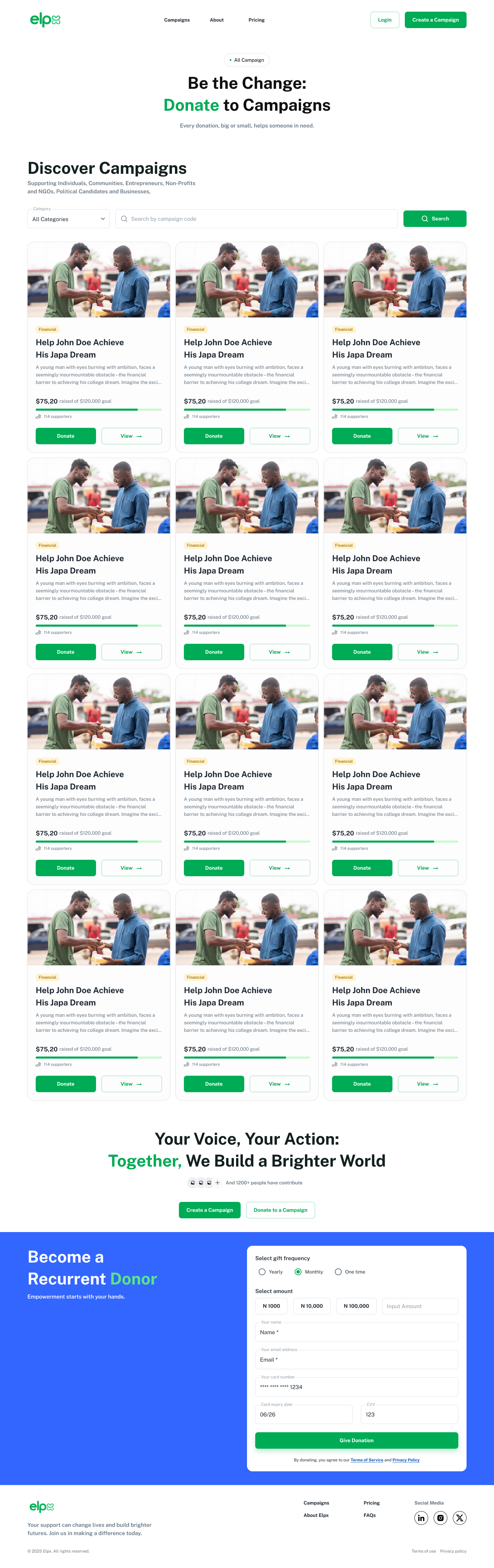
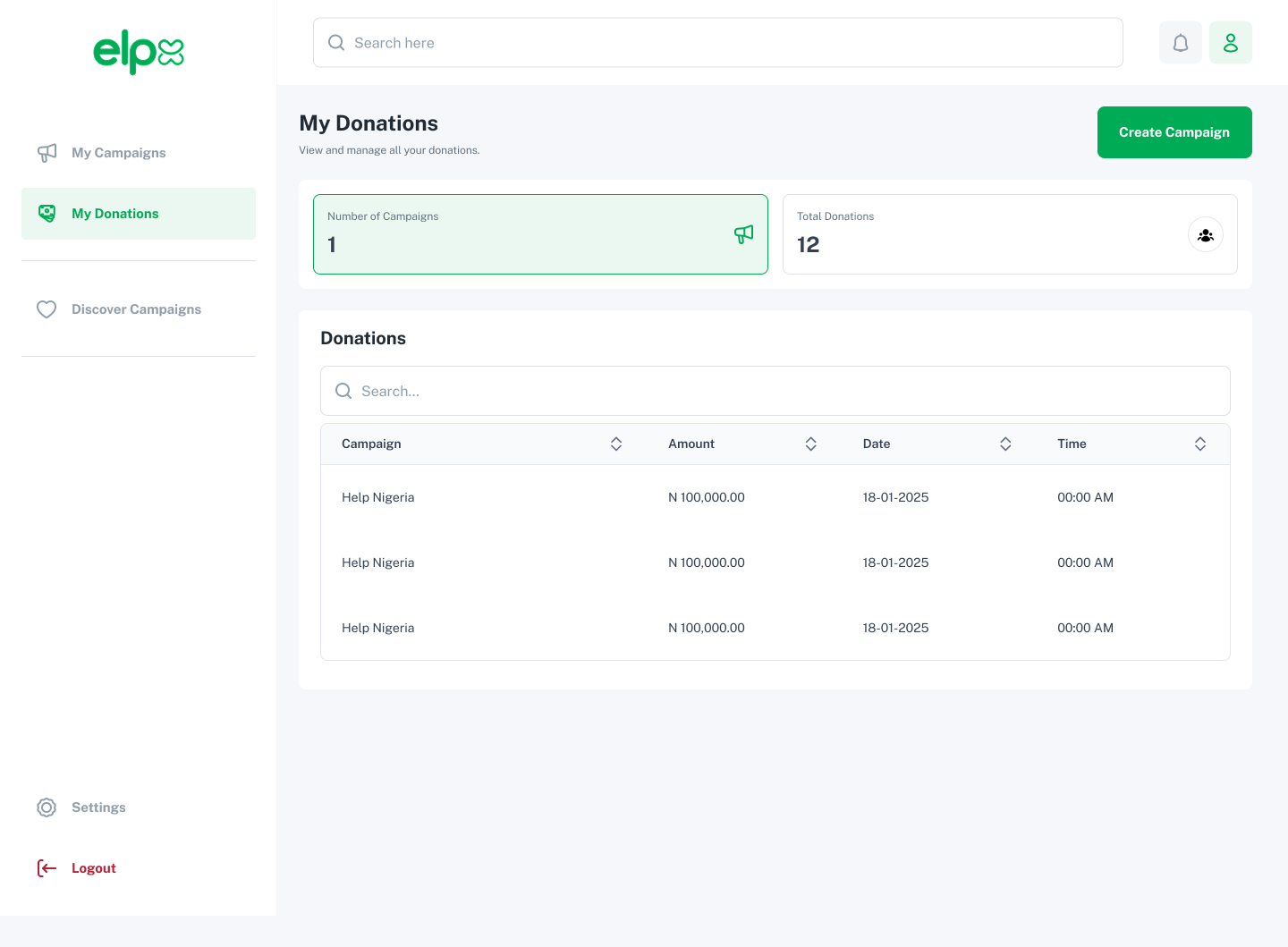
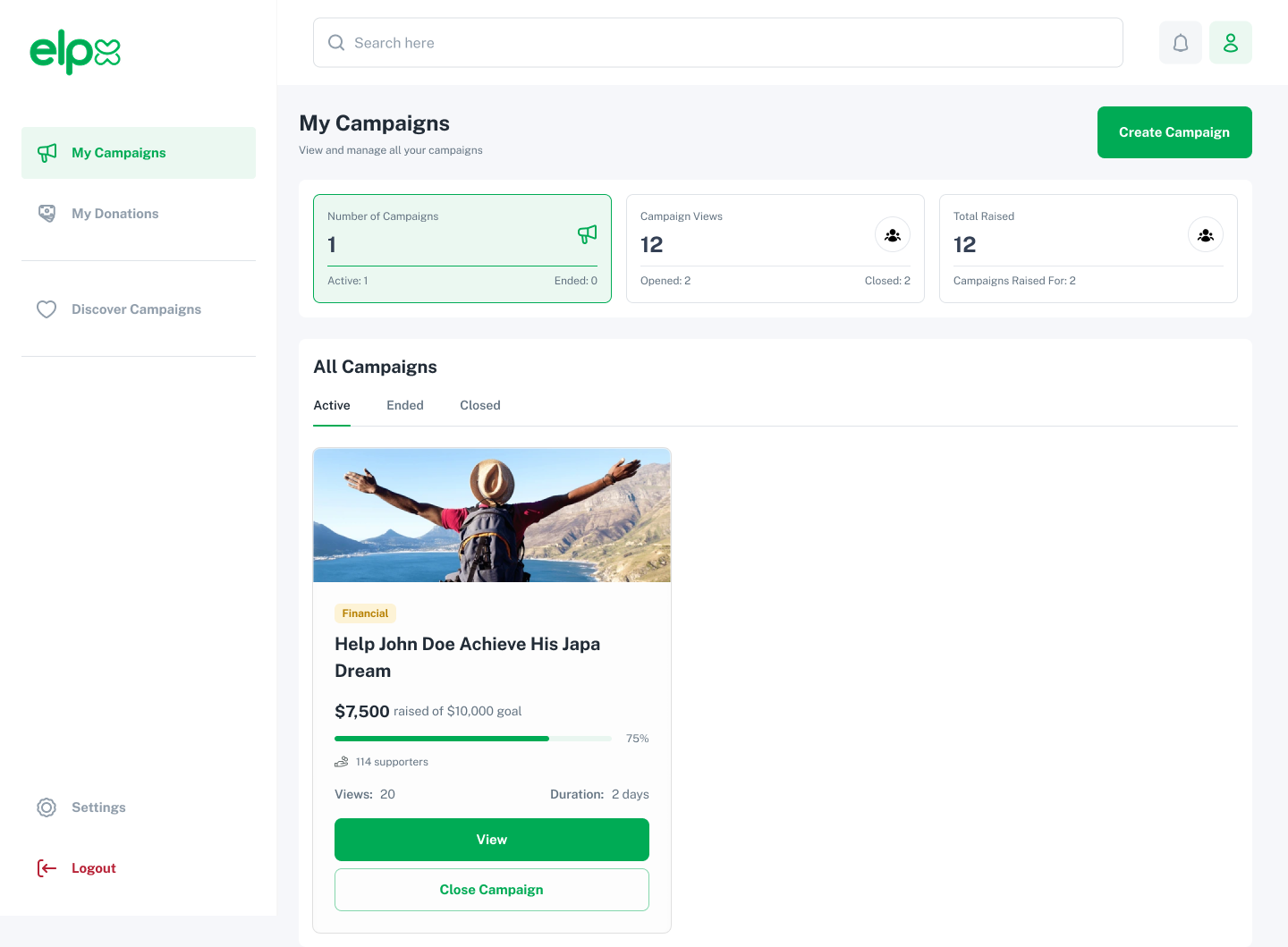
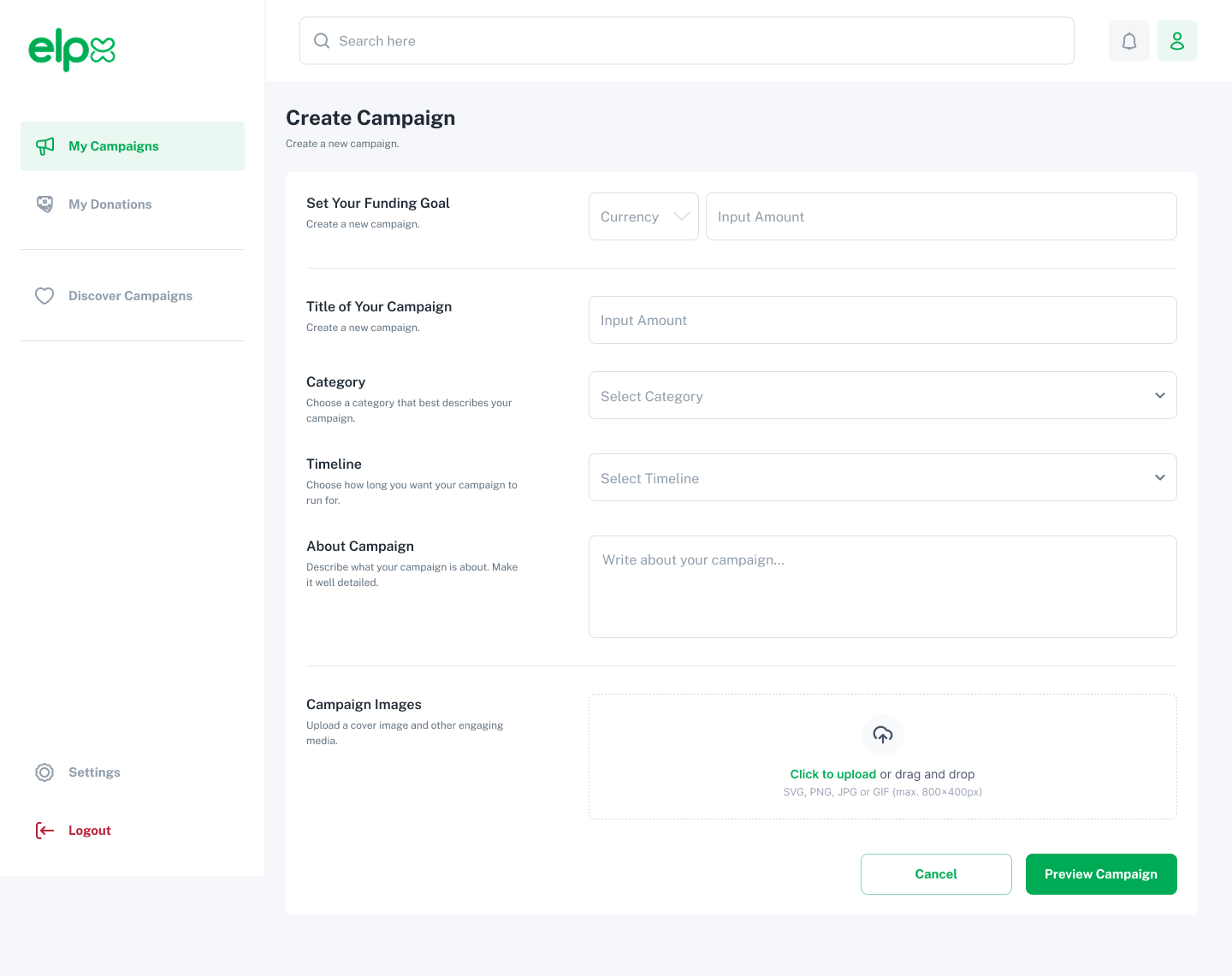
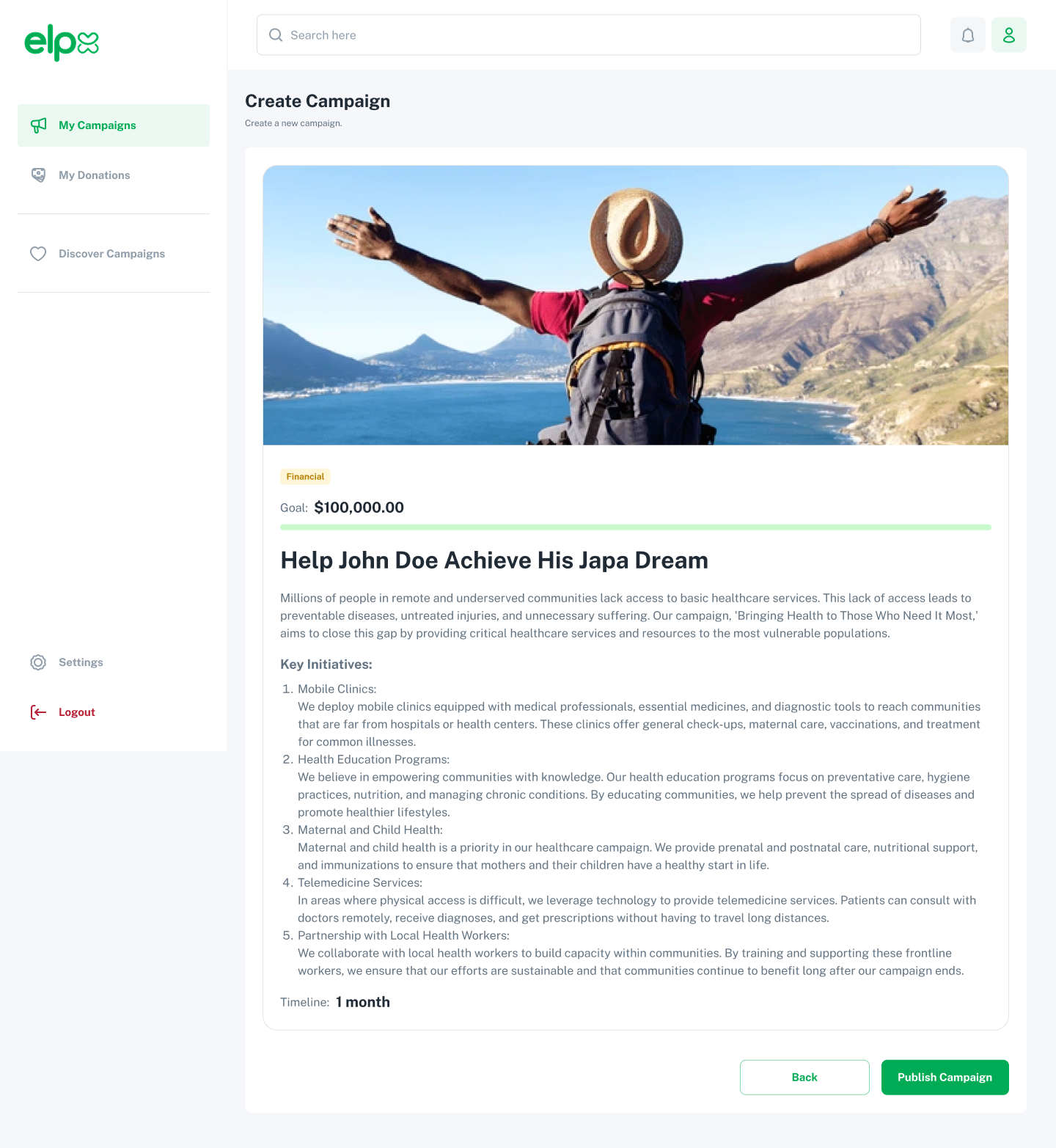
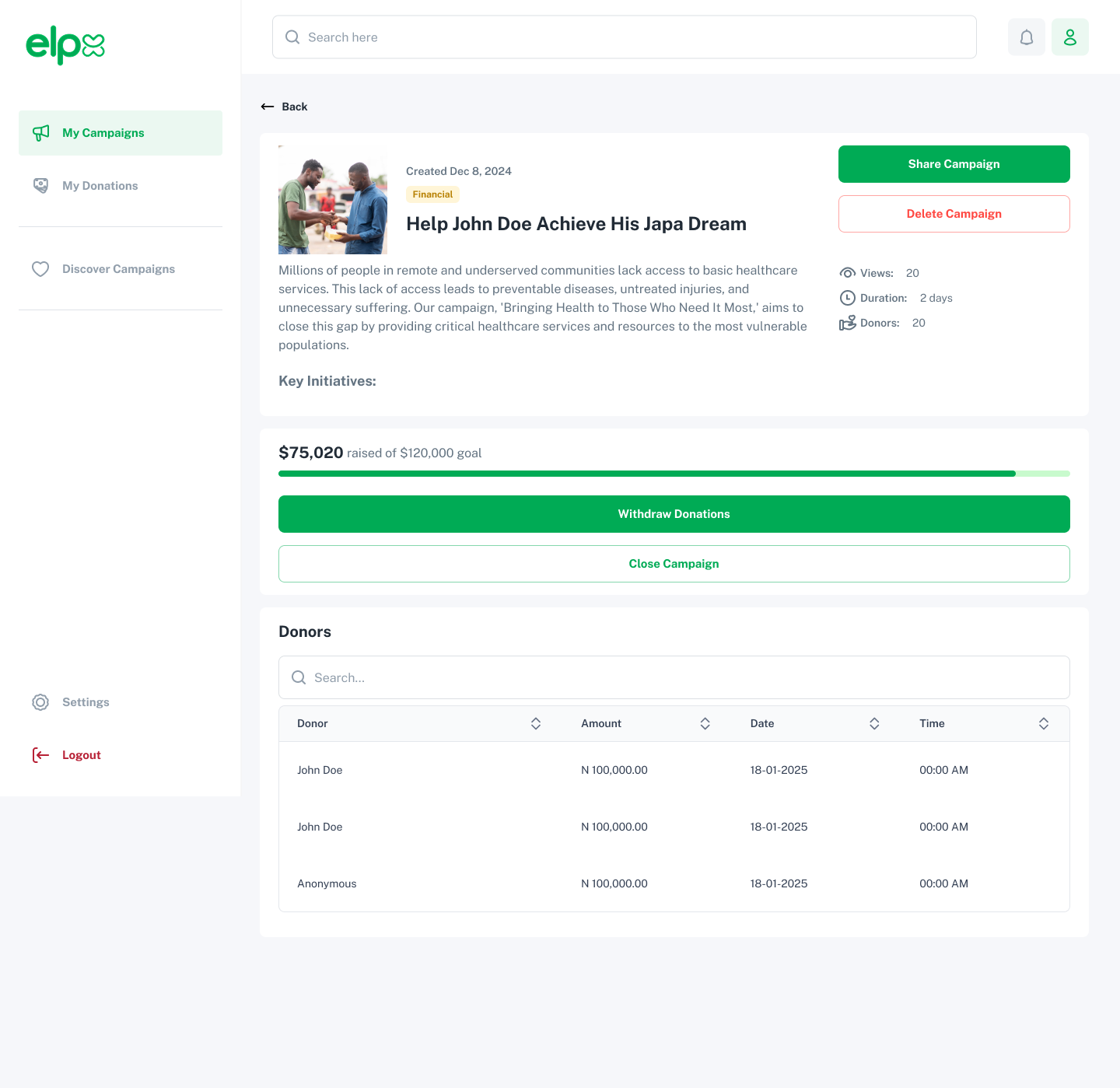
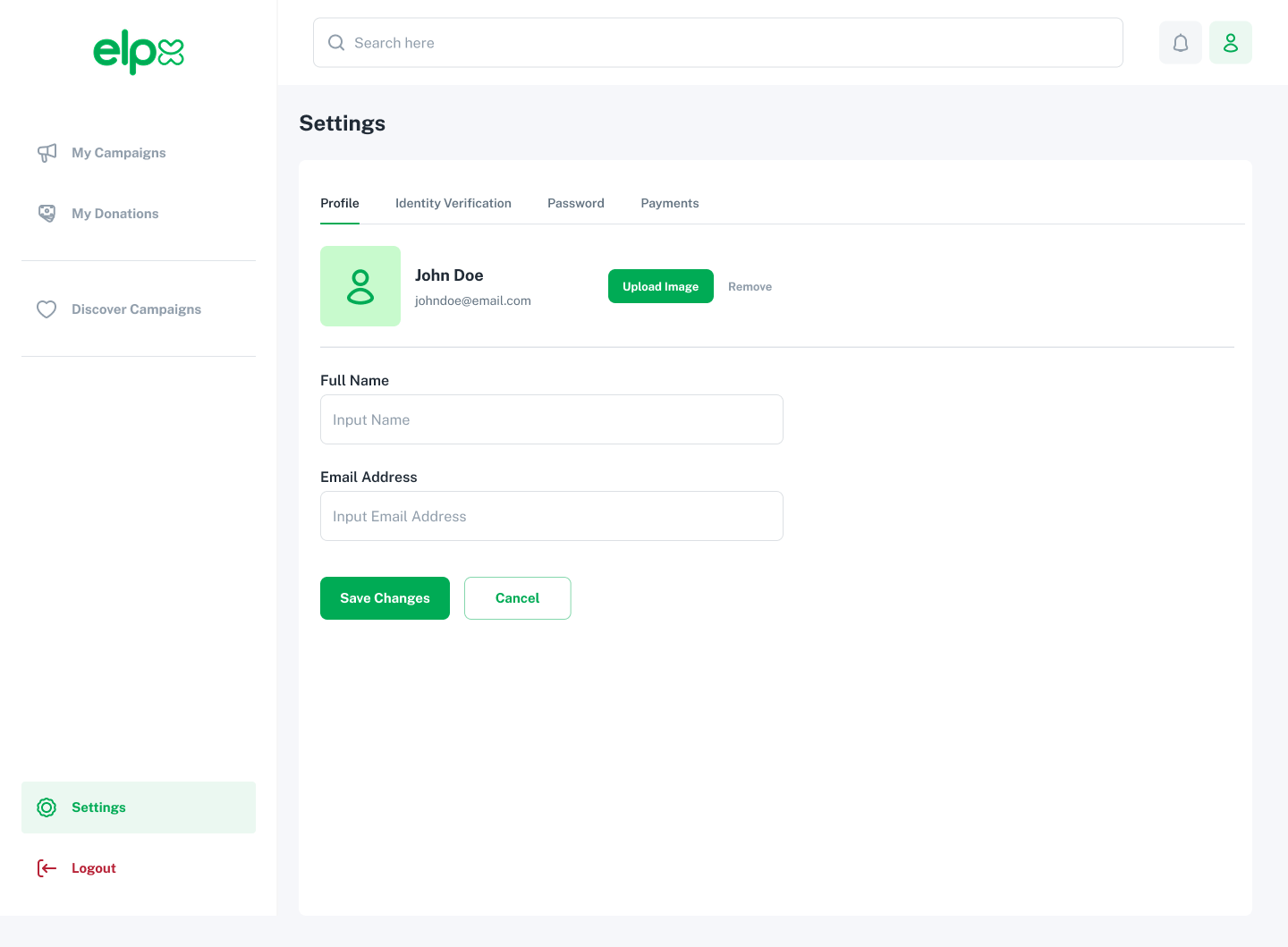
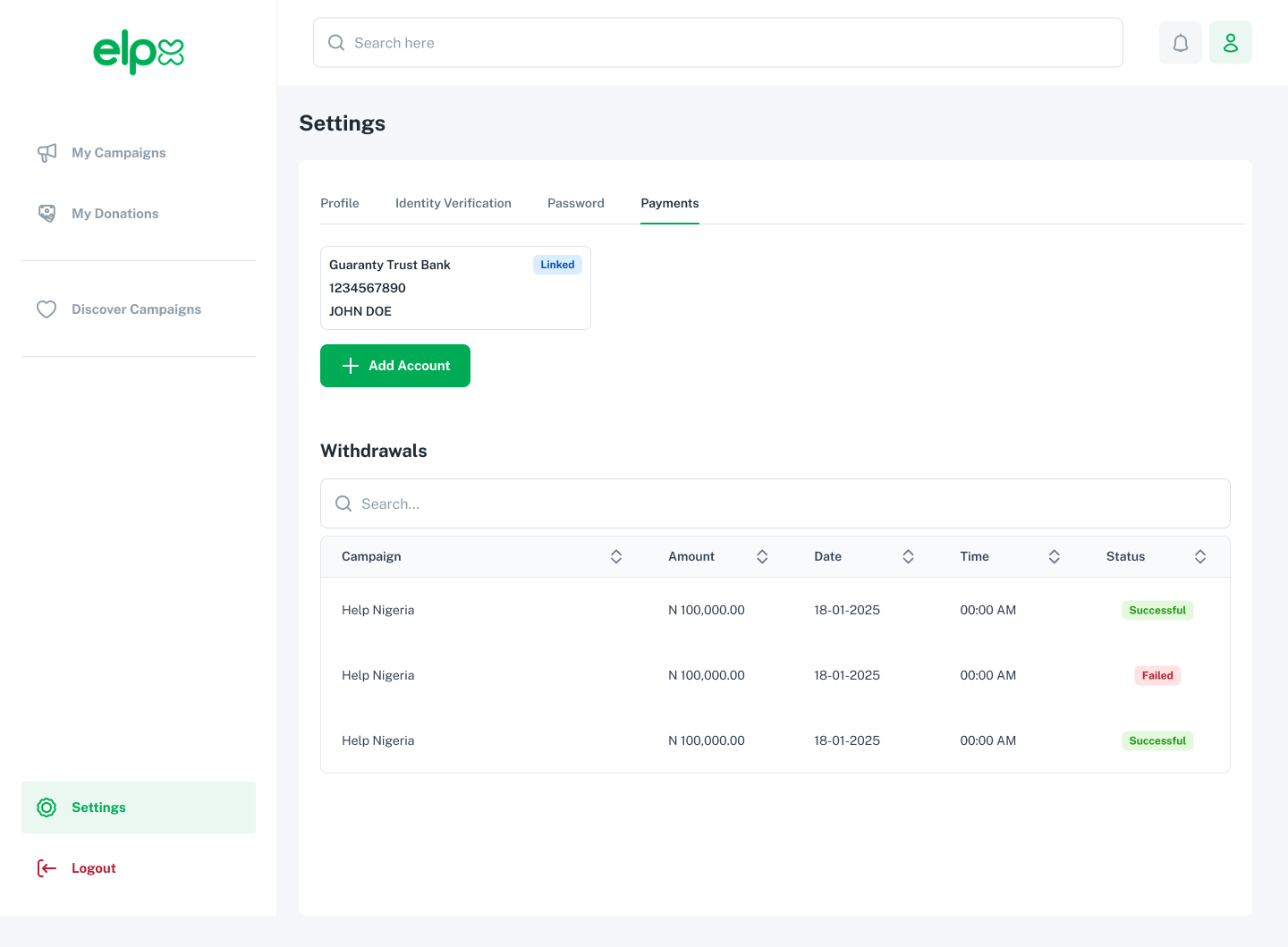
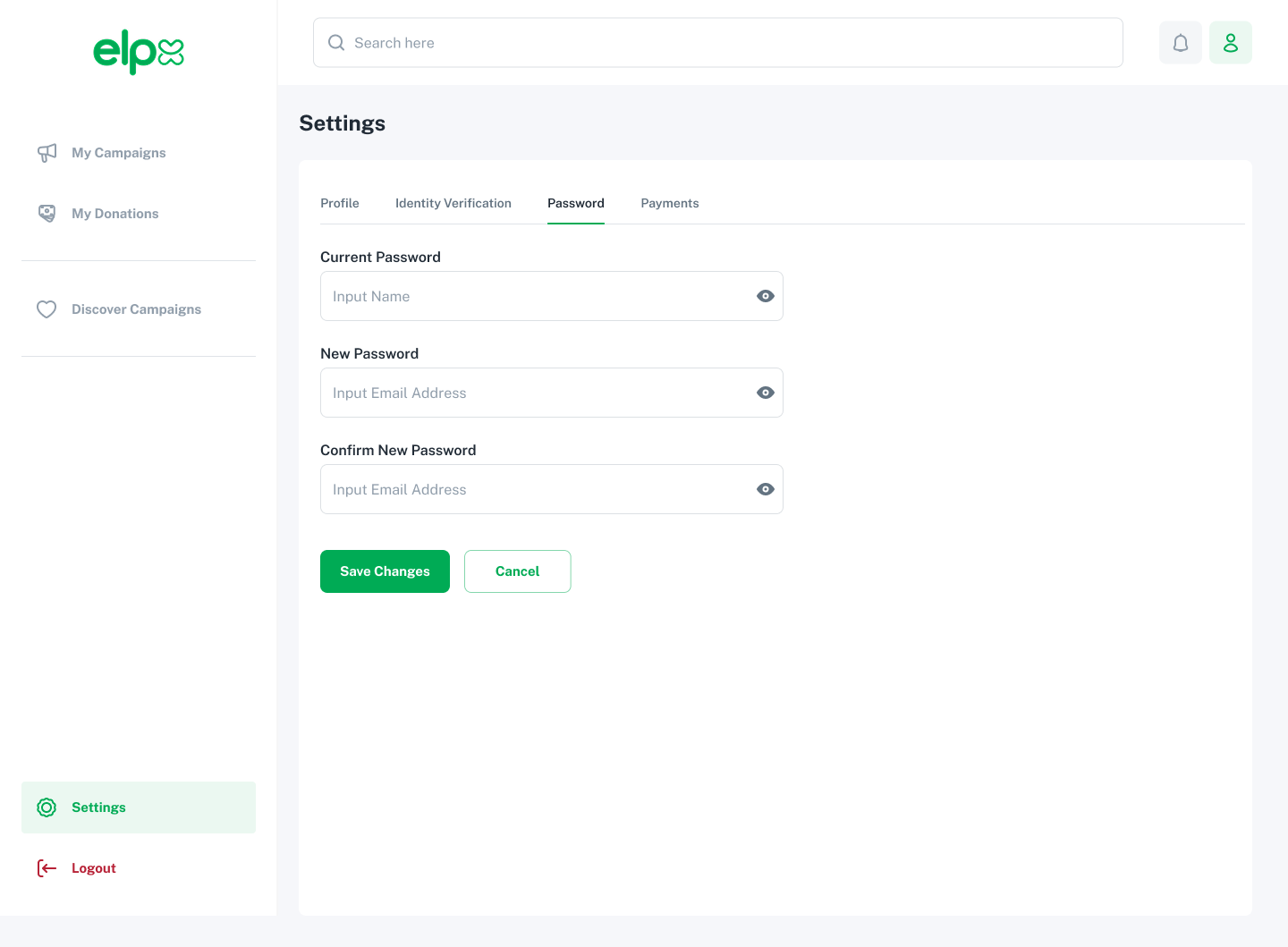
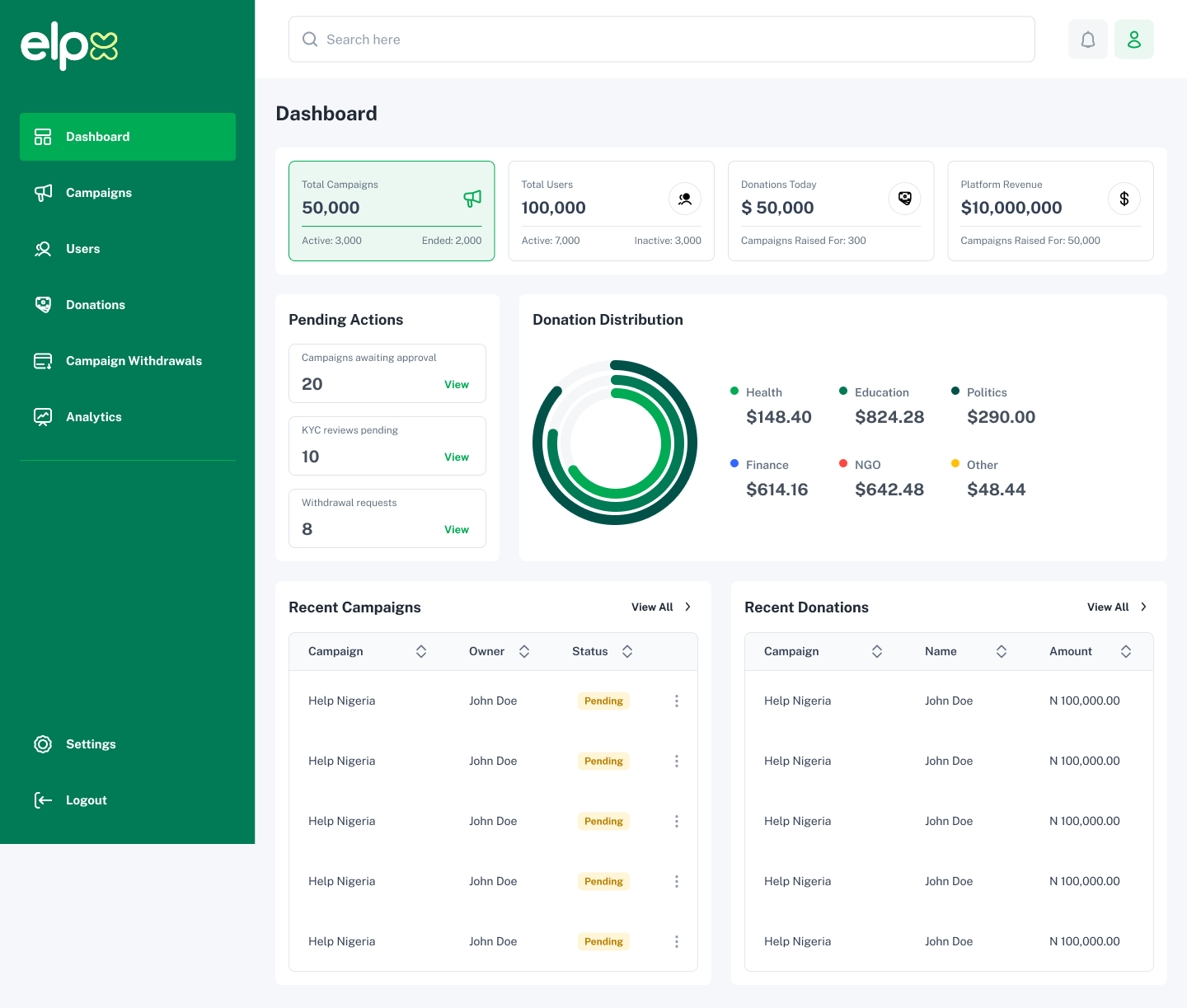
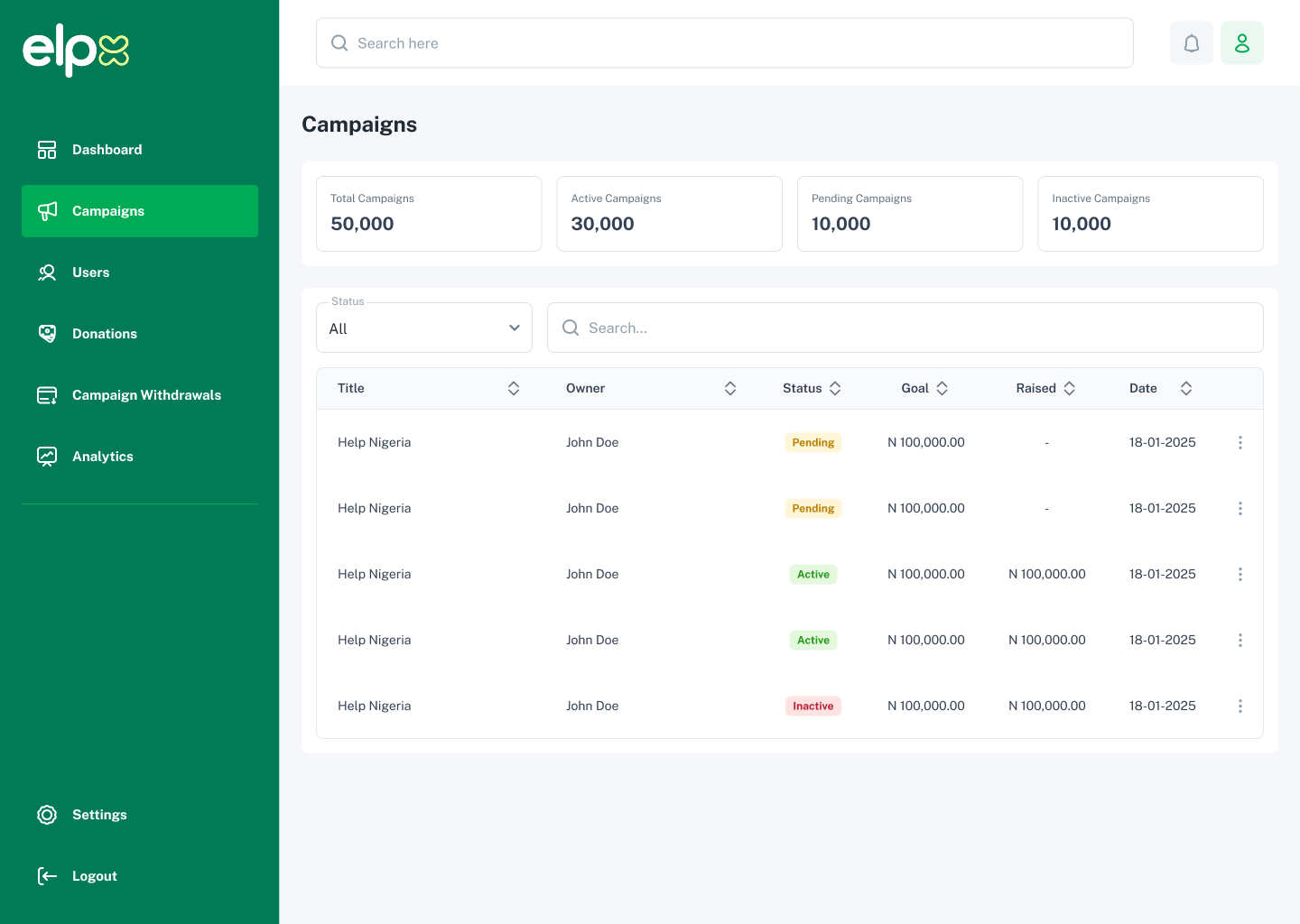
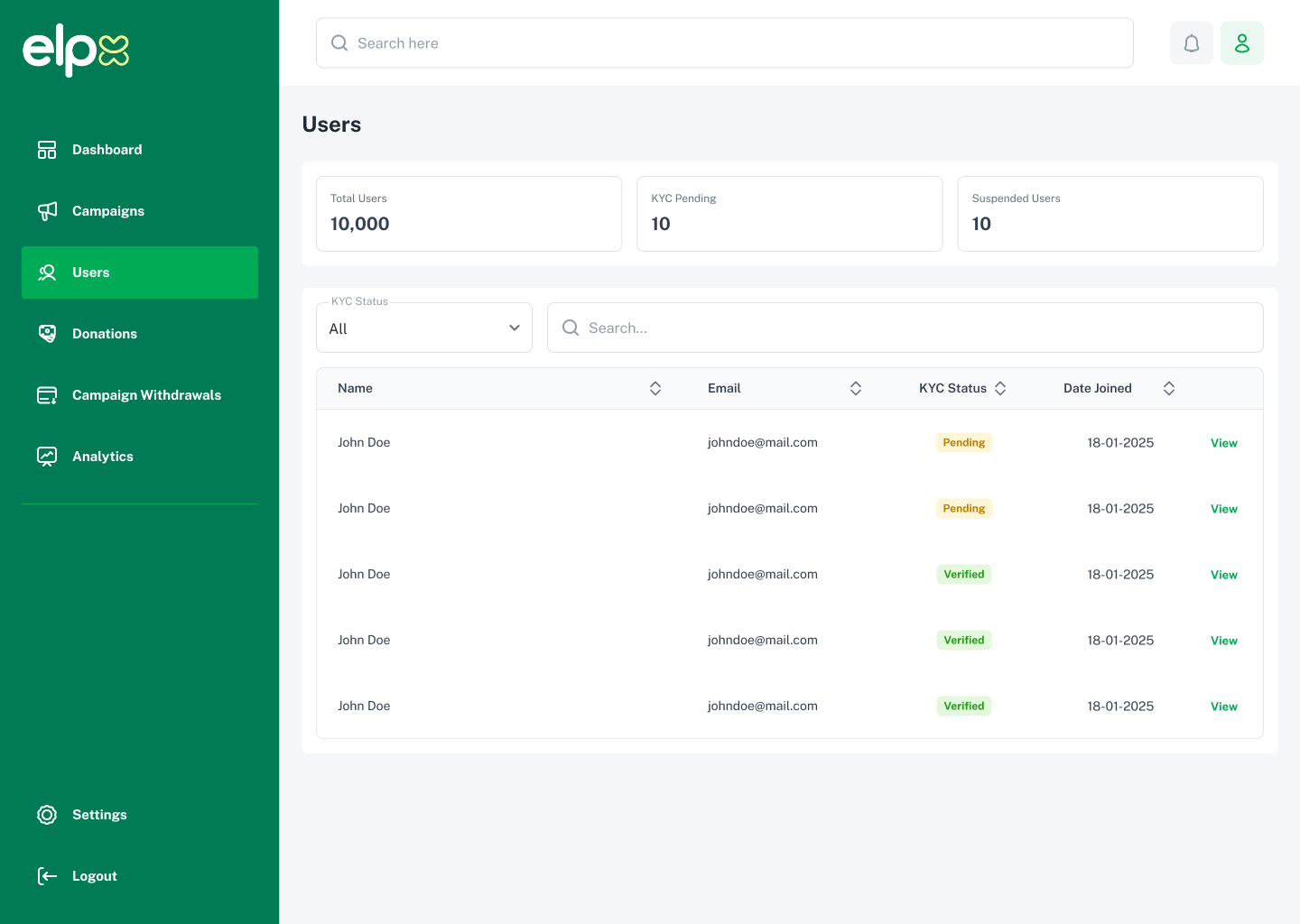
Screens grouped by who's using them: the public donation website, the donor/fundraiser dashboard, account settings, and the super admin console.


As the sole Product Designer on ELPX, I focused on user flows, interfaces, and scalable design systems to ensure accessibility, trust, and usability across the platform.
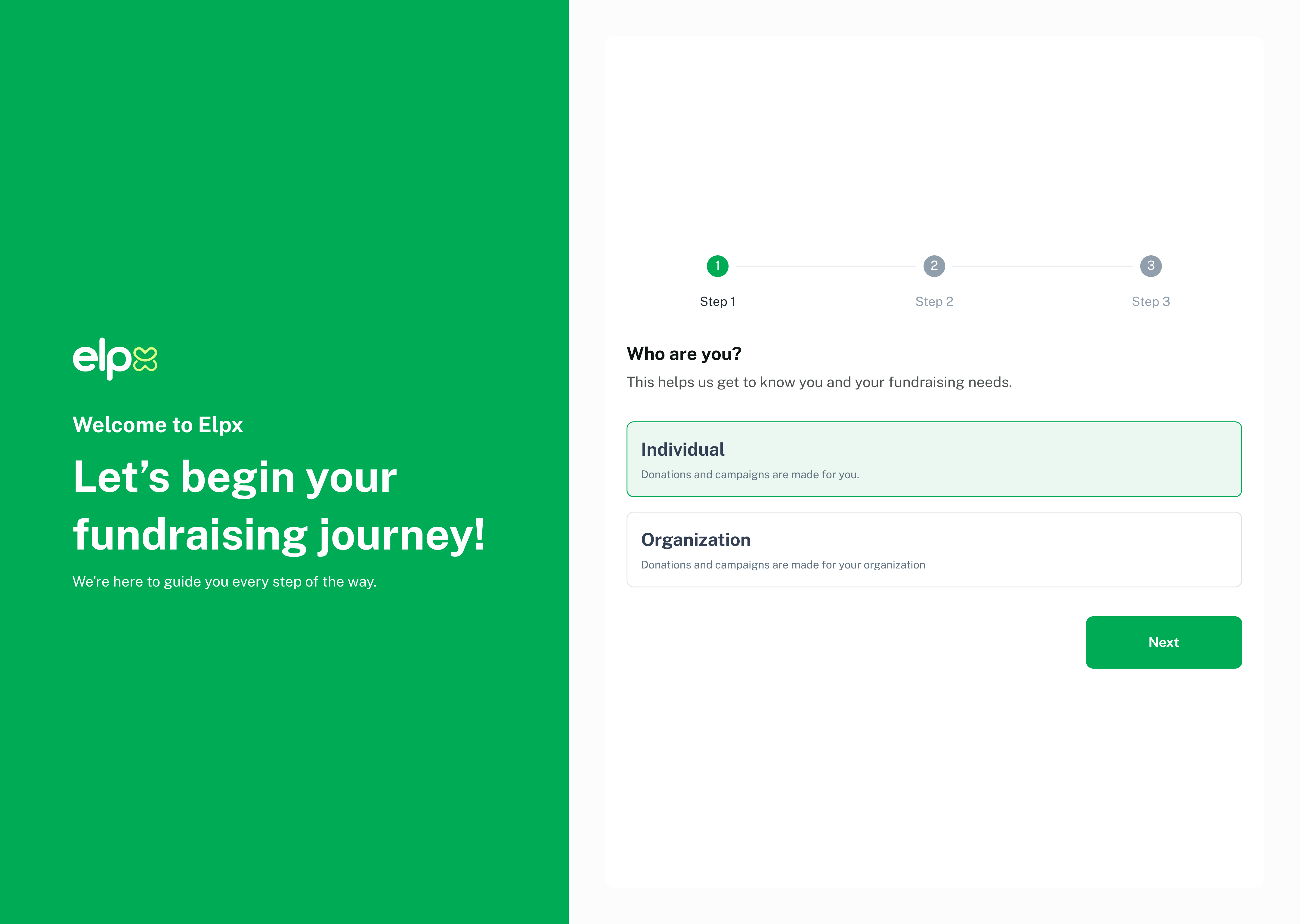
That included designing onboarding and campaign creation flows for individuals, NGOs, and communities, building dashboards for managing campaigns and donations, and creating one consistent design system across every user role — donor, fundraiser, and admin.
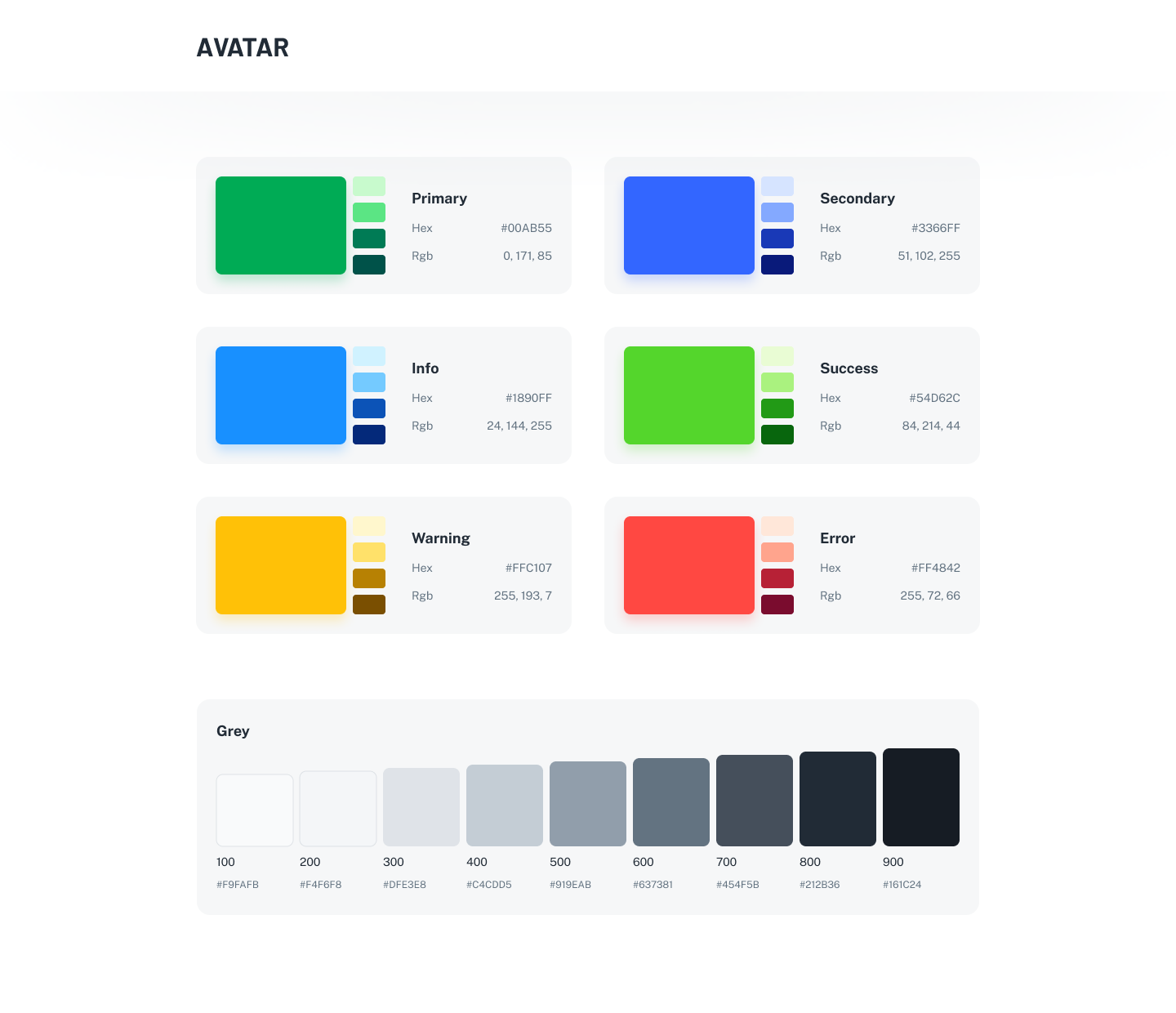
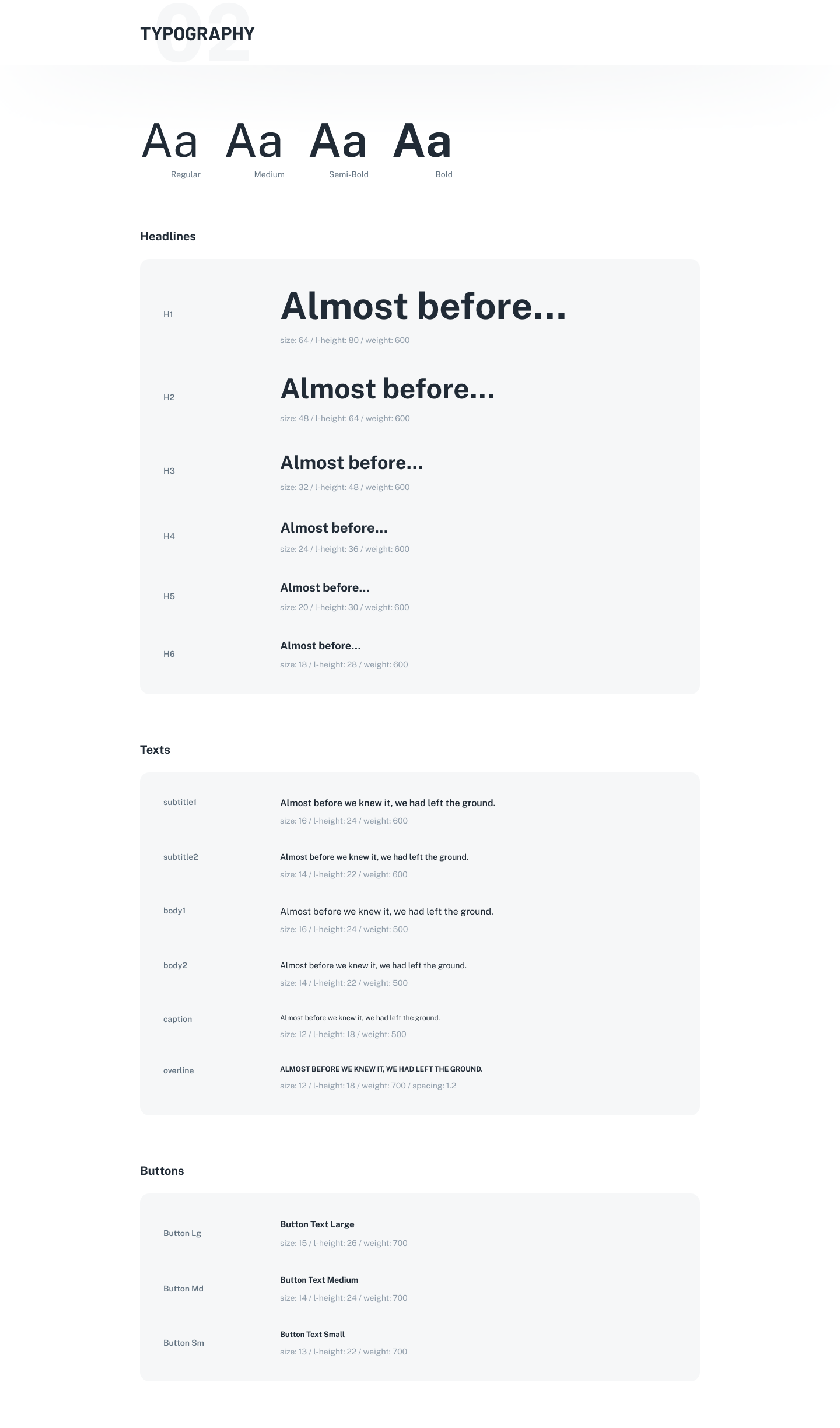
Collaborated iteratively with a small engineering team rather than handing off designs at the end, using Figma for the component and design-system handoff and clarifying interactions and edge cases directly with engineers as the system was implemented across every user role, from donor to admin.
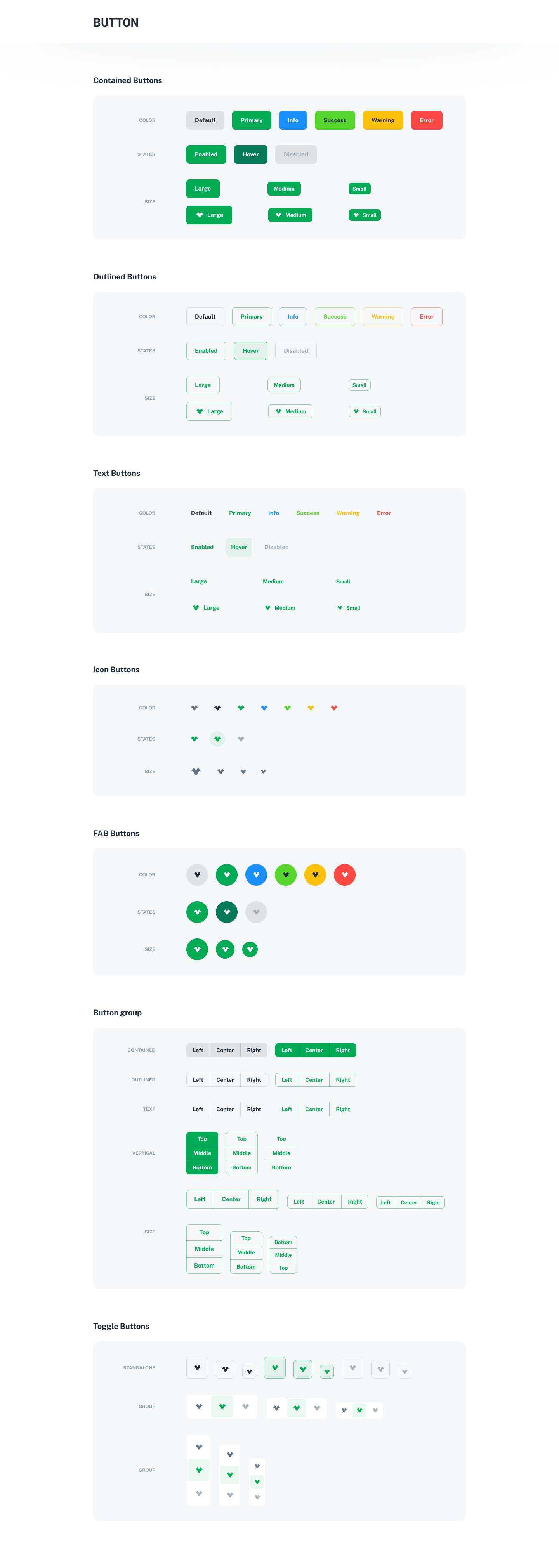
One consistent design system spanning donor, fundraiser, and admin interfaces.


ELPX sharpened how I think about designing for trust as a first-class requirement, not an afterthought — the CAMTA framework meant every screen had to do more than look clean; it had to actively lower the emotional and practical barriers to asking for or giving help.
If I were starting over, I'd push harder to test the trust-building elements — verification badges, fund tracking — specifically with donors who are naturally skeptical, since that's a different bar than general usability testing.